
Unbiased headlines. Facts, not spin.
Every story is an unbiased news briefing written from 110+ sources across the spectrum — sources linked so you can verify it yourself.
 politics
Low Interest (4/10)
August 1, 2026 at 02:47 AM
politics
Low Interest (4/10)
August 1, 2026 at 02:47 AM
Petro Ends Colombian Presidency With Farewell Visit to Cuba, Days Before Successor Vows to Cut Ties With Havana
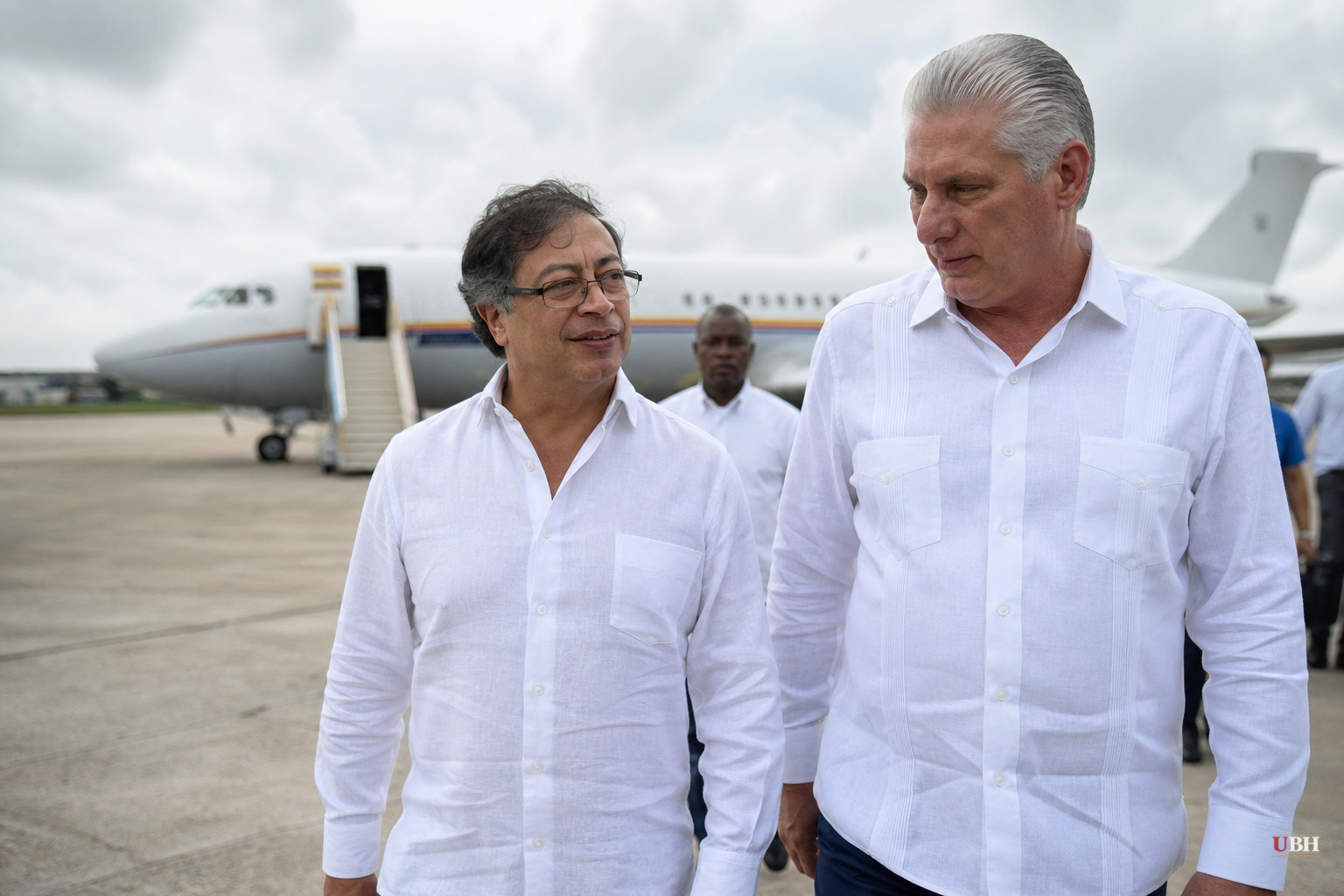
Gustavo Petro is closing out his presidency the way he ran it: standing with Cuba's communist government.
Petro traveled to Havana Friday, July 31, for a roughly 48-hour visit and meeting with Cuban President Miguel Díaz-Canel, according to Infobae Colombia as reported by en.CiberCuba. It's his third official trip to the island as president, following visits in June and September 2023.
This was supposed to be a U.S. trip. Petro had planned to attend a United Nations event in Washington and New York on natural resource governance, plus a stop at the Organization of American States, according to en.CiberCuba. He scrapped it after Democratic Republic of Congo President Félix Tshisekedi, whose country holds the U.N. Security Council's rotating presidency this month, canceled his own appearance.
Petro said that cancellation lowered the event's importance enough that he swapped it for Havana. "I replaced it with a place that I consider vital for national sovereignty and the struggle for life in the Caribbean: the attacked Cuba," Petro wrote on X, as quoted by both en.CiberCuba and Breitbart.
Framing It as Anti-War, Not Just Solidarity
Petro didn't just call this a goodwill visit. According to Xinhua, he said he's going to Havana specifically to oppose what he described as U.S. threats of military action against Cuba. "Now there is talk of invasions and missiles on the island of Cuba," Petro wrote on X, per Xinhua's reporting.
He listed reasons for Cuban solidarity: the island trained 2,000 Colombian doctors, helped broker peace between former President Juan Manuel Santos and the FARC guerrillas, and distributed its own COVID-19 vaccine internationally, Xinhua reported.
Petro also tied his Cuba trip to a separate, contested claim about U.S. strikes on suspected drug-trafficking vessels in the Caribbean. He said 261 people were killed in those strikes, including roughly 50 Colombians, and claimed U.S. intelligence agencies confirmed the missiles used were "completely useless," according to Xinhua. That casualty figure and the claim about U.S. intelligence assessments come from Petro's own statements as relayed by Xinhua. No independent U.S. government confirmation of those specific numbers appears in the available reporting, and it should be treated as Petro's characterization rather than a verified tally.
The Diplomatic Reversal Already in Motion
Petro leaves office August 7, handing power to Abelardo de la Espriella, a conservative who's already announced he's tearing up Colombia's Cuba policy.
De la Espriella said Colombia will completely sever diplomatic relations with Cuba and Nicaragua, calling them "tyrannies," and will shut down 14 Colombian embassies in an initial phase, according to en.CiberCuba. "In my government, there will be no ties with tyrannies," he said.
That list of embassy closures reportedly includes not just Havana and Managua but outposts tied to Haiti, South Africa, Algeria and Malaysia, the same countries Petro named as strategically vital to Colombia in his own farewell post, en.CiberCuba noted. It's a near-perfect mirror image: everything Petro called essential, his successor is calling expendable.
Cuba's government isn't taking the incoming shift quietly. After Colombian Vice President-elect José Manuel Restrepo met with U.S. Secretary of State Marco Rubio in Washington on July 15, the Cuban regime accused de la Espriella of acting in "subordination" to U.S. policy, according to en.CiberCuba.
De la Espriella also plans to restore diplomatic relations with Israel on his first day in office, according to Breitbart. Colombia maintained friendly ties with Israel for decades until Petro unilaterally severed them in 2024 as part of a broader campaign against the country, Breitbart reported.
What's Provable and What Needs Verification
Petro's core biography isn't in dispute. He was a member of the M19 guerrilla group before entering politics and became Colombia's first leftist president in the country's history, a fact both Breitbart and en.CiberCuba confirm. His affinity for Havana's government has been consistent and public across four years in office, this being his third state visit to the island.
What's contested is the framing around U.S. actions in the Caribbean. Petro's claim of an active U.S. "invasion" threat against Cuba and his casualty count from strike operations come entirely from his own statements as carried by Xinhua, a Chinese state outlet with its own interest in amplifying anti-U.S. narratives. No independent verification of the 261-person death toll or the claim that U.S. intelligence deemed its own missiles "useless" appears elsewhere in the available reporting. That doesn't mean the concern about civilian casualties from strikes on suspected trafficking vessels is fabricated. The specific numbers Petro cited need independent confirmation before they're treated as fact rather than a departing president's parting political message.
Colombia formally breaks with Cuba and Nicaragua once de la Espriella is sworn in August 7. Whether that diplomatic rupture holds, or whether Cuba's government finds another Colombian administration willing to normalize relations down the road, remains to be seen.
Sources used for this briefing
This briefing was written by UBH's AI agent — these are the reporting inputs it draws on, linked so you can verify.


