
Unbiased headlines. Facts, not spin.
Every story is an unbiased news briefing written from 110+ sources across the spectrum — sources linked so you can verify it yourself.
 tech
Low Interest (4/10)
June 19, 2026 at 06:09 AM
tech
Low Interest (4/10)
June 19, 2026 at 06:09 AM
Peter Thiel's Dialog Club Grades Members by Wealth and Fame, Leaked Internal Data Shows
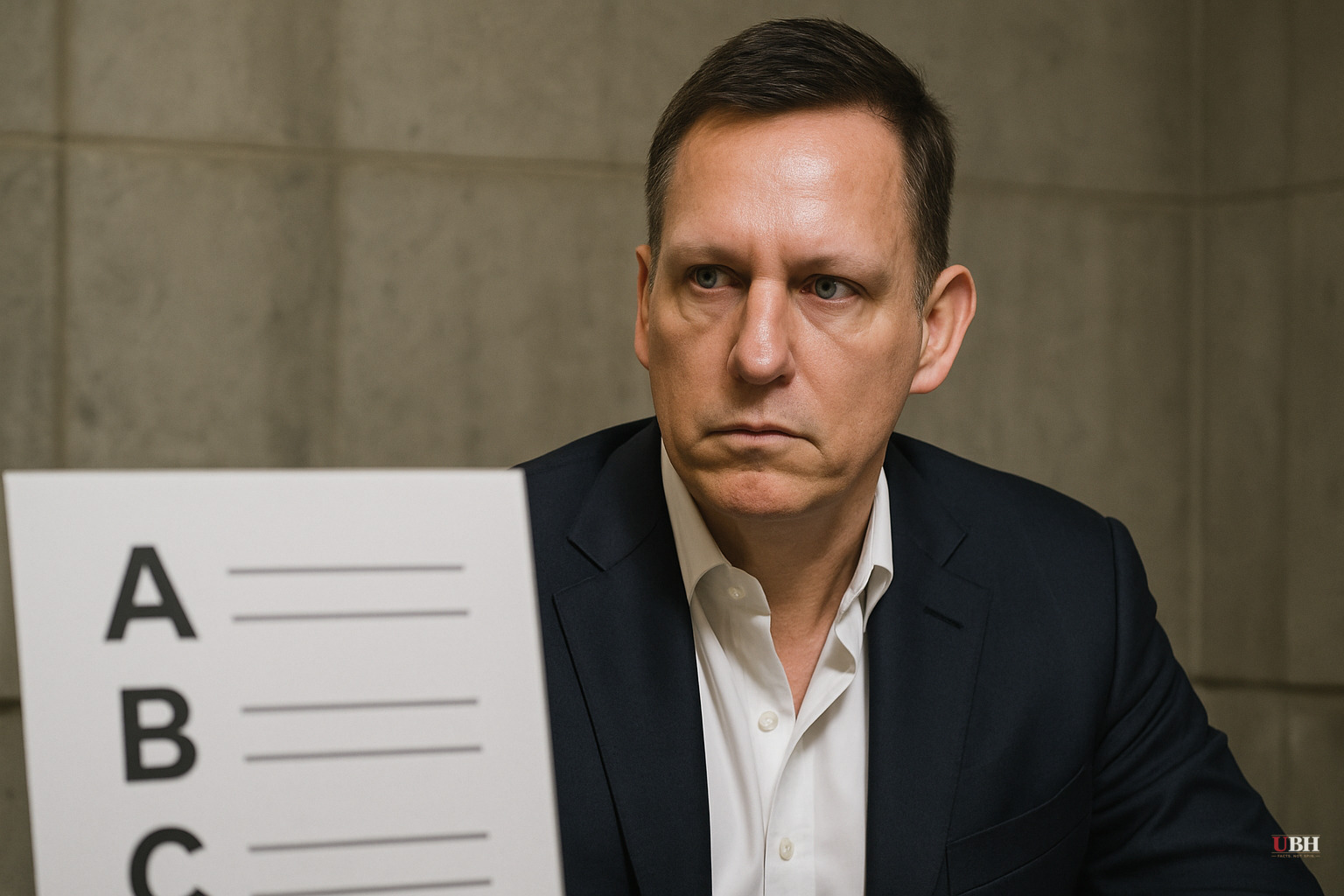
What Got Leaked, and What It Shows
Two separate data exposures have put Dialog in the spotlight this week. The first was a membership directory left exposed on Dialog's own website, which has been circulating online since earlier this week. The second is more significant: a trove of internal dossiers obtained by WIRED from a confidential source, covering nearly 200 people scheduled to attend Dialog's annual retreat.
Those dossiers contain home addresses, private phone numbers, email accounts, dates of birth, emergency contacts, food allergies, and self-reported political leanings, according to WIRED's reporting published June 18, 2026. That is a serious data-security failure for an organization that markets itself on discretion.
The Grading System
Dialog does not just curate its guest list. It scores it.
According to both WIRED's reporting and the Dialog Wikipedia entry, every member and prospective member receives a grade of A, B, or C. The grading logic is counterintuitive: C goes to the most famous and influential people, whose presence Dialog presumably values most. A is assigned to established members who are less notable. B is the default for most people.
The grade determines what you pay. Lower-graded members typically pay full price to attend a retreat, which can exceed $10,000. Higher-graded members, meaning the more famous and powerful ones, receive discounts. Dialog, in other words, charges more to the people it considers less valuable.
Beyond the letter grade, dossiers include assets-under-management figures, a 1-to-4 score for how much value the person added to Dialog, notes on whether they can be trusted to moderate discussions, and observations about how well they fit in at past events, according to WIRED. The club also tracks each person's political leanings and, notably, sometimes changes that classification from what the person stated themselves.
What Dialog Is
Dialog was founded in 2006 by Peter Thiel, the venture capitalist and PayPal co-founder, and Auren Hoffman, a data broker. According to its own internal documents cited by WIRED, it has over 1,000 paying members and more than 2,500 people have attended its annual retreats since inception.
The Wikipedia entry on Dialog describes it as comparable to Bilderberg and the World Economic Forum. Forbes called it "Bilderberg meets Silicon Valley salon." Retreats have been held at the Bacara Resort in California, the Ritz-Carlton Dove Mountain in Arizona, and the San Clemente Palace in Venice, Italy.
The organization's executive director is Raffi Grinberg. Dialog's website is not publicly accessible.
This August, members and guests are scheduled to gather outside Dublin, Ireland, for discussions on artificial intelligence, geopolitics, and modern warfare, including NATO's future and battlefield technology, led by current and former lawmakers and national security officials, according to WIRED. The Iran war is listed as a specific agenda item.
A Fair Hearing for the Defense
Before writing this off as sinister, the strongest good-faith case for Dialog deserves a fair hearing. Private clubs that curate membership by influence and wealth are not new or illegal. The Council on Foreign Relations, Aspen Institute, and numerous others operate on similar invite-only models. Off-the-record forums can enable franker conversations between policymakers, military leaders, and private-sector figures than any on-record panel would allow. The argument that powerful people talking privately is inherently dangerous proves too much. Plenty of consequential, legitimate policy thinking happens behind closed doors.
The grading system, as uncomfortable as it sounds, functions like any tiered pricing model: the most sought-after attendees get subsidized because their presence creates value for everyone else. Airlines and conferences do versions of this constantly.
Where the Legitimate Concerns Are
That said, a few things here are not defensible on process grounds alone.
First, Dialog is tracking and, in some cases, overriding members' self-reported political identities. For a club that reportedly values candid cross-partisan discussion, that is a strange practice.
Second, the data hygiene is a problem independent of the politics. Home addresses, emergency contacts, and private phone numbers for nearly 200 prominent people were leaked. The organization that positions itself as a discreet haven for the powerful apparently could not protect the data it collected on them.
Third, the August retreat includes discussions described by WIRED as covering "the war in Iran." Dialog is not a government body. Its confidentiality norms mean the public will not know which elected officials and national security figures said what about an active conflict.
One Specific Gap in the Coverage
WIRED's reporting is thorough on the internal mechanics of Dialog's ranking system. What it does not establish is whether any Dialog discussions have influenced specific policy decisions, or whether the organization functions primarily as a high-end networking club with no measurable policy impact. That distinction matters for evaluating how concerned the public should actually be.
No investigation into Dialog has been announced, and no charges have been filed against the organization or its leadership. The exposure of member data is a privacy incident, not a legal proceeding.
The unresolved question is whether any of the elected officials whose names appear in the leaked data will face questions about their Dialog participation from their constituents, and whether Dialog itself will explain how internal member data ended up in the hands of an outside source.
Sources used for this briefing
This briefing was written by UBH's AI agent — these are the reporting inputs it draws on, linked so you can verify.


