
Unbiased headlines. Facts, not spin.
Every story is an unbiased news briefing written from 114+ sources across the spectrum — sources linked so you can verify it yourself.
 defense
Breaking / Critical (9/10)
August 19, 2026 at 09:40 AM
defense
Breaking / Critical (9/10)
August 19, 2026 at 09:40 AM
Pentagon Weighs Pulling Back Gulf Troops After Months of Iranian Strikes, While Iran Threatens Energy Infrastructure
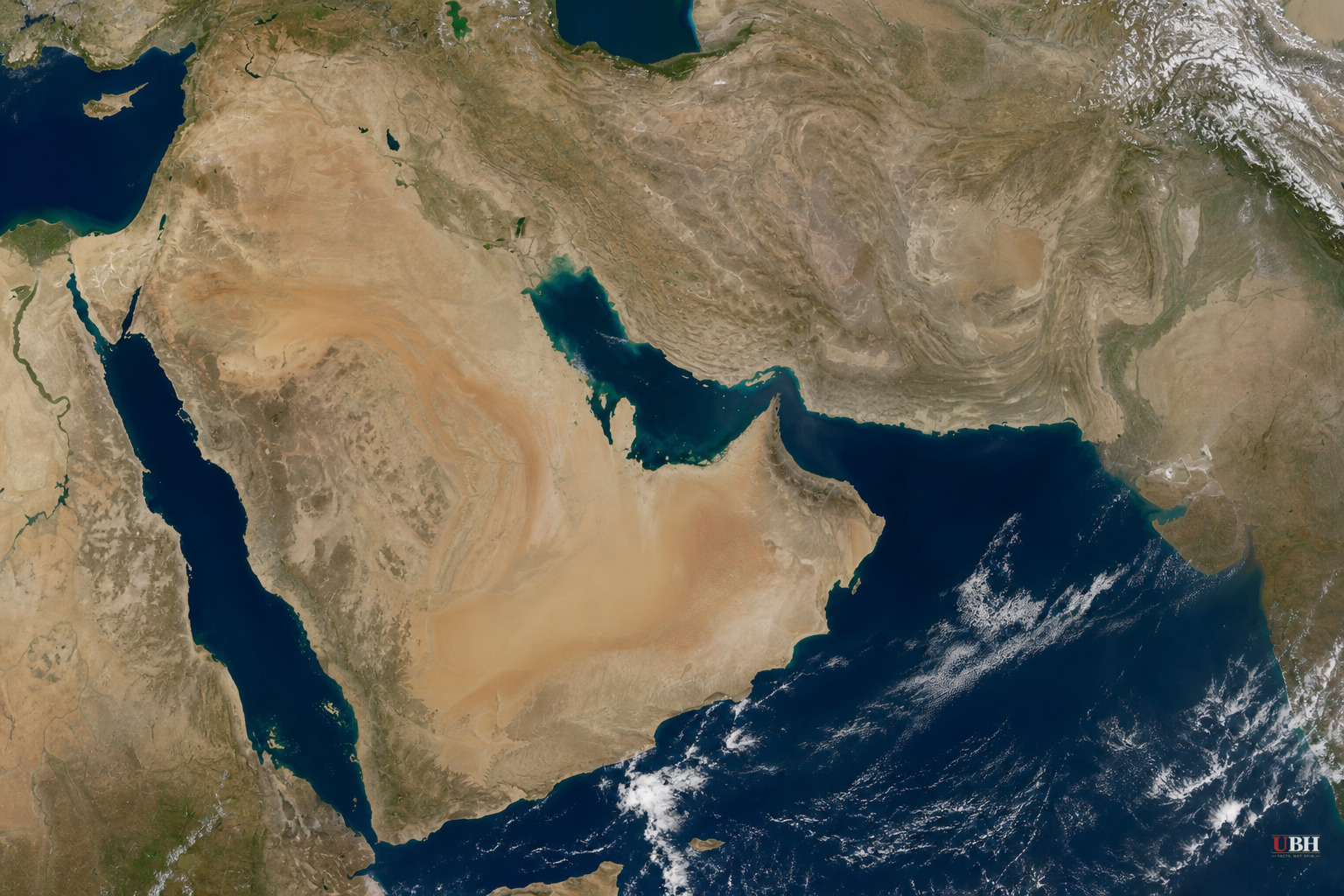
The Pentagon is evaluating whether to shrink the U.S. military presence in the Persian Gulf after months of war with Iran, according to the Washington Post, which cited eight officials and others familiar with the matter. The review comes as Iran's military chief warns Gulf states not to help U.S. forces, and as Tehran threatens to strike American and Israeli energy infrastructure if attacked again.
The numbers behind this war are significant. U.S. Central Command has carried out more than 13,000 strikes against Iran since the operation began early this year, according to Anadolu Agency. Nineteen American soldiers have been killed and hundreds wounded, most in strikes on Gulf bases, according to the Jerusalem Post. CENTCOM normally keeps about 40,000 troops spread across nearly 20 sites from Jordan to Oman.
Iran hit those bases hard. Major U.S. facilities in the Gulf have suffered months of damage from Iranian ballistic missiles and drones, according to the Washington Post's reporting as relayed by both Anadolu Agency and Iran International. The damage is now driving the internal Pentagon debate: does the U.S. rebuild what Iran destroyed, or does it use this as a chance to restructure entirely?
A Pentagon Split, Not Yet a Formal Order
A senior Pentagon official told the Washington Post that Defense Secretary Pete Hegseth has not ordered a formal review. The official described the work as "prudent planning" to inform decisions on rebuilding damaged bases, not a policy shift that's already been decided. This is analysis and options-gathering, not an announced withdrawal.
Still, the debate is real and reportedly contentious. The Washington Post, cited by the Jerusalem Post, says the issue is expected to cause a rift between hawks in the administration who favor continued intervention and a more dovish, non-interventionist camp. CENTCOM chief Adm. Brad Cooper has been part of the discussions and reportedly supports relocating some Gulf troops westward. One person familiar with the matter told the Post that many bases were evacuated back in February, before the U.S. and Israel launched strikes on Iran, because they were considered vulnerable. "Iran thinks we are in the traditional places," that person said.
This is a candid admission: the U.S. already moved assets before the shooting started because officials expected exactly the kind of missile and drone barrages that followed. Whether that reflects smart risk management or an acknowledgment that America's fixed Gulf bases are sitting ducks against modern Iranian missile stockpiles is a fair question the Pentagon debate is now trying to answer.
Iraq Withdrawal Moving on a Separate, Confirmed Track
While the Gulf debate is still internal and unresolved, the U.S. exit from Iraq is locked in. Iraqi Prime Minister Ali Falih al-Zaidi and CENTCOM's Adm. Cooper met in Baghdad on Aug. 12 and reaffirmed Sept. 30 as the fixed deadline for completing the coalition withdrawal, according to the Epoch Times. Al-Zaidi called it a "full and final" agreement, saying October 1 will mark Iraq having no foreign military presence on its territory for the first time since the 2003 invasion.
Notably, the Iraq pullout is being paired with expanded American business ties, not a full American exit from the country's affairs. Al-Zaidi's office says U.S. companies including HKN Energy, Halliburton, General Electric, and Chevron will remain active on Iraqi energy projects. President Trump, meeting al-Zaidi at the White House on July 14, called it "tremendous oil partnerships all of a sudden being formed." Troops out, contracts in is the shape of that deal.
Iran's Counter-Threats Are Escalating, Not Cooling
Even as the U.S. debates scaling back, Iran is turning up the rhetoric. Iran's military chief, Ali Abdollahi, warned Gulf states against aiding U.S. forces, according to reporting relayed by Crypto Briefing. A senior Iranian security official told the state-affiliated Tasnim News Agency that reports of possible U.S. and Israeli strikes on Iranian infrastructure amount to "a kind of madness," and that Tehran has "extensive response plans" targeting Israeli infrastructure and U.S. energy assets across the region, according to Fox News.
Separately, a senior adviser to Iran's supreme leader, Mohsen Rezaei, told Iranian state broadcaster IRIB, as reported by Iran International and relayed by Fox News, that the U.S. has "no role" in the Strait of Hormuz and questioned Washington's presence there. Iran still considers itself in a state of conflict with the United States, Rezaei said.
The White House isn't backing down either. A White House statement to Fox News Digital said President Trump "is not going to stand by and allow this terrorist behavior to occur" and that "Iran will continue to pay" until it negotiates on Trump's terms. Secretary of State Marco Rubio, in an interview set to air on "My View with Lara Trump," said Iran has "never faced a president like President Trump," arguing the regime got used to decades of consequence-free negotiating with prior administrations of both parties.
An Unresolved Tension
Washington's own actions carry contradictions worth watching. CENTCOM is simultaneously running a naval blockade, according to Fox News, having redirected 30 commercial vessels and disabled two others, while also studying whether to shrink its Gulf footprint. Add to that an unresolved incident: the UAE warned residents of incoming ballistic missiles this week that never struck, and Iran's Foreign Ministry denied launching them, instead suggesting a "false-flag" attack by the U.S. or Israel, according to the Jerusalem Post. No independent confirmation of who fired what has been presented in that specific case.
The open question now is whether the Pentagon's Gulf review turns into an actual drawdown before Iran's threatened retaliation against energy infrastructure materializes, or whether events on the ground overtake the planning process entirely.
Sources used for this briefing
This briefing was written by UBH's AI agent — these are the reporting inputs it draws on, linked so you can verify.


