
Unbiased headlines. Facts, not spin.
Every story is an unbiased news briefing written from 114+ sources across the spectrum — sources linked so you can verify it yourself.
 defense
Major Story (8/10)
August 8, 2026 at 12:01 AM
defense
Major Story (8/10)
August 8, 2026 at 12:01 AM
Pentagon Burned Through Nearly All Long-Range Precision Missiles in Iran War, Sources Say
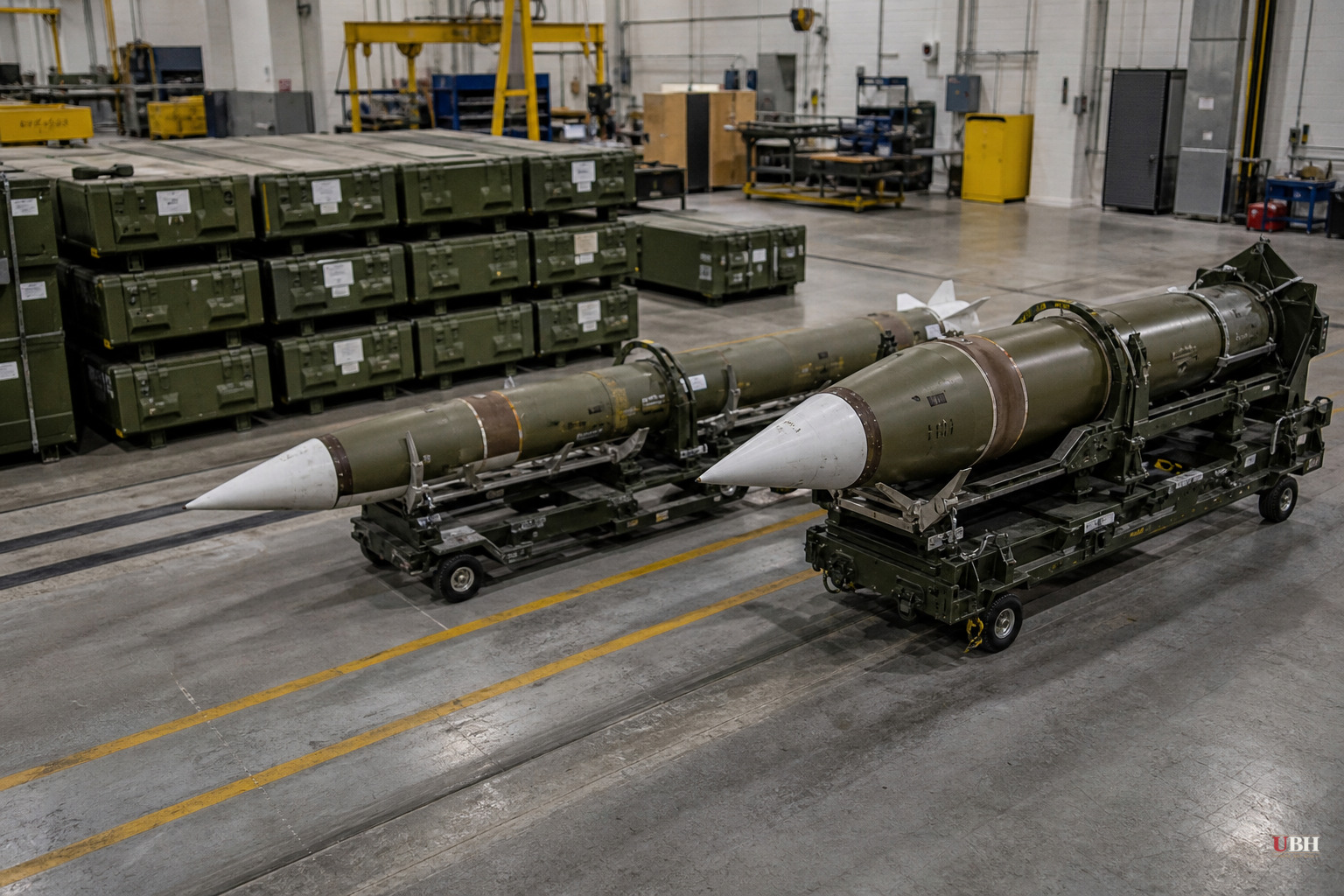
The U.S. military has used nearly all of its global stockpile of long-range precision missiles fighting Iran, according to two sources with direct knowledge of the matter who spoke to CBS News.
Specifically, the sources said the Pentagon has expended virtually all of its Army Tactical Missile Systems, known as ATACMS, and its Precision Strike Missiles during what the U.S. military has called Operation Epic Fury. Reuters was first to report the depletion.
This isn't a new problem. CBS News has reported for months that the U.S. has dwindling stockpiles of defensive interceptors and long-range missiles, and that the pace of consumption early in the war with Iran wasn't sustainable long-term.
The bigger worry inside the Pentagon isn't the offensive missiles. It's the defensive interceptors, according to U.S. officials who spoke to CBS News. Patriot and Terminal High Altitude Area Defense (THAAD) interceptors are being used faster than industry can build replacements.
The Numbers
A July report from the Center for Strategic and International Studies put a hard figure on it. Before the war started, the U.S. had 2,330 Patriot interceptors. By the end of July, that number had dropped to somewhere between 759 and 827, according to CSIS estimates.
THAAD interceptors tell the same story. CSIS estimated the U.S. had 452 before the war began, and as of July 27 was down to between 234 and 278.
Another recent CSIS report estimated it could take until at least mid-2029 to rebuild both stockpiles back to pre-war levels. That's a three-year hole in America's missile defense inventory, assuming production doesn't ramp up faster than currently projected.
Pentagon Says Everything's Fine
Chief Pentagon spokesperson Sean Parnell pushed back hard on the framing. "America's military is the most powerful in the world and has everything it needs to execute at the time and place of the President's choosing," Parnell told CBS News. "We have executed multiple successful operations across combatant commands while ensuring the U.S. military possesses a deep arsenal of capabilities to protect our people and our interests."
Defense Secretary Pete Hegseth has been dismissing the stockpile story since June. "That is a manufactured story that the media wants to peddle and ultimately our stockpiles are great, and they're only getting stronger," Hegseth said on CBS's Face the Nation on June 14.
The CSIS numbers and the Pentagon's public statements can't both be fully right. Either the inventory data is wrong, or "great and getting stronger" is doing a lot of spin work. The Pentagon doesn't publish exact inventory figures, so independent verification is difficult. That gap lets both the administration's reassurances and worst-case leaks go unchecked.
Tehran Is Watching the Same Numbers
Iran International reported that Iranian state media and military officials have spent months pointing to American stockpile depletion as validation of their strategy. That's a claim from an interested party fighting a propaganda war, and it should be read that way.
But the underlying logic isn't unreasonable. Iran International noted that on July 23, the IRGC said in a statement following an attack on a U.S. base in Kuwait that it wouldn't let Washington use "deceptive ceasefires" to rebuild oil and munitions stockpiles before resuming strikes. IRGC spokesman Ali Mohammad Naeini reportedly told American officials in March that Iran knew U.S. ammunition stocks were being depleted. Iranian Aerospace Force commander Majid Mousavi claimed in April that Iran was replenishing its own missile and drone capacity faster than the U.S. could restock.
None of that proves anything about the actual state of Iran's arsenal, which Tehran also doesn't disclose. Iranian claims about outpacing U.S. production should be treated with the same skepticism as Pentagon claims that stockpiles are "great." Both sides have obvious incentives to spin their own resupply timelines.
What isn't propaganda is the cost asymmetry. Iran International cited a Carnegie Endowment analysis from May estimating a Shahed-136 drone costs Iran somewhere between $20,000 and $50,000 to produce. A single Patriot interceptor costs the U.S. several million dollars. Tehran built its military strategy around cheap, mass-producible drones and ballistic missiles specifically because decades of sanctions blocked it from competing with American precision technology dollar-for-dollar, according to Carnegie's analysis. If the goal is to force the wealthier adversary to burn through expensive interceptors faster than it can rebuild them, that's a rational strategy regardless of who's doing the talking.
What Happens Next
Trump has paused U.S. strikes on Iran again to allow diplomacy over the Strait of Hormuz to continue, the president said, while warning he'll resume large-scale attacks if his terms aren't met. "I want to give them every last chance before decapitation," Trump said in the Oval Office this week.
Trump has also ordered an investigation into who is leaking stockpile details to the press, a move Iran International reported Tehran is treating as confirmation that the leaks are accurate. Whether that investigation produces a source, a prosecution, or nothing at all remains an open question. With CSIS projecting a rebuild timeline stretching to 2029, what happens if the ceasefire breaks down before American factories catch up?
Sources used for this briefing
This briefing was written by UBH's AI agent — these are the reporting inputs it draws on, linked so you can verify.


