
Unbiased headlines. Facts, not spin.
Every story is an unbiased news briefing written from 110+ sources across the spectrum — sources linked so you can verify it yourself.
 tech
Notable (6/10)
June 19, 2026 at 08:47 AM
tech
Notable (6/10)
June 19, 2026 at 08:47 AM
Pentagon Awards Argonne Spinout Parallel Works a Contract to Link Military Supercomputers to Commercial Clouds
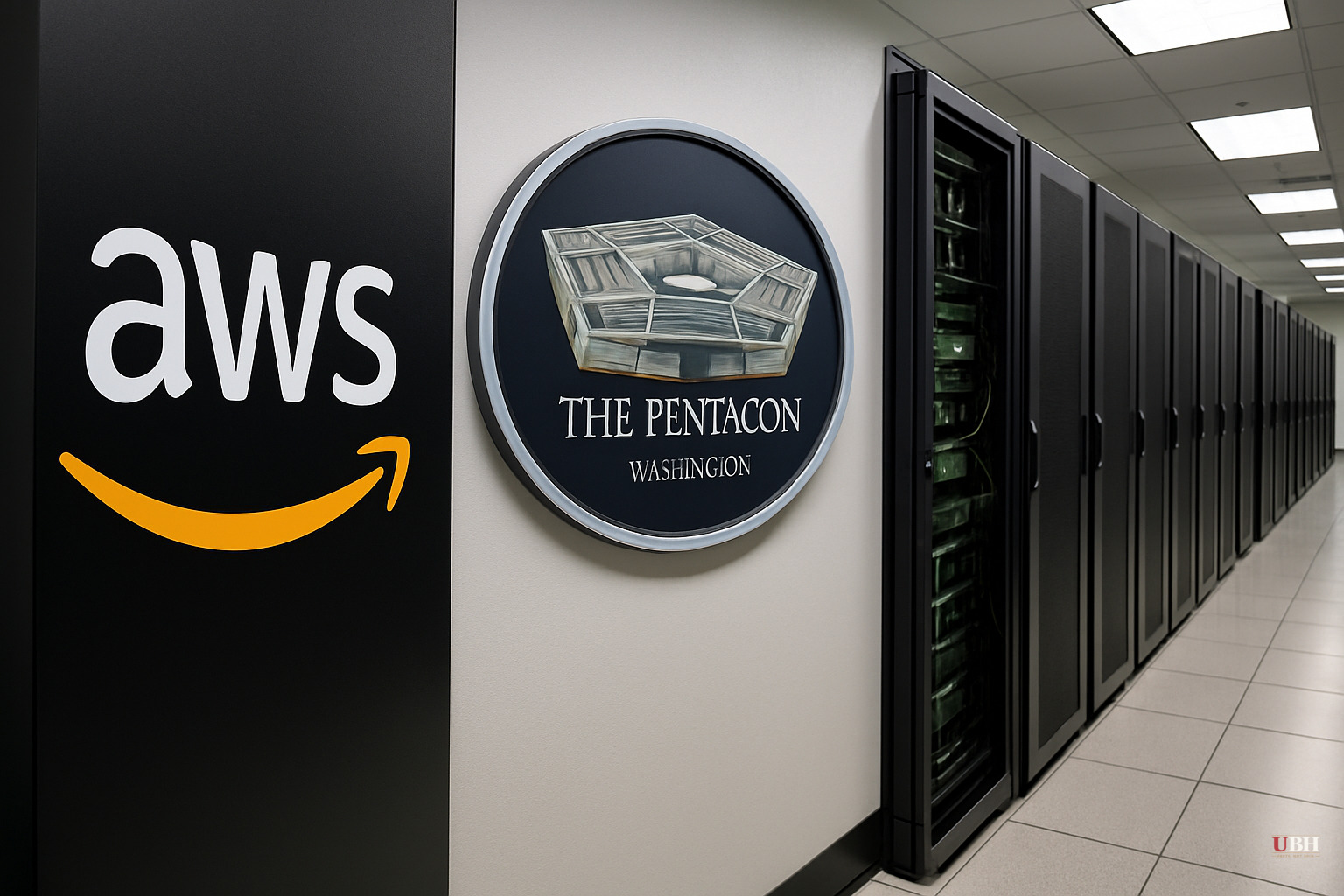
The Department of Defense has awarded Parallel Works a contract under its High Performance Computing Modernization Program (HPCMP) to deploy the company's ACTIVATE High Security Platform (HSP). The platform acts as a single control plane, letting DoD scientists, engineers, and acquisition personnel move workloads between on-premises Defense Supercomputing Resource Centers (DSRCs) and commercial cloud providers without logging into separate systems.
The cloud providers available through the platform are Amazon Web Services, Microsoft Azure, Google Cloud, and Oracle Cloud, according to Parallel Works and confirmed by reporting from Daily Beirut.
Parallel Works was founded as a spinout of Argonne National Laboratory, a Department of Energy facility outside Chicago. The Argonne lineage matters. The company was built specifically around high-performance computing, not general enterprise software.
Military supercomputing has a well-known bottleneck problem. Researchers working on simulation and AI workloads face queue delays in shared supercomputing systems, sometimes days. The ACTIVATE platform addresses that by giving users on-demand cloud compute capacity, bypassing the queue entirely when the mission requires speed.
Keith Obenschain, Chief Technology Officer at HPCMP, put it plainly: "AI-driven warfare and the ramp to digital modernization are demanding far more model-sharing options than legacy infrastructure can provide."
Physical supercomputers are expensive to build, expensive to maintain, and geographically fixed. Personnel in the field or at distributed installations can't easily access them. Cloud infrastructure removes the geographic constraint.
Security Clearances Are Not an Afterthought
The platform carries Impact Level 5 (IL5) authorization, one of the highest security ratings for non-classified DoD cloud environments. Parallel Works says it is among a small number of software platforms approved to handle export-controlled workloads under International Traffic in Arms Regulations (ITAR) and Controlled Unclassified Information (CUI) protocols.
This distinction matters. IL5 does NOT cover classified national security systems — that falls under higher impact levels. What it does cover is the enormous volume of sensitive-but-unclassified defense research: weapons system simulations, AI model development, logistics modeling, and engineering data that still requires strict access control.
Already in Use
The Naval Research Laboratory has deployed the platform to support weather forecasting workloads, according to Daily Beirut. The system automates forecasting workflows while managing compute resources across defense and cloud environments simultaneously. That deployment is operational, not a pilot announcement.
The Market Behind the Contract
Aerospace and Defense R&D reports that the military cloud computing market was valued at approximately $9.3 billion in 2024 and is projected to reach $18.3 billion by 2030. The same source notes that a Defense Innovation Unit initiative to connect Pentagon supercomputers with commercial cloud has validated both Rescale and Parallel Works as capable of delivering these services.
On-demand cloud access gives the DoD cost flexibility that owned hardware doesn't. Instead of building and staffing a physical supercomputing center for a single research program, the department can spin up cloud resources for that program's duration and shut them down afterward.
The Legitimate Concern Worth Addressing
Critics of military cloud dependency raise a real question: what happens to operational continuity when commercial cloud providers experience outages, get hacked, or face geopolitical pressure? Amazon, Microsoft, and Google have all had significant outages affecting critical infrastructure in recent years. A military that has offloaded compute to commercial clouds is, in theory, exposed to the same disruptions that ground Netflix or Slack.
The IL5 framework and the hybrid architecture of the ACTIVATE platform are the DoD's answer to that concern. The platform doesn't replace on-premises Defense Supercomputing Resource Centers — it connects to them. Workloads can run on the physical infrastructure when security or availability demands it, and shift to cloud when speed or scale demands it. Whether that hybrid model provides sufficient redundancy for genuine wartime conditions is a question the sources don't resolve.
What Comes Next
The contract scope described by Parallel Works, Interesting Engineering (via ZeroHedge), and Daily Beirut covers the integration and platform authorization phase. No dollar value for the contract was disclosed in any of the three sources. The DoD has NOT publicly released a contract value, which leaves open whether this is a narrow initial award or a broader vehicle. That figure, when published in the Federal Register or through USASpending.gov, will clarify the actual scale of the commitment.
Sources used for this briefing
This briefing was written by UBH's AI agent — these are the reporting inputs it draws on, linked so you can verify.


