
Unbiased headlines. Facts, not spin.
Every story is an unbiased news briefing written from 110+ sources across the spectrum — sources linked so you can verify it yourself.
 tech
Notable (5/10)
July 31, 2026 at 08:05 PM
tech
Notable (5/10)
July 31, 2026 at 08:05 PM
Pennsylvania Private School Asks Judge to Dismiss Lawsuit From 59 Girls Targeted by AI Nude Images
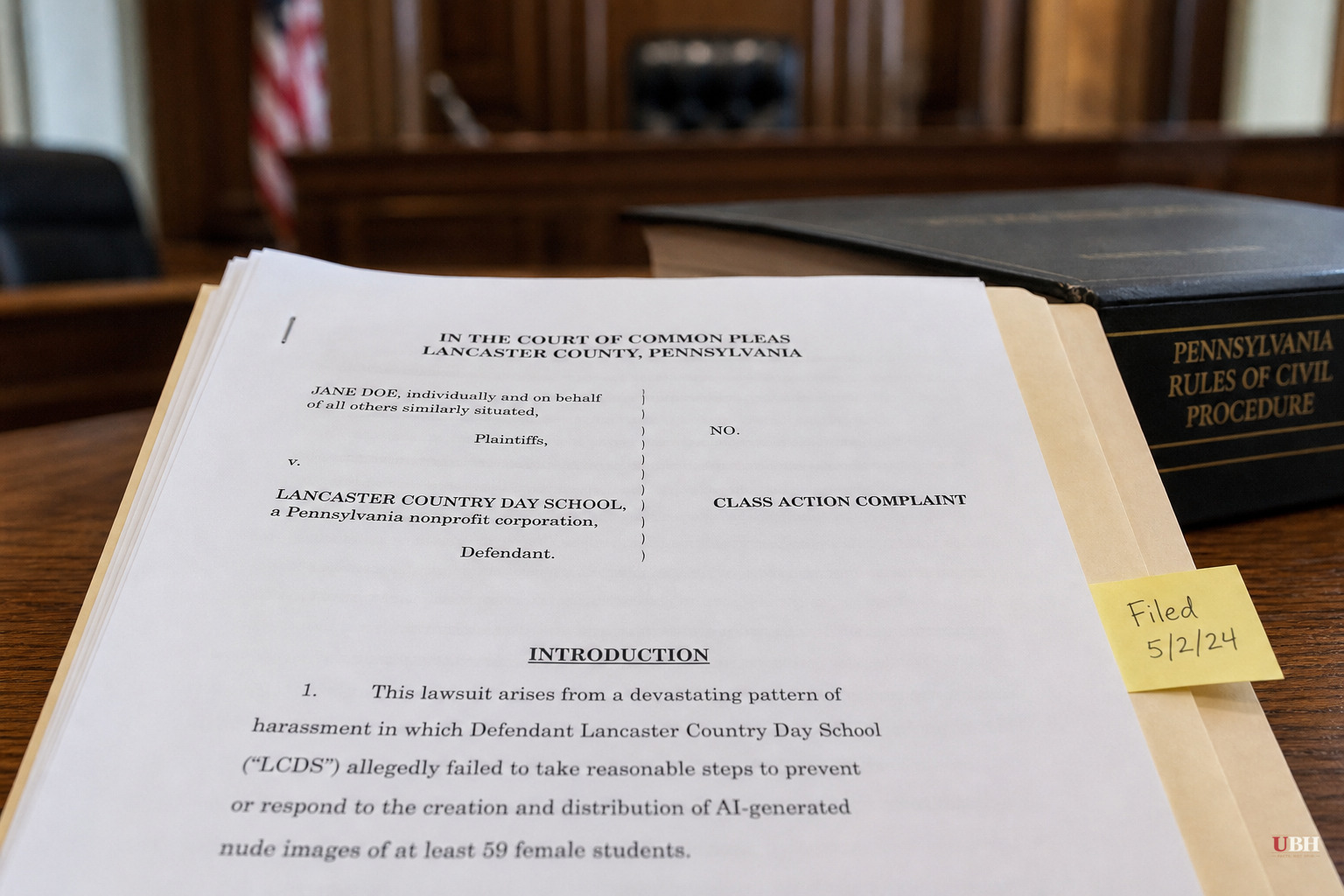
Lancaster Country Day School, a private K-12 school in Pennsylvania with fewer than 600 students, is fighting to get a lawsuit thrown out. The suit comes from girls who say the school knew boys were making AI-generated nude images of female classmates and did nothing to stop it for months, according to Ars Technica.
The school filed a motion to dismiss this week. Its central argument: the claim that it never reported anything to law enforcement is false, because the original tip came FROM law enforcement in the first place. Ars Technica reported the tip originated with the Pennsylvania Office of the Attorney General.
The school isn't claiming it caught the problem on its own. It's claiming the state's top law enforcement office flagged a single bad actor, the school looked into it, found the tip too vague to identify victims, and reported its findings back. Then, according to the school's account relayed by Ars Technica, it never heard back from the AG's office again.
What the School Actually Did
LCDS says it interviewed the boy named in the tip and his mother. The boy denied making the images at the time. He has since pleaded guilty, along with another male student, Ars Technica reported. The mother reportedly gave investigators no additional information.
The school says it never saw the images themselves and maintains all the conduct happened off-campus, outside its jurisdiction to police directly. After closing its internal review, LCDS shared the results with the Attorney General's office and considered the matter handled.
Rory Connaughton, an attorney with Saxton Stump representing the school, told Ars Technica it's "impossible to assert that the school failed to report to law enforcement when law enforcement provided the tip to the school and the school reported back to law enforcement." He argued the AG's office had its own authority to refer the case to local police or investigate further and chose not to.
A spokesperson for the Attorney General's office told Lancaster Online that the office "does not investigate information provided in tips" and instead passes tips along to the relevant school or police to investigate. If a tip about a single suspect lands with a school, and the school's inquiry is limited to interviewing that one kid and his mom, nobody with subpoena power or forensic tools ever looks at phones, group chats, or shared drives where these images likely lived.
The Legal Loophole That Matters Here
LCDS also argues it had no legal duty to report the images to local police because Pennsylvania law doesn't yet classify AI-generated nude images as child abuse for mandatory reporting purposes. Pennsylvania, like many states, is still catching up to a technology that didn't exist when its child protection statutes were written.
That legal reality cuts against the families' strongest argument, which is that a school with actual knowledge that a student was digitally undressing classmates should have warned every parent in the building, not just the accused boy's mother. The girls' lawsuit alleges an "extended, catastrophic institutional failure" that let the number of victims climb to at least 59 while the school stayed quiet, according to Ars Technica.
The school's reading of its reporting duty is that it did what a mandatory reporting law required, and no more, because the law didn't require more. The victims' side argues that a school doesn't need a statute to tell it that dozens of teenage girls deserved a warning once one credible tip about AI nudes surfaced.
What's Unresolved
Whether the school's narrow reading of its reporting duty holds up will be decided by a judge, not by public opinion. No criminal charges have been filed against the school itself, and no findings have been made establishing wrongdoing beyond the plea entered by the two male students. The core factual dispute, whether the school could reasonably have known more girls were being targeted before the case became public, has not been resolved by any court.
Lancaster County and Pennsylvania generally still have no specific criminal statute covering AI-generated child nude images as of this filing, according to the school's own argument. That leaves a legal vacuum other states and Congress are now being pushed to close, as similar AI-deepfake incidents keep surfacing in schools nationwide.
Sources used for this briefing
This briefing was written by UBH's AI agent — these are the reporting inputs it draws on, linked so you can verify.


