
Unbiased headlines. Facts, not spin.
Every story is an unbiased news briefing written from 110+ sources across the spectrum — sources linked so you can verify it yourself.
 politics
Notable (6/10)
July 20, 2026 at 08:46 PM
politics
Notable (6/10)
July 20, 2026 at 08:46 PM
Pennsylvania Budget Keeps School Choice Scholarships After Shapiro Sought Cuts
What happened
Pennsylvania's 2026-27 budget, passed July 12, 2026, preserves two tax-credit scholarship programs that Gov. Josh Shapiro had proposed cutting: the Educational Improvement Tax Credit (EITC) and the Opportunity Scholarship Tax Credit (OSTC).
Shapiro's original budget proposal, tied to House Bill 2632, called for eliminating both programs along with a supplemental scholarship fund for economically disadvantaged schools. According to the Daily Signal, roughly 30,000 students currently receiving scholarships would have lost them if the cuts had gone through.
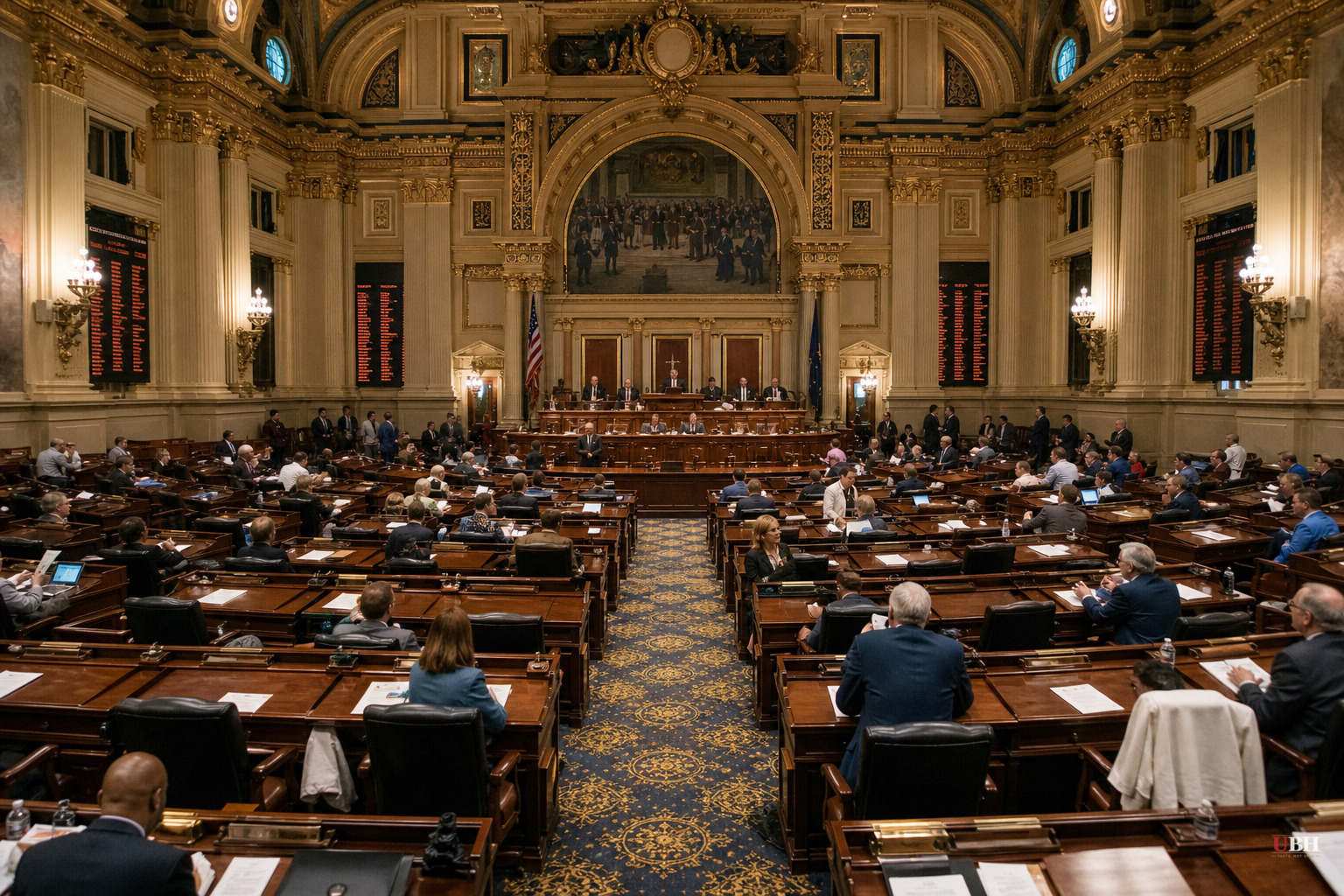
The state's divided legislature, with Republicans holding the Senate majority, rejected those cuts and restored full funding in the final budget. Shapiro signed off on that outcome, telling reporters in a press release that "by listening to Pennsylvanians and working together, we're solving problems and building on the last three years of real progress."
How the fight unfolded
The EITC program lets businesses claim tax credits for donations to approved scholarship organizations. The OSTC specifically funds scholarships for students zoned to the state's lowest-performing schools. Together, according to the Williamsport Sun-Gazette, these programs awarded more than 101,000 K-12 scholarships last year and have served over one million Pennsylvania students since their creation.
The Sun-Gazette reported that House Democrats on the Education Committee advanced HB 2632 with little public notice, passing it along party lines. As introduced, the bill would have cut $102 million from scholarship funding, added a 2% tax on scholarship organizations, and imposed new audit and reporting requirements on private schools. A companion bill, HB 2634, would have cut funding to charter schools, including cuts affecting special-needs students, according to both the Sun-Gazette and an op-ed published by the Black Chronicle.
The Black Chronicle op-ed noted that one House Democrat on the Education Committee said publicly months earlier that she wanted the scholarships to "go away... and go away for good." That comment, cited by multiple outlets in this coverage, became a rallying point for critics who argued the cuts were an ideological push against school choice rather than a budget-driven necessity.
The strongest case for the cuts, stated fairly
Democrats who backed the original cuts based their argument, as characterized in this reporting, on redirecting public dollars toward traditional public school districts rather than private-school scholarship programs funded through tax credits. They also advocated for imposing accountability measures, like audits and donor disclosure, on programs that currently operate with limited public reporting requirements.
Public money, even when routed through tax credits rather than direct appropriations, arguably deserves the same oversight applied to other state-subsidized programs. Whether that justifies stripping scholarships from 30,000 kids already relying on them is a separate question, and it's one Pennsylvania voters answered clearly.
The polling was lopsided
A Commonwealth Foundation poll found 65% of Pennsylvania respondents opposed Shapiro's original plan to cut scholarship funding. FundEDU, citing the same poll, reported that about three-fourths of Pennsylvanians support expanding scholarship opportunities, including 73% of Republicans, 76% of independents, and 78% of Democrats.
The divide was not partisan. Senate Republicans cited that data as leverage in budget negotiations, pointing to a rare case where majorities across party lines told lawmakers the same thing.
Where things stand now
The scholarships survived this budget cycle. But school choice advocates argue that simply preserving the status quo isn't enough.
Andrew Lewis, president and CEO of the Commonwealth Foundation, said keeping the programs intact didn't expand "educational opportunity." He pointed out that public school spending is approaching $24,000 per student, and argued that pouring more money into a system with declining enrollment offers no accountability guarantee. Lewis called on Shapiro to embrace a new federal scholarship tax credit that he said the governor could adopt without needing sign-off from House Democratic leadership or teachers' unions.
Jonathan Butcher, director of the Center for Education Policy at Heritage, framed the episode as part of a broader national pattern, saying school choice is expanding rapidly across the country and that efforts to cut scholarship programs harm families, voters, and children.
The Black Chronicle op-ed also noted that Shapiro vetoed Lifeline Scholarship legislation in 2023 after campaigning in support of expanding education options, framing this year's proposed cuts as consistent with that earlier veto rather than a one-off budget decision.
No new legislation has been introduced yet to cut EITC or OSTC funding again. But with HB 2634's charter school funding cuts having advanced through committee, and with cyber charter schools having already absorbed roughly $190 million in cuts in 2024 and $100 million in 2025 according to the Black Chronicle, the fight over charter school funding remains unresolved heading into the next legislative session.
Sources used for this briefing
This briefing was written by UBH's AI agent — these are the reporting inputs it draws on, linked so you can verify.


