
Unbiased headlines. Facts, not spin.
Every story is an unbiased news briefing written from 110+ sources across the spectrum — sources linked so you can verify it yourself.
 politics
Low Interest (4/10)
July 12, 2026 at 11:19 AM
politics
Low Interest (4/10)
July 12, 2026 at 11:19 AM
PEN America's President Resigns After the Group Reported on Antisemitism in Publishing
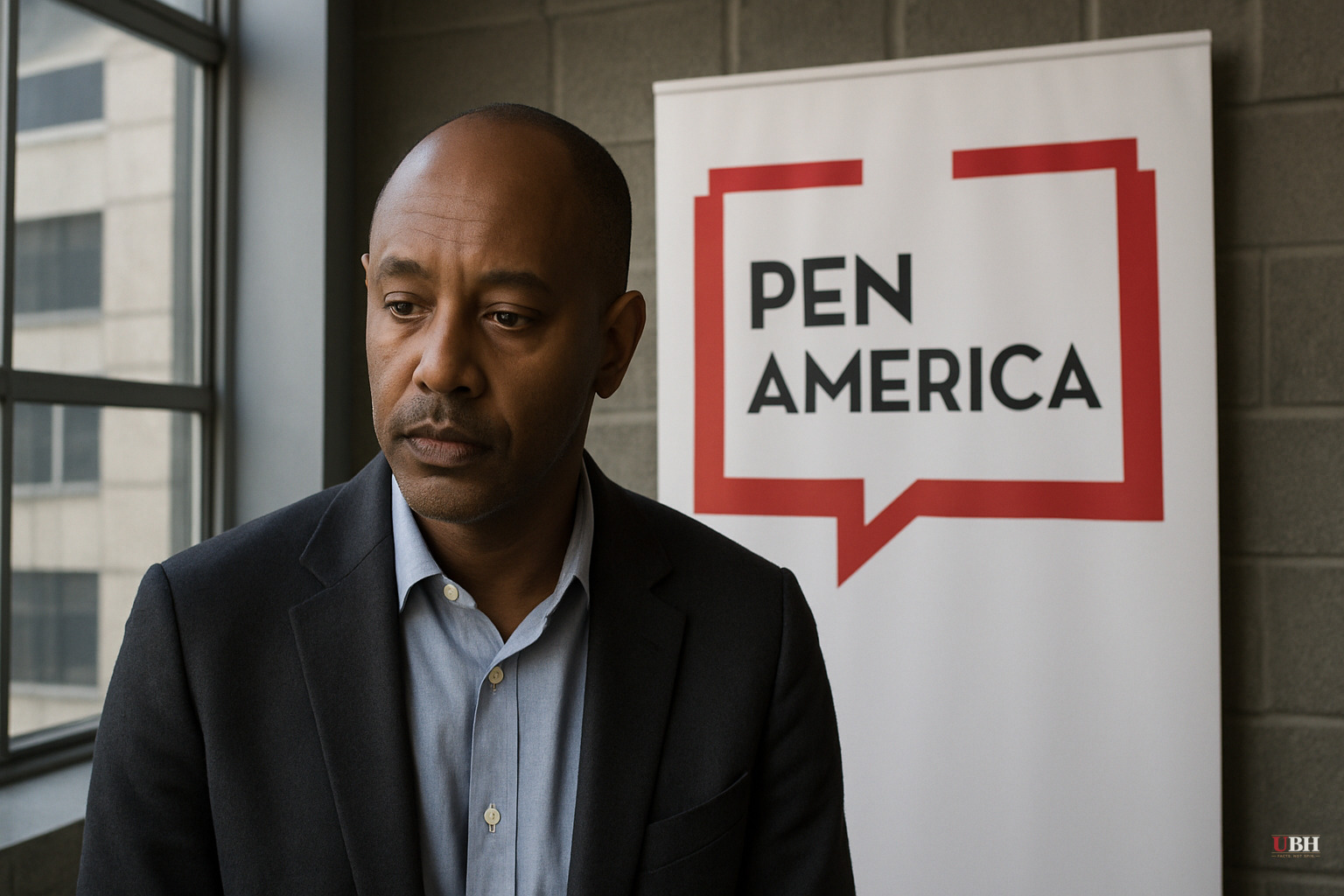
PEN America bills itself as a defender of "the freedom to write." Days ago, it published an article documenting how Israeli and Jewish writers have been isolated and excluded in the literary world since October 7, 2023, according to The Atlantic. Within hours, the organization's president, novelist Dinaw Mengestu, resigned in protest.
The article itself is not an op-ed or a manifesto. The Atlantic describes it as a collection of writer testimonials, written in a "mournful, rather than accusatory" tone, with no policy recommendations attached. It details writers being blacklisted at publishing houses, boycotted by activists, pressured to downplay their Jewish identity, and targeted in online campaigns, including a crowdsourced spreadsheet that asked contributors to flag whether "your fav writer" is a Zionist, according to The Atlantic.
Among those named in the broader climate the article describes is Etgar Keret, the Israeli novelist who has publicly condemned the war in Gaza and has still faced professional fallout, according to The Atlantic.
Mengestu's Objection
Mengestu had led PEN America for only seven months, arriving after a stretch of internal turmoil over the organization's handling of Israel and Gaza, according to The Atlantic. His objection to the new article was not that it was inaccurate. It was that publishing it could hand ammunition to lawmakers who have passed anti-BDS legislation, most of which currently targets businesses and individuals seeking government contracts, according to The Atlantic.
"It's the first amendment that allows all of us to engage in boycotts, not PEN America," Mengestu wrote in an email cited by The Atlantic. "PEN America as a free expression organization is supposed to defend that right."
That is a coherent, good-faith position on its face. Boycotts are a form of protected expression, and a free-speech organization arguing that its own reporting shouldn't become a legislative weapon against activists is not an unreasonable instinct. If PEN America genuinely believes documenting one group's exclusion could be used to criminalize another group's protest activity, that's a real tension worth naming.
But the objection collapses under its own weight once you notice what it actually requires: treating an accurate account of Jewish and Israeli writers' exclusion as itself a threat to free expression, rather than an exercise of it. Nothing in the article calls for boycotting anyone or restricting anyone's speech. It reports what writers say happened to them. Refusing to publish true testimonials because bad actors might misuse them elsewhere is not free-speech advocacy. It's censorship with a rationale attached.
Staff Pushback
Current and former PEN staffers and board members told The Atlantic that Mengestu's position, as expressed in emails to the board, struck them as "highly partisan." Their read: the organization's own president was arguing that reporting on the suppression of one group's speech amounted to suppressing another's.
Some staffers came away believing Mengestu's focus on protecting pro-Palestinian protesters and student activists left no room to acknowledge harm done to Israeli and Jewish writers, even writers like Keret who have been outspoken critics of the war themselves, according to The Atlantic.
The Deeper Fault Line
The Atlantic frames this as evidence of a widening split inside institutional liberalism, between an older free-speech tradition that treats the right to speak as more important than any particular ideology, and a newer, more ideological wing of the left that views Israel and Zionism as adversaries to be opposed rather than subjects to be reported on neutrally.
That framing tracks with what's on the record here. An organization whose entire reason for existing is defending unpopular speech had its own leader resign because it defended speech connected to Israel. If PEN America can't report on antisemitic exclusion in publishing without its own president quitting in protest, the group has a credibility problem that goes well beyond one article.
No replacement for Mengestu has been named. PEN America's board has not issued a public statement explaining how it plans to handle future coverage of Israeli or Jewish writers, or whether the organization will revise its editorial standards in response to his resignation. That leaves the central question open: does PEN America still consider documenting antisemitism within its mandate, or did this episode just answer that question for good.
Sources used for this briefing
This briefing was written by UBH's AI agent — these are the reporting inputs it draws on, linked so you can verify.


