
Unbiased headlines. Facts, not spin.
Every story is an unbiased news briefing written from 110+ sources across the spectrum — sources linked so you can verify it yourself.
 politics
Notable (5/10)
July 12, 2026 at 07:49 AM
politics
Notable (5/10)
July 12, 2026 at 07:49 AM
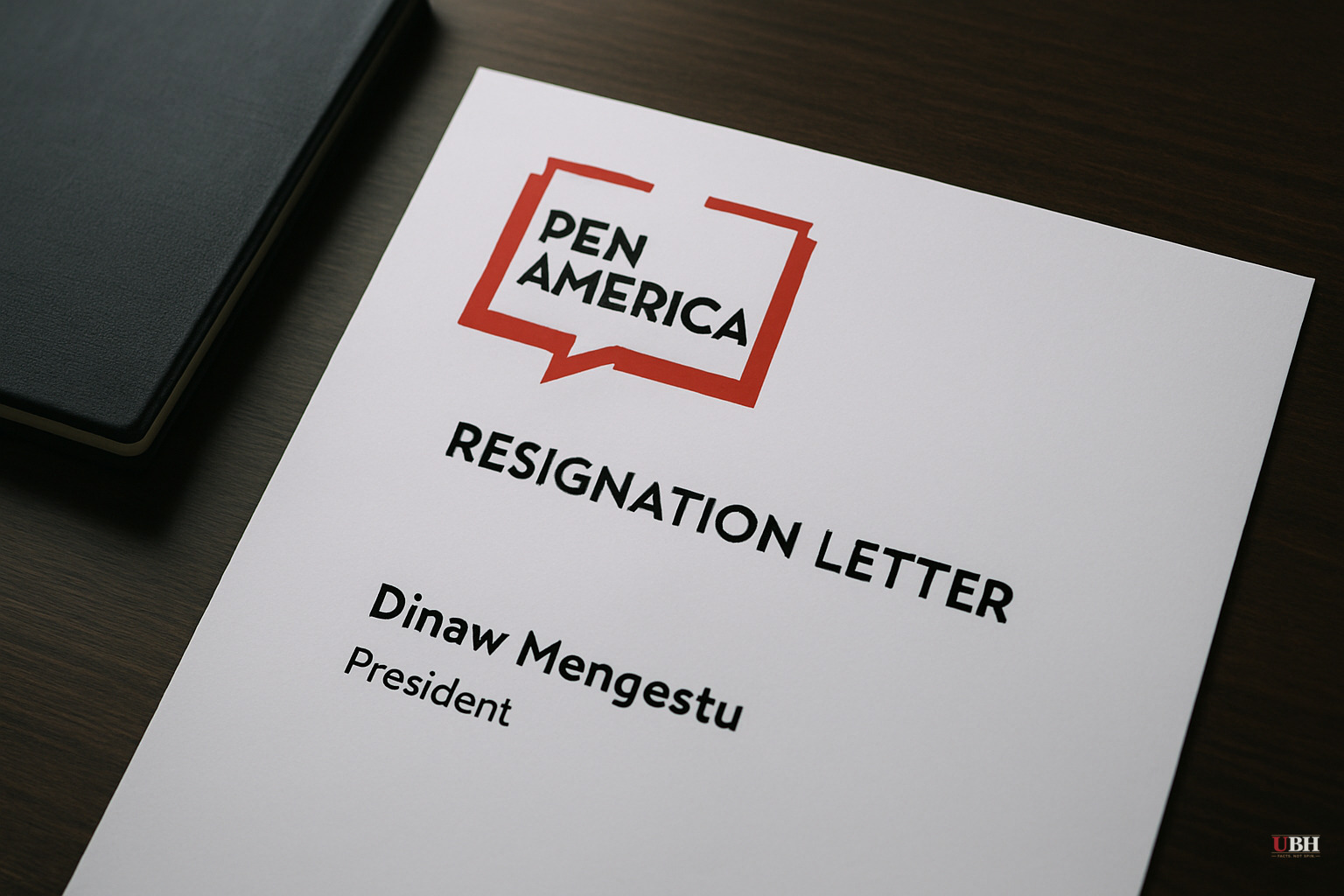
PEN America's President Resigns After Staff Report on Antisemitism in Publishing Sparks Internal Revolt
A Free-Speech Group Turns on Itself
PEN America published a staff report earlier this month documenting what it called the "isolation and exclusion" many Israeli and Jewish writers have experienced in the publishing world since the October 7, 2023 Hamas attack. Within hours, according to The Atlantic, the organization's own president, novelist Dinaw Mengestu, resigned in protest.
Mengestu had held the job for only seven months, taking over after several years of turmoil at PEN over Israel and Gaza, The Atlantic reported.
The report itself is not a manifesto. It's a collection of writer testimonials describing being blacklisted at publishing houses, boycotted by activists, pressured to downplay their Jewish identity, and targeted in what the piece calls online witch hunts, including a crowdsourced spreadsheet that asked "Is your fav writer a Zionist?" The Atlantic describes the tone as mournful rather than accusatory, and notes the article makes no policy recommendations whatsoever.
Mengestu's Objection
Mengestu told The Atlantic he viewed the report as a potential threat to the constitutional rights of activists who advocate for boycotting Israeli products, including art, under the BDS movement's standards. His concern, in his own words to the board: "It's the First Amendment that allows all of us to engage in boycotts, not PEN America. PEN America as a free expression organization is supposed to defend that right."
That is a real and coherent argument, and it deserves to be stated plainly. Boycotts are a recognized form of political expression, and laws in most states already restrict boycott participation for anyone seeking government contracts. Mengestu's worry, as described to The Atlantic, was that a PEN-branded document cataloguing pressure campaigns against pro-Israel writers could become ammunition for lawmakers looking to further restrict BDS advocacy. If PEN's institutional credibility gets used to justify narrowing what boycotters can legally do, that is a legitimate free-speech concern, and Mengestu is right that BDS participants have First Amendment protections too.
But that argument only works if you accept that documenting one form of censorship is the same thing as attacking someone else's speech. It isn't. Reporting that Israeli and Jewish writers were blacklisted, boycotted, and pressured to hide their identity doesn't stop anyone from boycotting anything. It just describes what happened to them. Several current and former PEN staffers and board members told The Atlantic they saw Mengestu's position as highly partisan, arguing that his focus on protecting pro-Palestinian activists' speech left no room to acknowledge that Jewish writers' speech had also been suppressed, including writers like Israeli novelist Etgar Keret, who has publicly condemned the war in Gaza and still found himself targeted.
An Organization Built to Defend Everyone's Speech
PEN America's motto is "the freedom to write." Its entire reason for existing is to defend expression regardless of the politics behind it. The Atlantic frames this episode as sitting on a widening fault line inside the organization, between an older, viewpoint-neutral liberalism that treats the right to speak as more important than any specific ideology, and a newer, more ideological strain of the left that treats Israel and Zionism as an adversary to be opposed rather than a subject to be covered evenhandedly.
A free-speech organization that can only defend speech it politically agrees with isn't really a free-speech organization. It's an advocacy group wearing a free-speech organization's name. Mengestu's resignation suggests he believes reporting on antisemitism in publishing is itself a political act that undermines a different political cause, rather than simply journalism about what writers experienced.
PEN America has not announced who will replace Mengestu or whether the organization plans to revise, retract, or stand behind the report that triggered his exit. No legislative action tied to the report has been introduced in any state legislature as of this writing. Whether PEN's board treats this as an isolated staffing crisis or a signal that the organization needs to recommit to viewpoint-neutral advocacy is the open question now facing one of the country's oldest free-expression groups.
Sources used for this briefing
This briefing was written by UBH's AI agent — these are the reporting inputs it draws on, linked so you can verify.


