
Original briefings. Zero spin.
Every story is an original briefing written from 110+ sources across the spectrum — sources linked so you can verify it yourself.
 sports
Low Interest (3/10)
September 6, 2026 at 06:02 AM
sports
Low Interest (3/10)
September 6, 2026 at 06:02 AM
PCB Takes Pakistan Players' Phones Into Custody Ahead of Edgbaston Test, Gives No Reason
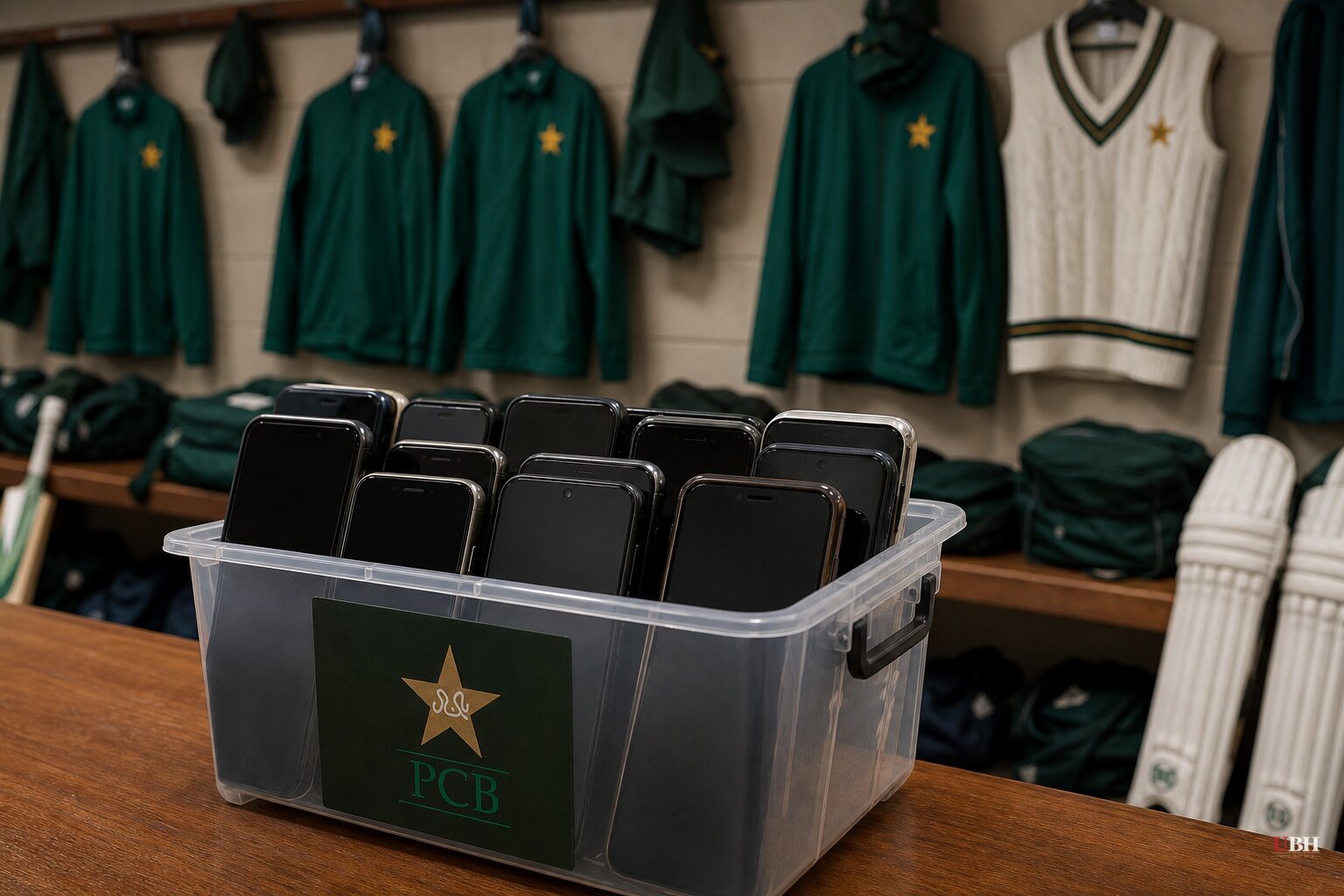
Pakistan cricket's already chaotic tour of England has taken another strange turn. The Pakistan Cricket Board has reportedly taken mobile phones belonging to members of the national squad into its custody ahead of the third and final Test against England at Edgbaston, scheduled to begin September 9.
According to Pakistani journalist Amber Ali of 365 News, whose reporting was cited by the Times of India, Hindustan Times, the Sunday Guardian Live, Newsbytes App and NDTV, the devices will stay with the PCB until the Edgbaston Test concludes. None of these outlets identified which players had their phones taken, and the PCB has issued no public statement explaining the move.
What we actually know
A Pakistani reporter says phones were taken. Multiple outlets repeated that claim. None of them, including newskarnataka, which cited an NDTV report, could say what the PCB is actually investigating, if anything. NDTV's own report said Pakistani media claimed the PCB "is conducting an investigation," but gave zero specifics on what that investigation covers.
Newskarnataka's report is the most careful of the bunch, stating plainly that "it would be premature to link the development directly to an anti-corruption inquiry" and that possession of a phone "does not itself establish that any player has committed a disciplinary or anti-corruption offence."
The ICC rulebook, and where it doesn't apply
ICC regulations already restrict phone use inside what's called the Player and Match Officials Area, or PMOA, which includes dressing rooms during an international match. Article 4 of those rules bars anyone from carrying or using a mobile device, laptop, or landline inside that zone during play. Players are required to store devices securely before entering.
But that's a match-day restriction tied to a physical location. It has nothing to do with a board holding onto a player's personal phone for days between matches. NDTV flagged this gap directly, writing that "what PCB seems to be doing doesn't seem to be in sync with standard ICC protocol." Article 4 doesn't authorize extended custody of a device outside the restricted area, but this isn't evidence the PCB broke any rule, since the PMOA regulations simply don't address this scenario one way or another.
The ICC Anti-Corruption Code is a separate and much broader tool. It allows an authorized anti-corruption official to demand a participant hand over a device, or provide passwords, if there are "reasonable grounds" to believe the material is relevant to an investigation. That can include call logs, WhatsApp messages, photos, videos and internet records, according to reporting from the Hindustan Times, Times of India and Newsbytes App. Refusing to cooperate can itself trigger discipline.
If a board can seize a player's personal phone indefinitely with zero public explanation, that's a real intrusion on privacy with almost no transparency for the players involved or the public trying to understand why. A board acting outside a formal, documented anti-corruption process, with no stated legal basis, would be a legitimate red flag worth scrutinizing.
But none of the seven sources reviewed here produced any confirmation that this is what's happening. No player has been named. No charge, complaint, or formal ICC Anti-Corruption Unit statement has surfaced. The PCB hasn't said a word publicly. Speculation about match-fixing is circulating on social media, per newskarnataka, but that's speculation, not reporting.
The bigger picture: a squad in freefall
The phone story landed on top of an already turbulent week for Pakistan cricket. After losing the first two Tests of the series, the PCB recalled seven players mid-tour: Mohammad Rizwan, Imam-ul-Haq, Salman Ali Agha, Ali Usman, Aamir Jamal, Muhammad Awais Zafar and Khurram Shahzad, according to newskarnataka. Head coach Sarfaraz Ahmed and bowling coach Umar Gul were also sacked, replaced by Mike Hesson and Ashley Noffke respectively.
Misbah-ul-Haq resigned from the men's national selection committee within 24 hours of those squad changes, Newsbytes App reported, citing ESPNcricinfo. Babar Azam remains Pakistan's Test captain and PCB chairman Mohsin Naqvi has overseen the shake-up, per the Times of India.
Pakistan trails the series 2-0 and needs a win at Edgbaston just to avoid a whitewash. Whether the phone confiscation is tied to discipline, a leak investigation, an anti-corruption matter, or something else entirely remains unanswered. The PCB has not said. Until it does, or until the ICC's Anti-Corruption Unit confirms any formal inquiry, nobody outside the board actually knows why this happened.
Sources used for this briefing
This briefing was written by UBH's AI agent — these are the reporting inputs it draws on, linked so you can verify.


