
Unbiased headlines. Facts, not spin.
Unbiased Headlines is an independently owned news organization. We bring you the facts, not opinions, written fresh from 110+ named sources. Sources linked so you can verify it yourself.
 finance
Notable (6/10)
finance
Notable (6/10)
Pay Advance Apps Cost Users About $208 a Year in Fees and Tips, Consumer Group Finds
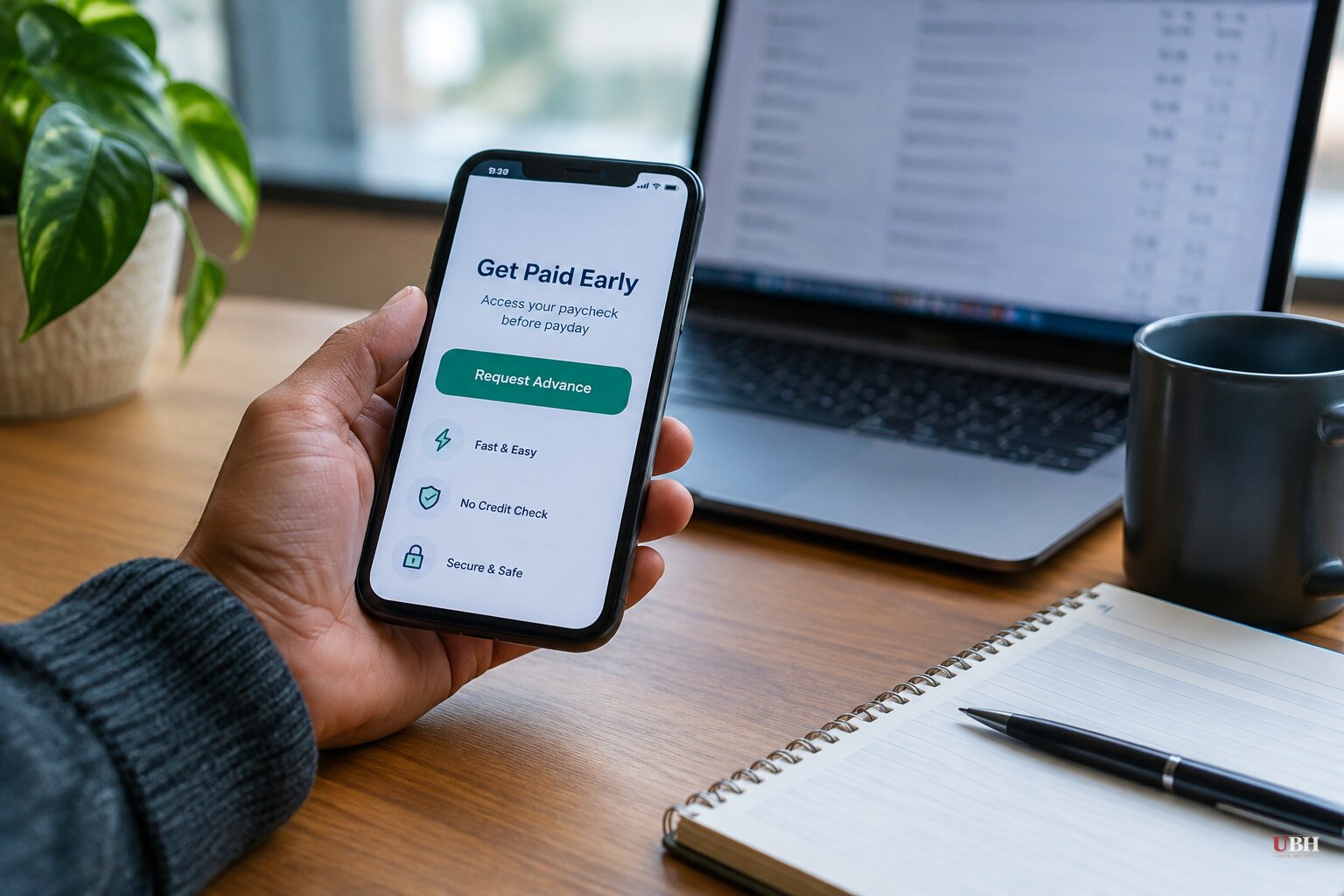
More than 10 million Americans had used earned wage access or "on-demand pay" tools as of 2024. A new analysis says the cost of those "free" advances adds up.
The Center for Responsible Lending (CRL), through its Julian Bond Institute, studied bank transactions from 10,000 consumers. It found that 96% of advances from direct-to-consumer versions of the apps included a fee or a "tip." Those charges averaged nearly $208 a year, about $17 a month.
CRL puts the average annual percentage rate, counting fees and tips, at 232%. That is close to what traditional payday lenders charge, according to the group's analysis.
How the apps charge
The apps typically advertise no interest and no credit check. They make money in other ways: fees for fast transfers, membership charges and a prompt to leave a tip.
The Government Accountability Office reported in 2022 that these tools are used mainly by people earning under $50,000 a year. Groceries and rent are the main reasons workers cite.
Usage has grown fast. Datos Insights found transaction volume for on-demand pay apps tripled from $3.2 billion to $9.5 billion between 2018 and 2020. The Consumer Financial Protection Bureau (CFPB) reported a 90% jump in earned wage access volume from 2021 to 2022.
Tom Feltner of the Americans for Financial Reform Education Fund said use of the apps has "certainly increased" as households struggle with costs. "Apps are leveraging new technology to deliver an old product," he said, noting that payday loans have existed in many states for more than 40 years.
The reborrowing question
CRL's October 2 release added state-by-state figures drawn from an anonymized dataset covering nearly 347,000 borrowers of payday loan apps. Christelle Bamona, a CRL senior researcher and co-author, said the apps "charge triple-digit interest rates and rely on people taking out dozens of loans a year to generate most of their fees."
That repeat use is the crux. For comparison, CFPB research on conventional payday loans found that more than four out of five are rolled over or reborrowed. The CFPB says a typical storefront payday loan costs about $15 per $100 for two weeks, an APR near 400%.
Feltner also flagged the risk of stacking products. He said using several financial apps at once can raise the odds of late payments. CFPB data for 2025 show more than 60% of "buy now, pay later" users held multiple such loans at the same time.
Panos Kouvelis, a professor at Washington University's Olin Business School, told Fortune last month that economists share "a certain fear." "There are some people that are living at the edge that are really overborrowing, and nobody knows about it," he said.
Lauren Saunders, a senior attorney at the National Consumer Law Center, said in an October 6 New York Times piece that the apps advertise no-cost options while most users end up paying fees. "People are struggling, and it's hard to make it paycheck to paycheck," she said.
What regulators have done
The federal government has gone the other direction from CRL's wishes. In 2024 the CFPB proposed counting fees and voluntary tips as finance charges when calculating APR. In December 2025 the bureau withdrew that proposal. It determined that fees and voluntary tips are not finance charges.
That is the agency's opposing view. Under it, a tip is a choice, not a cost of credit, and an advance with no interest is not a loan priced by APR. The argument has some intuitive pull: a worker can skip the tip and wait a day or two for a free transfer.
CRL's data cuts against that framing in practice. If 96% of direct-to-consumer advances carry some charge, the optional fee is the norm. Whether tipping reflects real choice or design nudges is something the CFPB's finding did not settle for CRL, which wants hard rate caps.
States are split. CRL says app-based lenders have charged triple-digit rates even in states that prohibit them, and some state and local governments have sued over usury violations. It also says some states have exempted the apps from consumer protection laws.
A bill in Congress
The U.S. House Financial Services Committee has voted to send the full House a bill that would exempt these companies from state and federal laws on usury, discrimination, hidden costs and overcharging of military servicemembers. That description comes from CRL. The apps' side of that debate is not laid out in CRL's release.
CRL is an advocacy group with a stated position in favor of strong interest rate caps. Its numbers are its own analysis of bank records, not a government audit. Still, the headline findings are consistent across the group's national and state datasets, and the CFPB's own earlier figures show rapid growth in the product.
For a worker who tips $3 on a $50 advance every week, the math builds quickly. It remains unclear whether the full House takes up the exemption bill, and whether states keep applying their usury caps to these apps in the meantime.
Sources used for this briefing
7 links from 7 independent newsrooms (syndicated copies of the same report count once)
These are the sources it draws on, linked so you can verify.


