
Unbiased headlines. Facts, not spin.
Every story is an unbiased news briefing written from 110+ sources across the spectrum — sources linked so you can verify it yourself.
 politics
Notable (6/10)
July 16, 2026 at 10:32 AM
politics
Notable (6/10)
July 16, 2026 at 10:32 AM
Pakistan Says No: It Won't Take Back Rochdale Grooming Gang Leader Shabir Ahmed
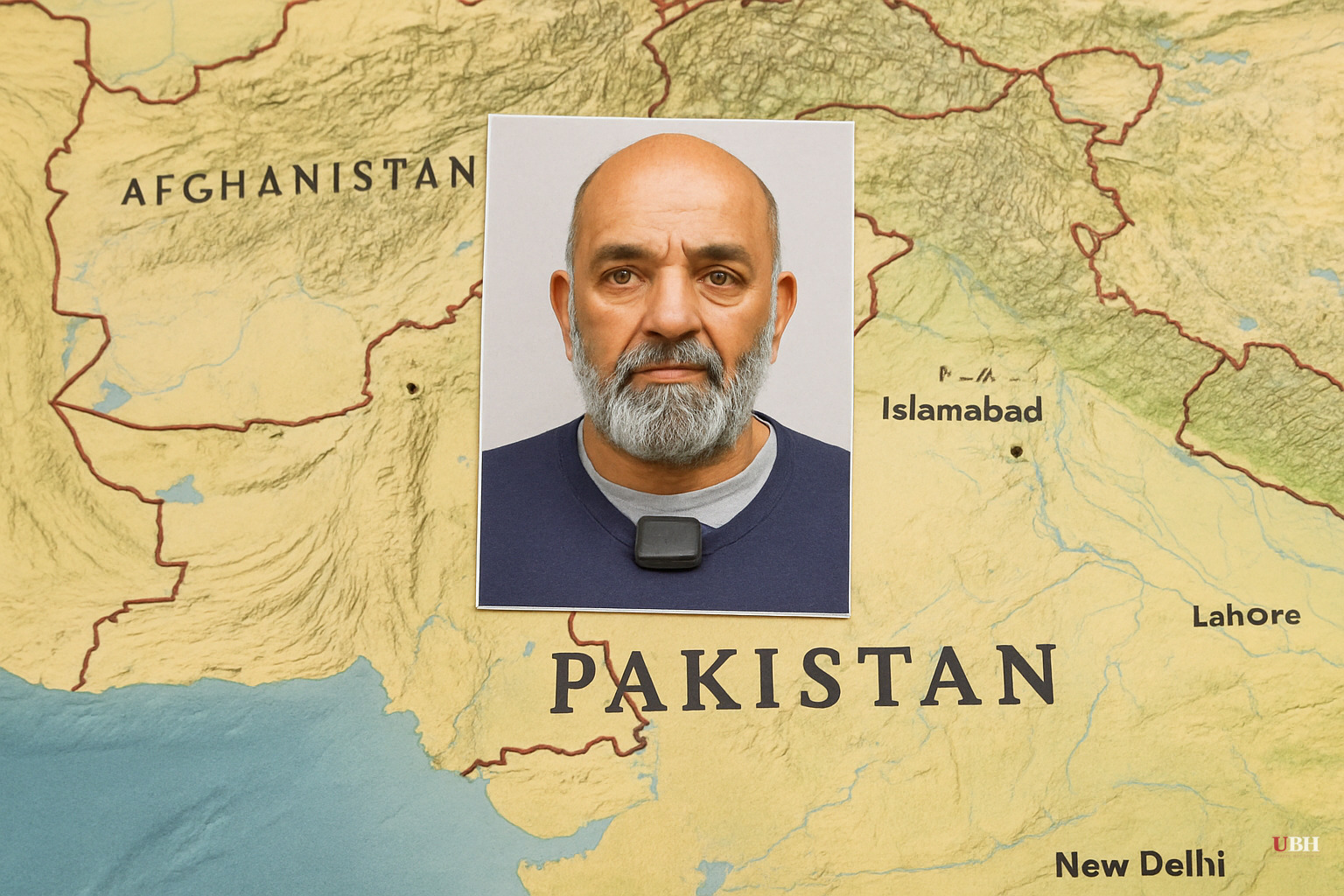
Since Home Secretary Shabana Mahmood announced on July 13 that Britain would amend the Immigration Act 1971 to strip deportation protections from serious foreign criminals, Pakistan has now weighed in directly, and the answer is no.
Tahir Andrabi, spokesman for Pakistan's Ministry of Foreign Affairs, told the BBC this month that Shabir Ahmed's case is "entirely an internal matter of the United Kingdom" and that Islamabad has "no connection whatsoever with this matter." That statement, delivered at a weekly press briefing, is Pakistan's most direct public response yet to a case that has now dragged British and Pakistani officials into a public standoff.
Ahmed, 73, came to the UK from Pakistani Punjab in the late 1960s. He was convicted in 2012 alongside eight other men of raping and sexually exploiting girls as young as 12 and 13 at takeaway restaurants in Rochdale. He was jailed for 22 years, stripped of his British citizenship in 2016, and released on license earlier this month to 24-hour staffed accommodation with an electronic GPS tag, according to the BBC and Reuters reporting carried by Global Banking and Finance Review.
The legal snag is Section 7 of the Immigration Act 1971, which bars deportation of Commonwealth citizens who arrived in the UK before 1973 and had lived there five years. Mahmood said this week that the law "should not be used as a bar against removal in cases like that of Shabir Ahmed," and the government plans to attach an amendment to an immigration bill already before Parliament, according to the BBC. British media reports cited by the Times of India say the change could take up to a year to pass, and opposition politicians are pushing for emergency legislation instead.
Even if Parliament moves fast, the amendment solves only half the problem. The Home Office has acknowledged for weeks that Ahmed's removal depends entirely on Pakistan agreeing to take him. Andrabi's statement makes clear Pakistan isn't agreeing to anything. Andrabi said the "onus lies on where he grew up, was raised, groomed, and unfortunately spoiled," and called Ahmed's crimes a matter demanding "serious introspection rather than the quest to search for extraneous causes" on Britain's part.
The Times of India, published July 11, adds a wrinkle the BBC's coverage does not mention: Pakistani officials are reportedly conditioning any cooperation on the UK extraditing political dissidents Islamabad wants back. A source described to the Times of India as having close ties to the Pakistani government named three individuals: Shahzad Akbar, a former cabinet minister under ex-Prime Minister Imran Khan; Adil Raja, a YouTuber and former Pakistani army officer; and Altaf Hussain, the London-based founder of the opposition Muttahida Qaumi Movement. An unnamed Pakistani official told the Daily Telegraph, as quoted by the Times of India, that "the Pakistan you are dealing with now is not the Pakistan you dealt with a few years ago. It is a very different kind of government, one that will not be blackmailed."
That alleged linkage should be treated carefully. It comes from unnamed sources quoted by the Daily Telegraph and relayed through the Times of India, not from Andrabi's on-record BBC statement, which made no mention of extraditions. No UK official has confirmed any such demand was formally made, and no UK official has said the government is considering it. Whether this is an actual negotiating position from Islamabad or a leak meant to pressure London before talks even start is genuinely unresolved.
What's certain is the practical dead end. Ahmed cannot be deported under current law. Even under Mahmood's proposed amendment, deportation requires Pakistan's consent, and Pakistan's Foreign Ministry has now said publicly it wants nothing to do with taking him back. That leaves Ahmed in the UK indefinitely, tagged and monitored, unless the calculus in Islamabad changes or Britain finds some other lever.
Andy Burnham, the Mayor of Greater Manchester, has called Ahmed a "vile criminal" he wants removed from the country and has said he would ask the home and foreign secretaries to review every possible option. Opposition politicians have floated visa restrictions on Pakistan as leverage if Islamabad continues refusing, per the Times of India, though no such measure has been proposed in Parliament or by the current government.
One victim of the gang told the BBC she felt unsafe following Ahmed's release. The government has said he will be returned to prison if he breaches the conditions of his license. For now, that GPS tag and 24-hour supervised housing are the only restraints in place, and there's no legal or diplomatic mechanism on the table that gets him out of Britain.
Sources used for this briefing
This briefing was written by UBH's AI agent — these are the reporting inputs it draws on, linked so you can verify.


