
Unbiased headlines. Facts, not spin.
Unbiased Headlines is an independently owned news organization. We bring you the facts, not opinions, written fresh from 110+ named sources. Sources linked so you can verify it yourself.
 sports
Low Interest (3/10)
·
sports
Low Interest (3/10)
·
Packers Post First Non-Pandemic Operating Loss Since 1990, CEO Blames Ownership Structure
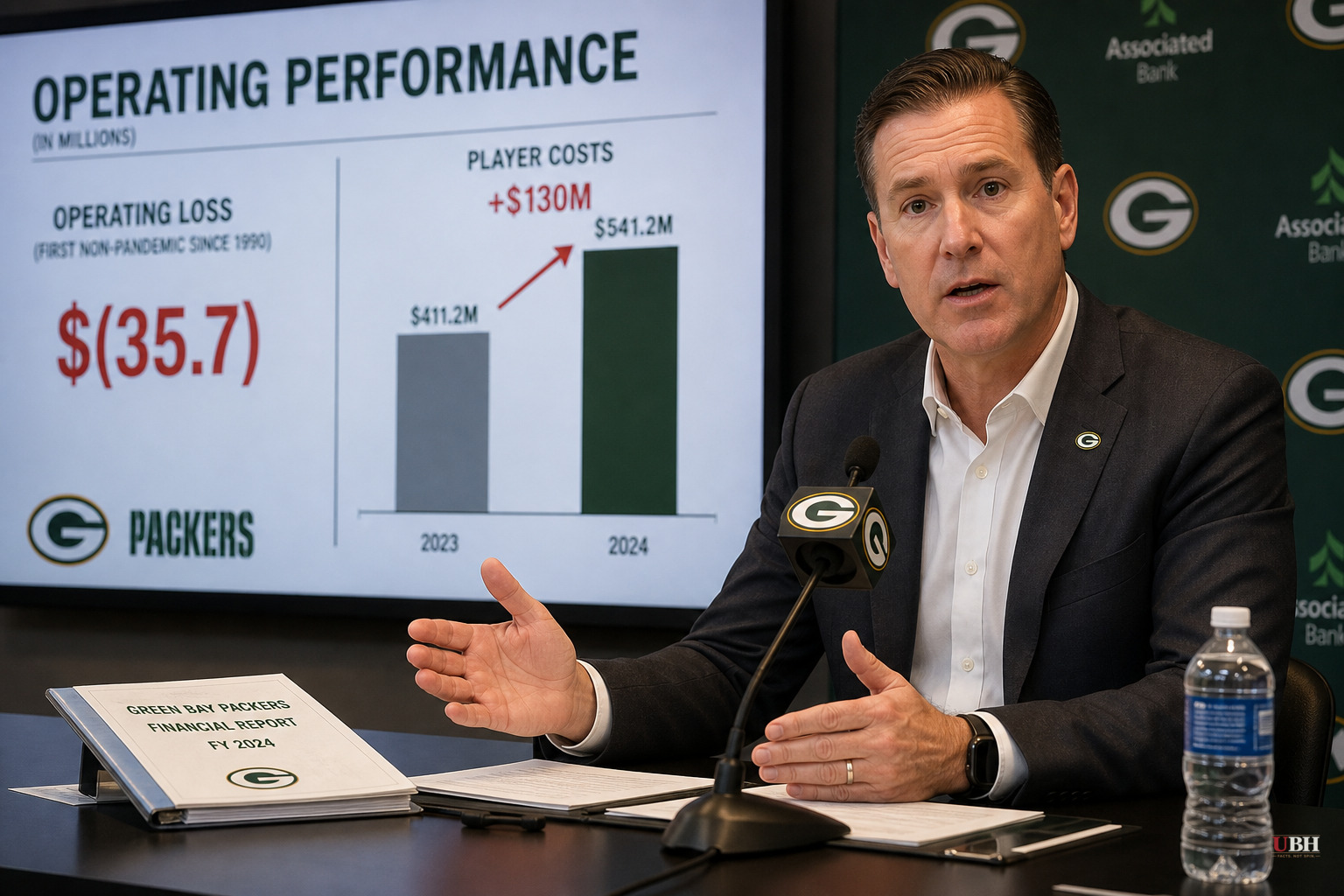
Packers lost money on football operations. They still made more money overall.
The Green Bay Packers reported a $1.1 million operating loss for fiscal year 2026, the team's first shortfall in a non-pandemic year since 1990, according to Sports Business Journal. Revenue hit $753 million against $754.1 million in expenses.
Despite that, net income jumped 54.8% to $132.5 million, according to NFL.com. The gap between a bad operating year and a good bottom line comes down to $133.6 million in nonoperating revenue, including investment gains from the team's corporate reserve fund and its cut of ESPN through the NFL's 32 Equity stake, per Sports Business Journal.
Where the money went
Expenses rose 18.7%, driven by a $130 million jump in player costs, according to NFL.com. The Packers traded for All-Pro edge rusher Micah Parsons last year and signed him to a four-year, $188 million deal with $136 million guaranteed. They also accelerated payments to players who were traded away. Total player costs will run just over $447 million this year, Sports Business Journal reported.
Local revenue, ticket sales, sponsorships, retail, climbed 4.7% to $299.8 million even though Green Bay played one fewer home game than the year before.
Policy's actual complaint isn't this year
Speaking Friday, three days before the team's annual shareholders meeting, president and CEO Ed Policy made clear the operating loss itself doesn't worry him. The structural problem does.
"It's like other teams have access to this ATM machine that we just don't have right now," Policy said, according to the Associated Press. "We're going to have to be more aggressive with revenue generation going forward. We all know the cost of competing in the NFL is going up, and other teams have access to capital sources that we just don't have."
Green Bay is the NFL's only publicly owned franchise, run as a nonprofit corporation with more than 500,000 shareholders and no single controlling owner. That structure means the team can't sell minority stakes to private equity or wealthy individuals the way every other franchise can.
Policy pointed to the Miami Dolphins selling a 1% stake to billionaire Lin Bin at a $12.5 billion valuation earlier this year, raising $125 million in the process, according to Sports Business Journal. "For example, a team can sell five to 10 percent of their equity without giving up any controlling interest in the team, and they could raise more money than we have in our capital reserve fund in just a matter of months," Policy said.
That reserve fund sits at $701 million, up from $579 million a year ago. Policy noted it took the organization more than 30 years to build that cushion, a pace other franchises can now beat in months by selling a sliver of equity.
The fair pushback: this isn't a crisis, it's a hedge
A reasonable skeptic would point out that the Packers just posted their best net income figure in franchise history, sit on a $701 million reserve, and remain one of the most valuable franchises in football. Calling this an emergency is a stretch. Policy himself said as much: "I feel very good about the Packers' financial strength and condition in the medium term and the short term, certainly. But we are keeping a very close eye on some of these long-term trends."
That's a legitimate distinction. Nobody at Lambeau Field is claiming the team can't pay its bills. The argument is about relative competitiveness a decade out, as rival owners tap private equity and billionaire minority investors to fund facilities, front offices, and player payrolls the Packers can only fund out of operating cash and a reserve fund built over generations.
What NBC Sports adds that the others don't
NBC Sports' Mike Florio pressed Policy on the fact that he's now raised this same complaint twice in 2026 without proposing a fix. Florio also surfaced a pointed comment from a rival team source: "It's their choice to not sell naming rights. Or don't trade for Micah [Parsons]." That counters the more sympathetic coverage elsewhere. The Packers' cash crunch this year is self-inflicted, a direct result of paying $136 million guaranteed to land Parsons, not some external funding disadvantage.
Sources used for this briefing
4 links from 4 independent newsrooms (syndicated copies of the same report count once)
These are the sources it draws on, linked so you can verify.


