
Unbiased headlines. Facts, not spin.
Unbiased Headlines is an independently owned news organization. We bring you the facts, not opinions, written fresh from 110+ named sources. Sources linked so you can verify it yourself.
 tech
Major Story (8/10)
Oracle Cancels $7 Billion Tencent AI Chip Lease After Trump Officials Raised Concerns, FT Reports
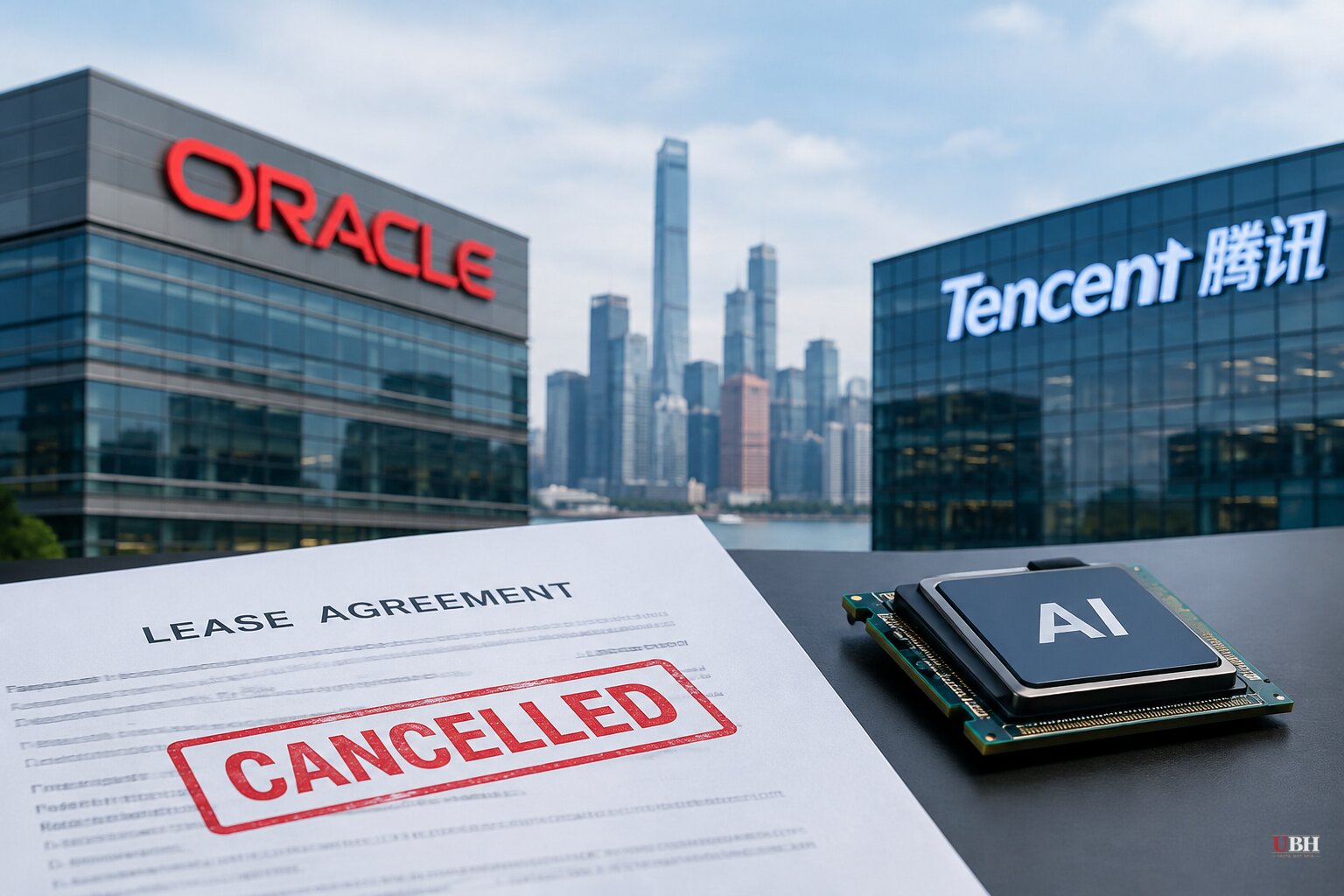
Oracle has canceled a chip leasing contract with Chinese tech giant Tencent after Trump administration officials approached the company with concerns, according to a Financial Times report published today, Nov. 4. The FT cited two people familiar with the matter.
The deal was a five-year lease valued at an estimated $7 billion. It would have given Tencent access to as many as 100,000 advanced AI chips housed in Oracle data centers across Southeast Asia. Those are chips Tencent cannot get at home because of curbs from both Washington and Beijing.
Oracle, Tencent and the White House did not respond to requests for comment on the report. Oracle has not confirmed the cancellation on the record.
A deal that was legal
No regulation forced Oracle's hand. Overseas leasing of AI chips remains permitted under existing rules, as the FT noted. U.S. export controls govern where a chip ships, not who rents time on it once it is installed abroad.
That gap is exactly what Chinese AI developers have been using. Renting advanced Nvidia hardware through data centers in Southeast Asia has become a main legal route around export controls. Chinese firms are among the biggest customers of data centers in the region.
The Tencent lease was the company's largest overseas leasing deal. The FT first reported it before the cancellation, and the lease was signed earlier this year. The Next Web reported that Tencent was to pay about 30% of the value upfront.
Pressure from both capitals
Tencent was not only dealing with Washington. Top officials in Guangdong, the province where the company is based, visited Tencent and asked it to support domestic Chinese chips, according to one of the FT's sources.
Chinese foreign ministry spokeswoman Mao Ning said she was not aware of the report when asked about it.
The result is a squeeze. Washington wants Chinese labs kept away from top-tier American silicon, and Beijing wants its champions buying Chinese hardware. Tencent has been spending heavily on computing power to catch up with Chinese rivals in AI.
The Nvidia rule that came a day earlier
The cancellation followed another FT report on Tuesday, Nov. 3. Five people told the paper that Nvidia has told data center and cloud customers that at least 51% of their services must go to non-Chinese companies. They said Nvidia had never imposed such a requirement before and delivered it verbally.
The condition reportedly covers only new contracts and leaves existing agreements alone. Tencent's lease predates it, so by that account Oracle walked away from a contract Nvidia's own policy would not have touched.
Nvidia gave AFP a statement that pushes the other way: "America cannot win the AI race unless America's AI infrastructure wins worldwide." That is the company's argument for keeping American technology in global demand rather than walling it off.
A Singapore-based cloud operator told the FT that finding enough non-Chinese customers outside the U.S. is hard. That is the practical problem for Southeast Asian data center operators who built capacity around Chinese demand.
Oracle's position
Oracle sits in an awkward spot. It is run by Larry Ellison, a major Trump ally. It was also part of the investor group that acquired the majority of TikTok's U.S. operations last year in a deal brokered by the White House. It is a major supplier to ByteDance and operates several data centers in Malaysia.
No source says Oracle was threatened with a penalty, and no investigation, charge or enforcement action has been announced. The account of what U.S. officials said rests on two anonymous sources, and neither the administration nor Oracle has described those conversations.
The financial stakes for Oracle are real. The Tencent contract was one of several large, long-term deals behind its rapid AI cloud buildout. The company is funding that expansion partly with borrowed money and recently priced a $20 billion funding round with interest of up to 8.65%. Its shares have roughly halved over the past year as investors weigh its AI growth against the cost of financing it. Oracle has not disclosed what the lost contract means for its revenue.
The loophole is still open in law
Congress has not closed the gap this deal exploited. The Remote Access Security Act, which would put remote access to controlled chips under export-control law, passed the House 369-22 in January. It then stalled in the Senate Banking Committee.
The Commerce Department has reportedly been drafting its own rule to block Chinese firms from renting Nvidia compute through data centers in countries such as Thailand. Commerce has not announced a rule.
Until one of those lands, enforcement depends on phone calls to individual companies. A $7 billion contract just died that way. Whether other cloud providers with Chinese customers get the same call is the open question.
The next concrete markers are whether Oracle, Tencent or the White House confirm the cancellation, and whether Commerce publishes its remote-access rule or the Senate Banking Committee moves the House-passed bill.
Sources used for this briefing
8 links from 8 independent newsrooms (syndicated copies of the same report count once)
These are the sources it draws on, linked so you can verify.


