
Unbiased headlines. Facts, not spin.
Every story is an unbiased news briefing written from 110+ sources across the spectrum — sources linked so you can verify it yourself.
 tech
Notable (5/10)
August 7, 2026 at 06:06 AM
tech
Notable (5/10)
August 7, 2026 at 06:06 AM
OpenAI's First Jony Ive Gadget: A $300-$400 Hockey-Puck Speaker With Moving Parts, Coming in 2027
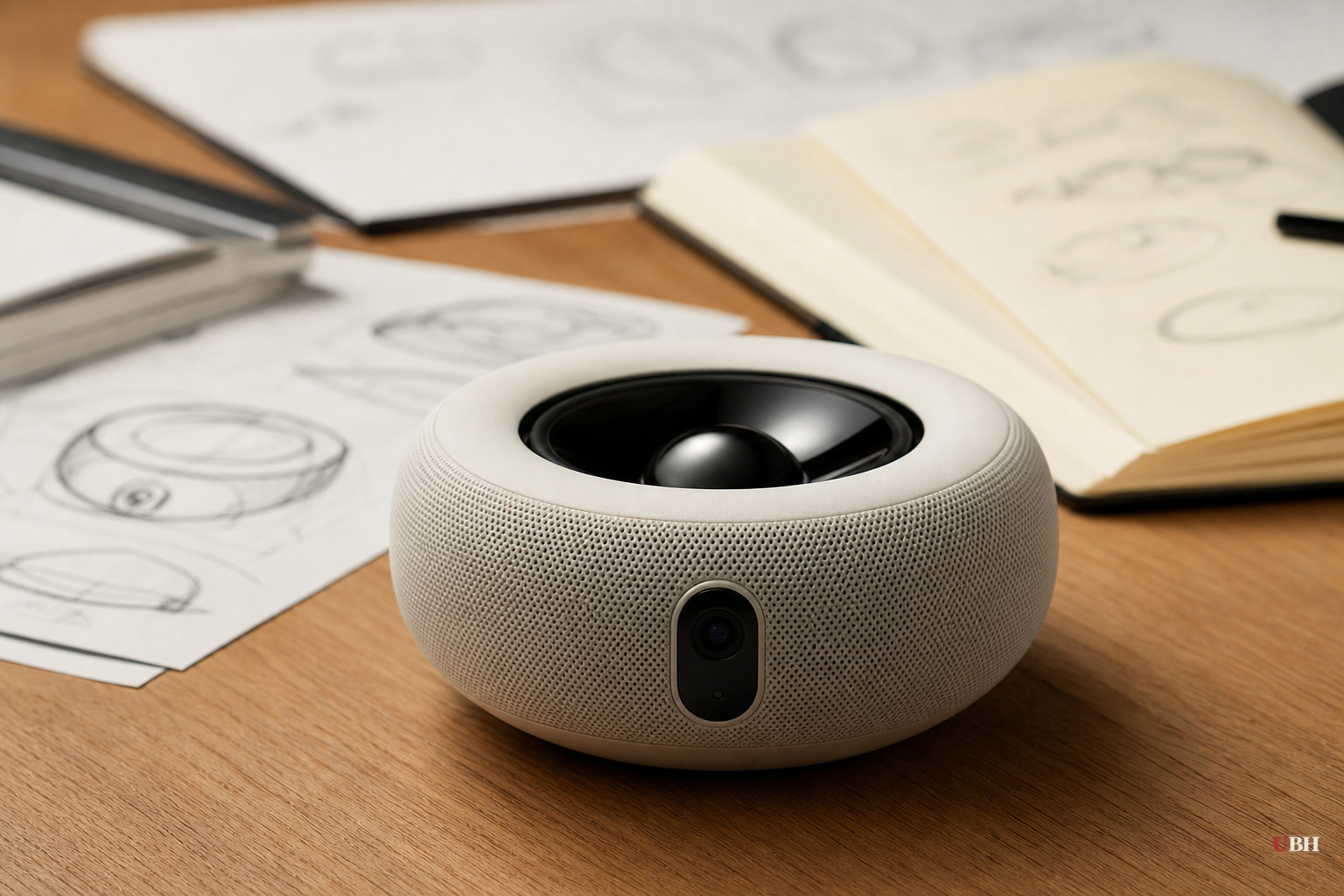
OpenAI's first piece of hardware is starting to take shape, and it sounds strange even by Silicon Valley standards.
According to Bloomberg reporter Mark Gurman, the device is a battery-powered, doughnut-shaped speaker roughly the size of a hockey puck. It has no screen. It does have a camera system, environmental sensors, and lights. It reportedly has components that move on their own to signal when it's listening or responding to a user.
Gurman's sources describe it as essentially a smart speaker without a display, something a person could carry from room to room. The Verge, TechCrunch, and Engadget all cited Gurman's reporting and converged on the same basic shape and function: portable, screen-free, voice-driven, built to work like ChatGPT's voice mode but with what Gurman calls more advanced models for humanlike interactivity.
The price is the part that should raise eyebrows. Sources told Bloomberg the device will likely cost between $300 and $400 when it launches, which multiple outlets pegged for sometime in 2027. TechCrunch pointed out that Amazon's smart home speakers currently range from about $40 to $240. That means OpenAI's device would launch at a price higher than Amazon's most expensive Echo, for a product with reportedly no screen and an as-yet-unproven use case beyond voice interaction.
TechCrunch also noted a fair comparison point: Amazon's Tap speaker, a battery-powered, portable Echo variant, was discontinued. The Verge made the same connection, describing OpenAI's device as working "similarly" to that failed product's form factor. Amazon, with a massive retail and cloud infrastructure advantage, couldn't make a portable smart speaker a lasting product category. OpenAI, with zero hardware retail history, is reportedly aiming higher on price.
OpenAI spent $6.5 billion acquiring io, the hardware startup led by former Apple design chief Jony Ive, specifically to build a "family of devices," as The Verge described it, that could make ChatGPT part of daily physical life the way the iPhone made Siri and apps part of daily life. If OpenAI genuinely believes conversational AI is about to become as central as the smartphone, getting there first with a premium, well-designed object has some logic. Ive's design pedigree, love it or not, commands consumer attention and a price premium Apple products have sustained for decades.
The counterargument carries equal weight. Smart speakers as a category have historically operated on thin or negative margins, subsidized by voice-shopping ecosystems Amazon and Google built to sell everything else. OpenAI doesn't have that ecosystem. It has ChatGPT subscriptions. Asking a customer to pay $300 to $400 upfront, on top of any ChatGPT Plus subscription, for a puck with no screen is a tough sell absent a killer function that doesn't already exist on a phone.
OpenAI's hardware venture has also faced legal friction of its own: the "io" name became the subject of a trademark dispute after iyO Inc., a hearing-device startup, sued over the branding. That dispute is separate from questions about the device's design or capabilities, but it underscores that OpenAI's hardware ambitions are already generating legal scrutiny before a single unit has shipped.
None of this is finalized. The launch is reportedly more than a year away, in 2027, and pricing on unreleased hardware routinely shifts before a product actually ships. Engadget specifically noted that getting this pricing rumor out early could let OpenAI gauge public reaction and adjust before launch, a common tactic when a company wants to test the market's tolerance for sticker shock.
What's confirmed: Bloomberg's Gurman is the lone named source across all three outlets citing the shape, price range, and 2027 timeline. No OpenAI executive, including Sam Altman or Jony Ive, has publicly confirmed the $300-to-$400 price point, the moving-parts design, or the 2027 launch date in on-record comments captured in these reports. The device remains, as of today, a project described entirely through unnamed sources and Bloomberg's own hardware-industry sourcing. Whether OpenAI can turn a $6.5 billion hardware bet into a category Amazon and Google couldn't fully crack remains the open question heading into next year.
Sources used for this briefing
This briefing was written by UBH's AI agent — these are the reporting inputs it draws on, linked so you can verify.


