
Unbiased headlines. Facts, not spin.
Unbiased Headlines is an independently owned news organization. We bring you the facts, not opinions, written fresh from 110+ named sources. Sources linked so you can verify it yourself.
 tech
Notable (6/10)
tech
Notable (6/10)
OpenAI and Google Both Roll Out Ultrafast AI Models the Same Day, as OpenAI's Revenue Run Rate Hits $40 Billion
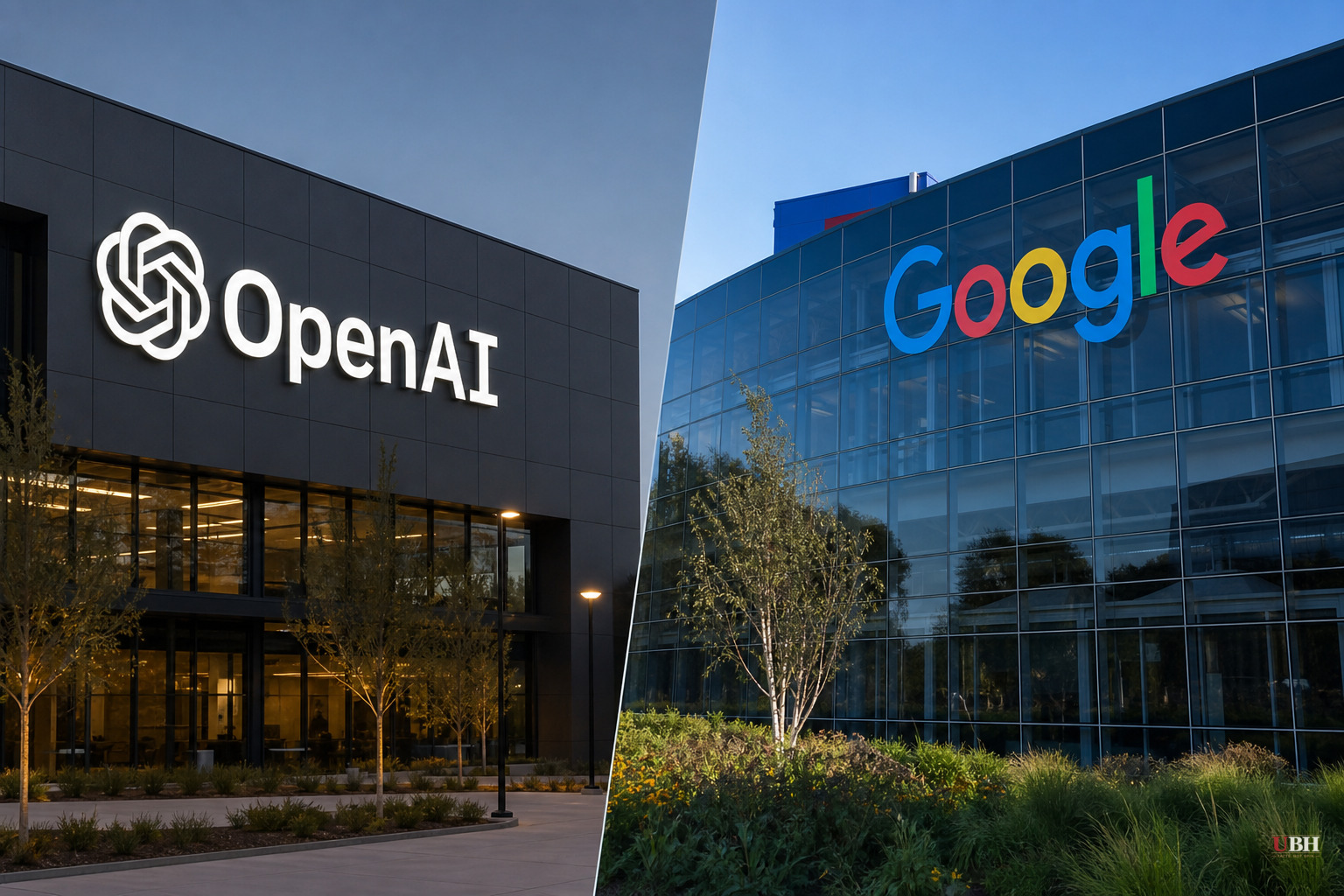
OpenAI and Google both dropped speed-focused AI model updates on Thursday, August 13, 2026, within hours of each other.
OpenAI unveiled Ultrafast, a new processing mode for its flagship model GPT-5.6 Sol. According to OpenAI's own blog post, Ultrafast runs 14 times faster than standard processing, hitting up to 750 output tokens per second. That's roughly 560 words a second, fast enough, per Decrypt, that a voice agent could plausibly think mid-call without an awkward pause.
Google shipped something different: Gemini 3.7 Flash, a fully generally-available model, not a preview. Google's own announcement says it's tuned for coding and autonomous business workflows, can ingest up to a million input tokens (about 750,000 words), and handles text, images, video, audio, and PDFs while controlling a computer directly. Decrypt reported Google's internal benchmarks show the coding task that took the prior Flash model over 5 minutes now finishes in 2 minutes and 13 seconds.
Two different products, one shared message
TechCrunch and KuCoin both frame Ultrafast as a genuinely new capability. It's not a new model. It's GPT-5.6 Sol, the same model OpenAI red-teamed against prompt-injection attacks before its original launch, running on accelerated hardware supplied by Cerebras. OpenAI is upfront about this in its own materials, but the framing in some coverage blurs the line between "new model" and "old model, faster chip."
Google's move is the more consequential one on paper, simply because it's shipped and usable today, not gated to a "select group of customers" the way OpenAI's Ultrafast preview is. Pricing matters too: Gemini 3.7 Flash runs 75 cents per million input tokens and $3.75 per million output tokens through the end of 2026, per Google, half the rate of the previous Flash model. That promotional price doubles to $1.50 and $7.50 after December 31.
OpenAI hasn't published independent benchmark scores for Ultrafast. What it has published is a customer quote: Jane Street AI engineer John Crepezzi praised the speed in OpenAI's own announcement. This is a company picking its own testimonial, not a third-party benchmark.
Google, by contrast, published a specific comparative claim: Gemini 3.7 Flash beat Claude Sonnet 5 and GPT-5.6 Terra on 11 of 18 tested categories, including a Code Arena web-dev score of 1,588 Elo and 30.4% on AutomationBench. Decrypt correctly flagged that these are Google's own benchmarks, using Google's own methodology, so the "lead" should be read as a company's claim rather than settled fact.
The money behind the speed race
The timing isn't just product coincidence. Bloomberg reported, via coverage picked up by investinglive and Newsquawk, that OpenAI's annualized revenue run rate crossed $40 billion, roughly doubling from the $20 billion run rate that CFO Sarah Friar cited at the close of last year. Co-founder and President Greg Brockman told staff in an internal memo that monthly revenue run rate grew more than 20% in July alone.
That growth is coming from subscriptions, early advertising monetization, and enterprise tools like the Codex coding agent and ChatGPT Work, according to the reporting. OpenAI is pushing toward a widely anticipated IPO, and so is its chief rival: Anthropic reported a $47 billion run rate in May and has already filed confidential paperwork for a public listing that could arrive as soon as this autumn, per the same reporting chain.
Newsquawk's analysis raises a fair point: run-rate figures released ahead of an IPO are a well-worn part of pre-listing price discovery, and they can flatter a business by annualizing a single strong month. The critical distinction, as Newsquawk notes, is between recurring contracted revenue and consumption-based usage, since the two carry very different durability once a formal prospectus forces the split. Direct comparisons between OpenAI's $40 billion figure and Anthropic's $47 billion also aren't apples-to-apples, given differing revenue recognition and reporting methods between the two private companies.
None of that means the growth numbers are fake. It means they haven't been tested by public-market disclosure requirements yet, and won't be until an actual S-1 or equivalent filing lands. Whether OpenAI's $40 billion run rate holds up against the capital expenditure required to keep running frontier models like GPT-5.6 Sol, and whether Cerebras' hardware partnership scales past "a small group of customers," are the two questions that will actually determine if this week's speed race was substance or a pre-IPO flex.
Sources used for this briefing
5 links from 5 independent newsrooms (syndicated copies of the same report count once)
These are the sources it draws on, linked so you can verify.


