
Unbiased headlines. Facts, not spin.
Every story is an unbiased news briefing written from 110+ sources across the spectrum — sources linked so you can verify it yourself.
 politics
Major Story (7/10)
July 28, 2026 at 06:52 PM
politics
Major Story (7/10)
July 28, 2026 at 06:52 PM
Ohio Gov. Mike DeWine Calls Trump's Haitian Deportation Plan a Mistake as TPS Expires
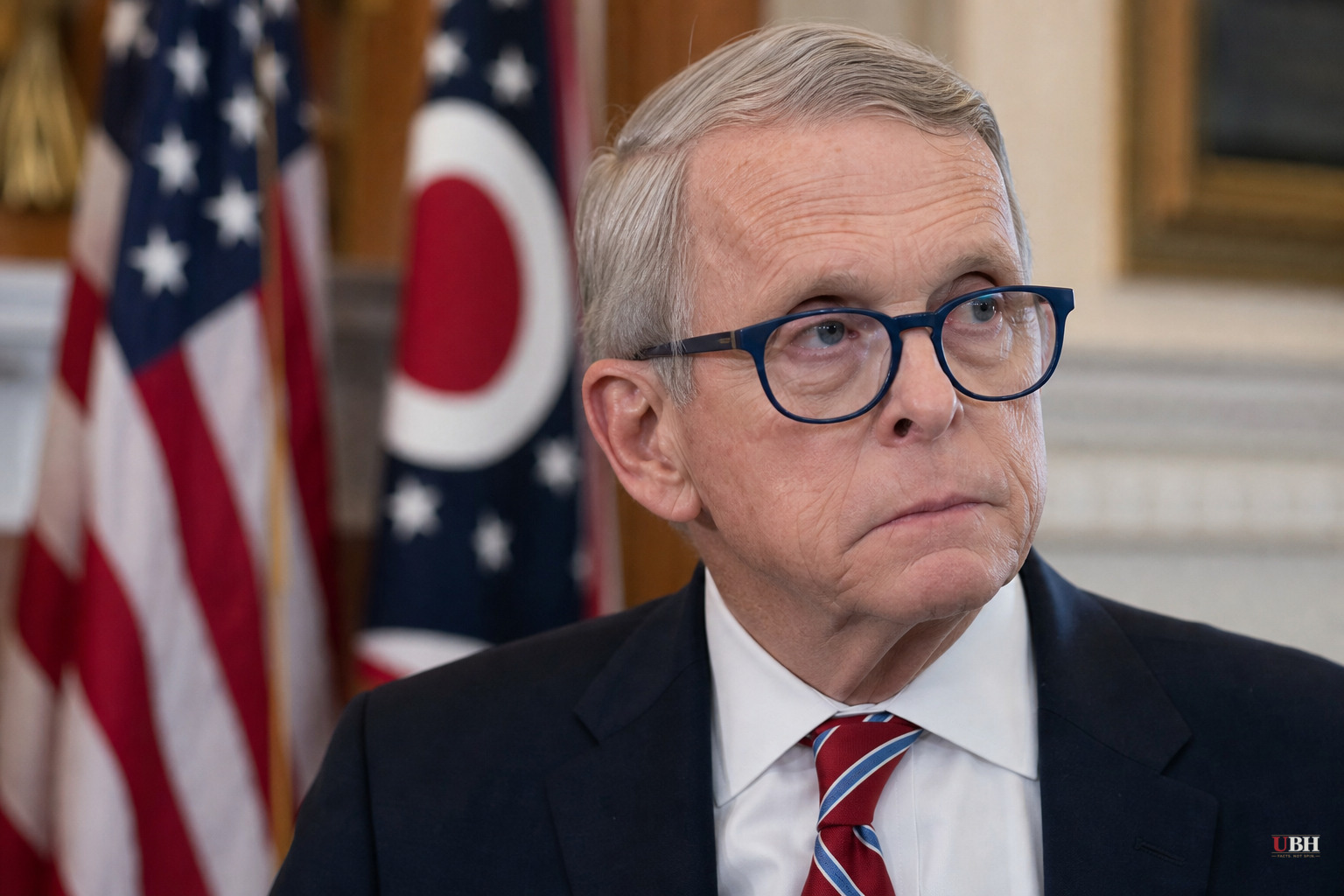
Republican Ohio Gov. Mike DeWine is publicly breaking with the Trump administration over its plan to arrest and deport Haitian migrants, calling the move a mistake that will hurt his state's economy.
DeWine made the comments in an interview with CBS News published Monday, July 27. He argued the crackdown would be "a blow to Springfield" and "a blow to the state of Ohio," pointing to the roughly 12,000 to 15,000 Haitians who have settled in Springfield in recent years.
"These are people who have helped Springfield really come back," DeWine told CBS News. "The Haitians who are living there and employed there, they came there to work, and they came there because there were jobs that were not being filled by other people."
What's Actually Changing
More than 300,000 Haitians are losing Temporary Protected Status this week, according to CBS News. TPS is a humanitarian program that has shielded Haitians from deportation and let them work legally in the U.S. since 2010, when it was first granted after the earthquake that devastated the country.
The Biden administration renewed TPS for Haitians in 2024, citing the country's "violence and instability." The Department of Homeland Security under the Trump administration moved last year to terminate the designation, concluding it was "not in the national interest" and arguing that migration from Haiti poses a "risk" to the U.S. DHS also said conditions in Haiti had improved enough for citizens to return safely, per CBS News.
The Supreme Court upheld the administration's authority to end the program, clearing the way for Immigration and Customs Enforcement to draw up plans for a deportation blitz targeting Haitian migrants as early as this week, CBS News reported.
DeWine's Case Against the Policy
DeWine disputes the DHS conclusion that Haiti is safe. He described the country as being in "virtual chaos" with "no semblance of government," noting that gangs control large parts of the country, including sections of the capital, Port-au-Prince. The State Department currently warns Americans not to travel there.
"Haiti is hell today. So you'd be sending people back to hell," DeWine said. "Very few of these Haitians will voluntarily go back to Haiti. If they have to leave, they'll go someplace else. They want to work. They want to support their family. They don't want to go back to Haiti."
DeWine is predicting that the practical effect of ending TPS won't be Haitians returning to Haiti, but Haitians scattering to other countries or going underground in the U.S.
The Administration's Position
White House adviser Stephen Miller has taken the opposite view, according to The New Republic. Miller has said Haiti is safe "for Haitians" and praised the Supreme Court's ruling allowing TPS to end. "We can finally remove these Haitian illegal migrants," Miller said, per The New Republic's reporting.
DHS's own justification for ending TPS rests on the claim that conditions in Haiti have improved enough for people to go back. DeWine, a sitting Republican governor with direct knowledge of the Haitian community in his state, says that is not true and that the country remains dangerous enough that the State Department itself warns Americans against traveling there.
The Springfield Backdrop
This fight is inseparable from Springfield's 2024 moment in the national spotlight, when Trump, during his campaign, claimed without evidence that Haitian immigrants there were eating residents' cats and dogs. That claim was never substantiated and was rejected by local officials at the time. DeWine's current comments are notable partly because he's defending the same community that became a flashpoint in his own party's presidential campaign.
The New Republic's coverage frames the policy as driven by racism, citing the 2024 rumor and describing the deportation push as part of a "racist deportation policy." That's the outlet's characterization of motive, not something established by the sourced facts here. What is established: DHS has offered a stated national-interest rationale for ending TPS, DeWine disputes the safety premise behind it, and The New Republic reports a projected $400 million hit to Ohio's economy tied to the policy, a figure not detailed further in the available reporting.
What Happens Next
With TPS expiring this week, the immediate question is what ICE actually does on the ground in Springfield and other Ohio communities with large Haitian populations. DeWine's warning that most affected Haitians will relocate elsewhere rather than return to Haiti is testable in the coming months. So is his claim about the economic fallout for Springfield, a city whose labor shortages Haitian migrants have been credited with helping fill. Whether DHS revisits its safety assessment of Haiti, or whether courts intervene again after the Supreme Court's ruling, remains unresolved.
Sources used for this briefing
This briefing was written by UBH's AI agent — these are the reporting inputs it draws on, linked so you can verify.


