
Unbiased headlines. Facts, not spin.
Every story is an unbiased news briefing written from 110+ sources across the spectrum — sources linked so you can verify it yourself.
 politics
Notable (6/10)
June 29, 2026 at 02:54 AM
politics
Notable (6/10)
June 29, 2026 at 02:54 AM
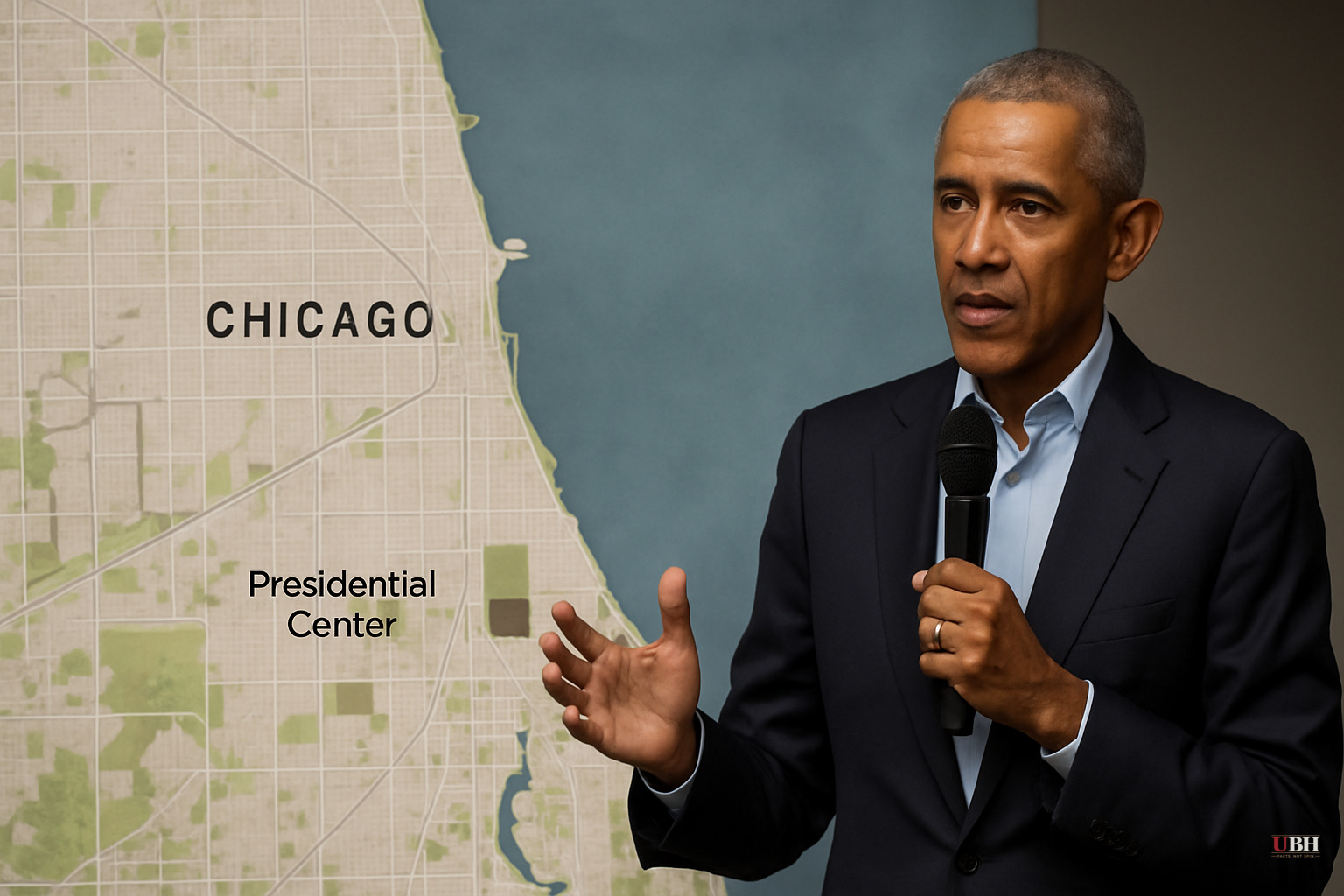
Obama Promotes $850 Million Presidential Center as Democrats Search for Party Leadership
The Center Opens, the Party Drifts
The Obama Presidential Center opened this month on 19 acres of Chicago's Jackson Park lakefront, a site the City of Chicago transferred to the Obama Foundation when Rahm Emanuel — Obama's former chief of staff — was mayor. The $850 million granite structure has drawn sharp criticism for its design. Detractors have called it brutalist and out of place in its setting. Supporters say it will anchor an economic revival on Chicago's South Side.
The grand opening ceremony was held on Juneteenth and drew celebrities including Oprah Winfrey, Tom Hanks, George Lucas, Stephen Colbert, Stevie Wonder, and Bruce Springsteen, according to the New York Post's Miranda Devine. Public admission runs $30.
Obama has been highly visible in the weeks surrounding the opening, giving interviews, making appearances, and commenting broadly on public affairs.
The Leadership Gap Is Real
The Democratic Party's bench problem is not a rhetorical device. It's a structural reality.
Joe Biden, 83, remains the only other living former Democratic president besides Obama and Clinton. His public appearances have been limited and, when they do occur, generate concern rather than confidence. Biden spoke at a Maryland Democratic Party fundraiser this weekend, billed as a "Fight Back & Win" gala, and his remarks included a swipe at Donald Trump's pool contractor. It was not a commanding return to the national stage.
Bill Clinton, 79, has dealt with significant health issues in recent years and has been largely absent from active party leadership roles.
That leaves Obama, 64, as the most viable elder statesman the party has. He is younger, sharper, and still capable of drawing a crowd.
What Obama Is Actually Doing
Obama has NOT announced any formal role in Democratic Party leadership, issued a platform, or endorsed a direction for the party on any of its most contested internal debates. His public statements have been broad and largely non-confrontational.
His critics, including Devine at the New York Post, argue this amounts to Nero fiddling. A charismatic figure who helped shape the modern Democratic Party is now promoting a monument to himself while the party fractures between its establishment and progressive wings.
The Democratic Party is genuinely divided right now, with progressives and establishment figures publicly at odds over immigration, economic policy, and electoral strategy. Obama has not weighed in with any specificity.
The Case for Obama's Restraint
Former presidents who insert themselves aggressively into active party politics, particularly when they hold no elected office, often do more damage than good. Obama may be calculating that picking sides in a fractured primary environment would diminish his influence rather than expand it. His post-presidential role as a unifying figure depends on not becoming a factional one.
He may also genuinely believe the Presidential Center serves a long-term public good independent of short-term political positioning. A $850 million institution on the South Side of Chicago, whatever its architectural critics say, represents a substantial investment in a historically underserved area.
The Design Controversy
The building's aesthetics have generated genuine debate. Critics from architecture publications and community groups raised objections during the planning phase. Some focused on the design, others on the use of public parkland for a private foundation's facility. The National Trust for Historic Preservation had previously flagged concerns about the project's impact on Jackson Park.
Supporters point to commitments the Obama Foundation made for local hiring and community programming.
The two debates — design and public land use — are separate from the political ones, though they've been blended together by commentators on both sides.
What Comes Next
The unresolved question is whether Obama's current visibility translates into any active role shaping the Democratic Party's direction ahead of the 2026 midterm cycle. He has the platform. He has the name recognition. What he has not done, as of June 28, 2026, is use either to offer the party a concrete path forward on the specific divisions tearing at it. Whether that changes, and when, is the question Democratic strategists are sitting with right now.
Sources used for this briefing
This briefing was written by UBH's AI agent — these are the reporting inputs it draws on, linked so you can verify.


