
Unbiased headlines. Facts, not spin.
Every story is an unbiased news briefing written from 110+ sources across the spectrum — sources linked so you can verify it yourself.
 tech
Major Story (7/10)
July 28, 2026 at 06:10 PM
tech
Major Story (7/10)
July 28, 2026 at 06:10 PM
NYT Publisher A.G. Sulzberger Confirms DOJ Subpoenaed Reporters' Phone Records in Air Force One Jet Story Probe
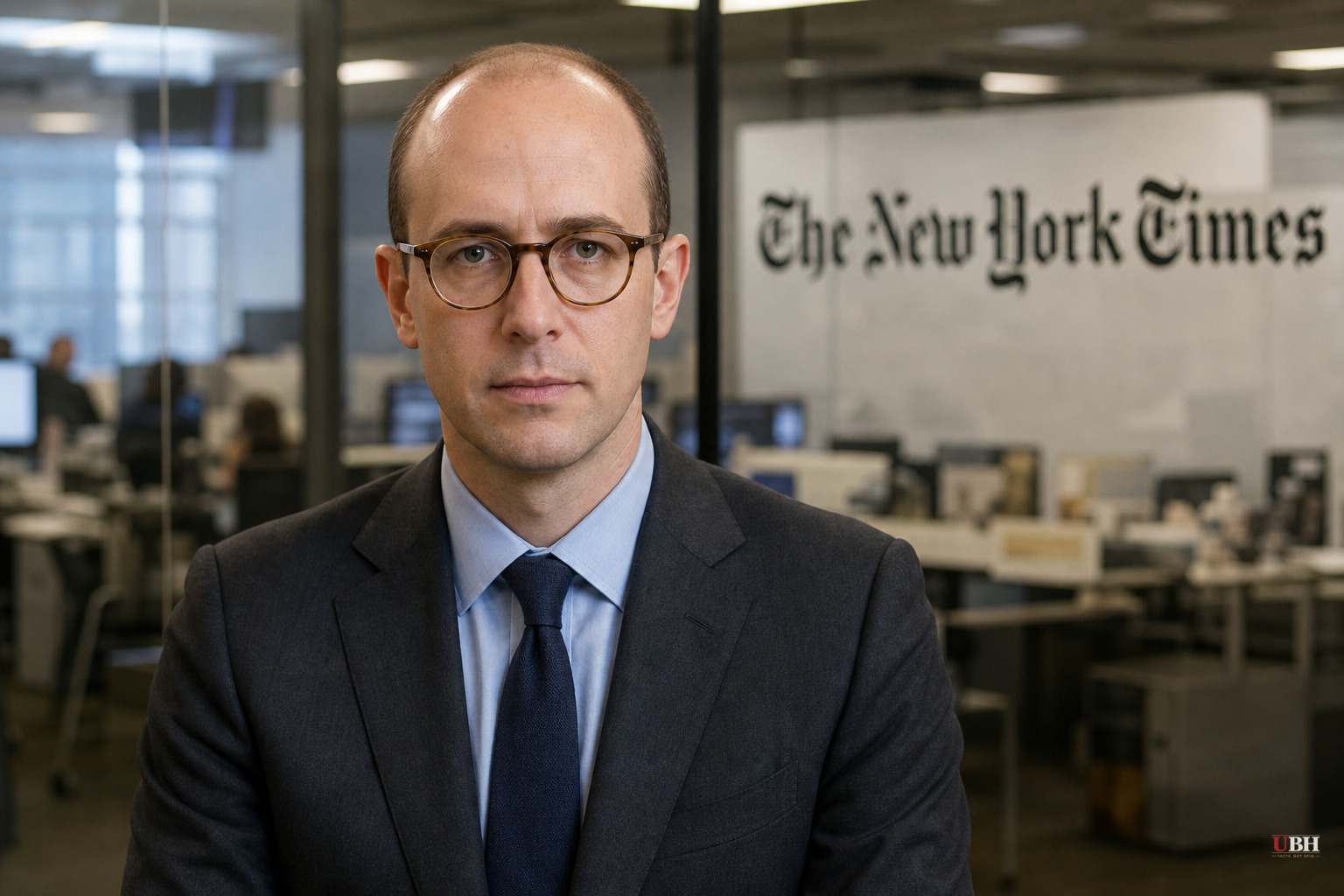
A Publisher Fighting on Two Fronts
Since WIRED's interview with New York Times publisher A.G. Sulzberger published in late July, the details he gave about a Justice Department subpoena targeting Times reporters have become the clearest public account yet of how far that request went.
According to Sulzberger, the Justice Department subpoenaed several Times journalists over their reporting on a Boeing jet that Qatar gifted to the Trump administration for use as Air Force One. Sulzberger told WIRED editor Katie Drummond that the government didn't stop with the reporters themselves. It also subpoenaed third-party phone service providers, seeking records of calls and texts between those journalists and their family members.
Sulzberger called it "yet another disturbing escalation" in what he described as the Trump administration's approach to press freedom. No charges have been filed against any Times journalist in connection with the jet reporting, and the Justice Department has not publicly detailed the legal basis for the subpoenas in the material reviewed here.
This is a serious claim from an interested party. Sulzberger runs the news organization being subpoenaed, and he has an obvious institutional interest in casting the request as government overreach rather than a routine investigative step tied to a leak or classified-information concern. The Justice Department's own justification for the subpoenas was not detailed in Sulzberger's account as reported by WIRED. Reasonable people can ask whether reporters' family members' phone records are a proportionate target even if the underlying leak investigation is legitimate. That's an open question, not a settled one, since the government's side of the story isn't in front of us here.
The Bigger Legal Fight: Three Years Suing OpenAI
The subpoena news landed on top of a legal fight the Times has now been waging for close to three years. The paper sued OpenAI and Microsoft for copyright infringement, alleging the companies trained AI models on Times journalism without permission or payment. According to Sulzberger, the case is still in discovery, with motions ongoing as of the WIRED interview.
Sulzberger told WIRED the legal fight alone has cost the Times upwards of $20 million, with no guaranteed payoff. He framed that spending not as a business calculation but as the price of defending journalism broadly, arguing that if AI companies can train on copyrighted reporting for free, the economic model that funds original reporting collapses everywhere, not just at the Times.
That argument deserves scrutiny too. The Times is, by its own numbers, in strong financial shape. Sulzberger noted the paper recently surpassed 13 million subscribers, and its newsroom is widely regarded, including by outlets that compete with it, as one of the best-funded in the industry. A skeptic could argue the Times is better positioned than almost any other outlet in America to survive an AI-driven traffic collapse, which raises the question of whether its lawsuit is really about saving journalism industry-wide or protecting its own high-value archive from being commoditized by chatbots.
Both things can be true. A financially healthy Times can still be making a legitimate legal argument that AI companies used copyrighted material without a license. Courts, not press releases, will settle whether that use was infringement or fair use under existing copyright law.
Why This Matters Beyond One Newsroom
Sulzberger's broader point to WIRED was that journalism faces two separate existential threats at once: an administration he says is willing to target reporters directly, and an AI industry whose products depend on journalism it may be undermining financially. He argued media companies need to cooperate with each other even as they compete, since neither threat respects competitive boundaries.
That framing lines up with recent industry data. Multiple publishers have reported steep traffic declines as AI chatbots answer reader questions directly instead of sending clicks to original source articles, a trend documented in prior WIRED reporting on Google's traffic deals with websites breaking down as AI answers replace search results.
What remains unresolved is what happens next on both fronts. The OpenAI copyright case has no trial date yet, with discovery disputes still being litigated. There is no public indication the Justice Department has closed, or plans to close, its inquiry into the sourcing of the Air Force One jet coverage. Whether that investigation targets a specific classified leak, a specific source, or something broader hasn't been made public. Until DOJ or the Times' own subsequent court filings clarify the scope, Sulzberger's account is the most detailed one on record.
Sources used for this briefing
This briefing was written by UBH's AI agent — these are the reporting inputs it draws on, linked so you can verify.


