
Unbiased headlines. Facts, not spin.
Unbiased Headlines is an independently owned news organization. We bring you the facts, not opinions, written fresh from 110+ named sources. Sources linked so you can verify it yourself.
 tech
Major Story (7/10)
tech
Major Story (7/10)
Nvidia's China AI chip share falls to 34% as professor says U.S. export controls backfired
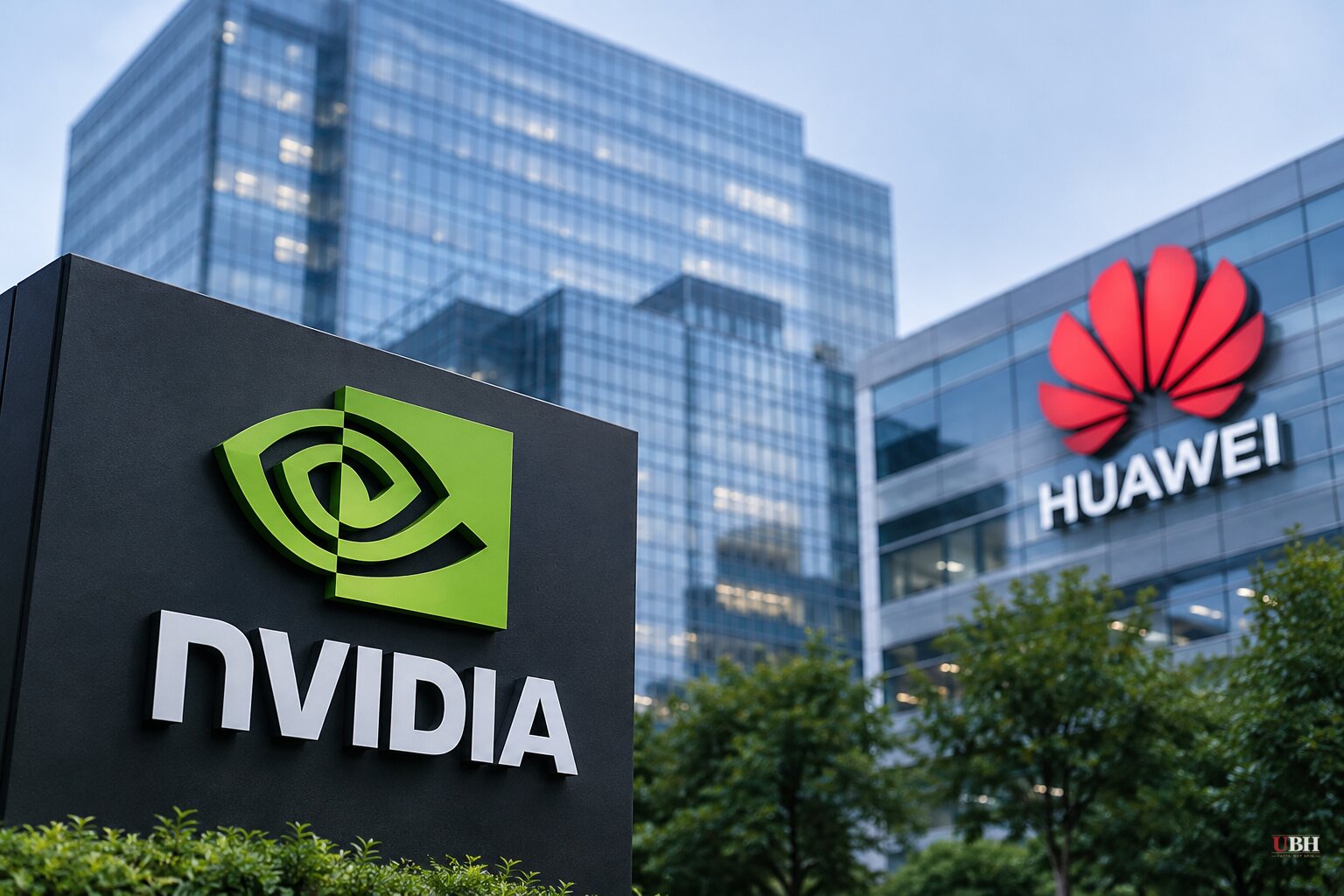
Four years after Washington began choking off China's access to advanced chips, the market numbers are moving in a direction the policy was not supposed to produce.
Nvidia's share of China's AI accelerator market fell to 34% in the first half of 2026, according to IDC data. The company shipped about 678,000 units there, and its AI accelerator shipments in China dropped 44% from a year earlier.
Huawei took 28% over the same period, shipping 572,000 AI accelerators. Total shipments in China reached roughly 2 million units. So Nvidia is selling a lot of chips into a growing market. It is just selling a smaller slice of it.
The professor who warned them
Rakesh Kumar teaches electrical and computer engineering at the University of Illinois Urbana-Champaign and wrote the book Chip Age: How Semiconductors Became the World's Most Powerful Resource. In Fortune, days before the Biden administration unveiled its October 2022 export controls, he warned they would not work. "You can't win an important race by hoping to trip your opponent, especially when there are significant costs to doing so," he wrote. "A far better strategy is to run faster."
He is now collecting on that call. "I'm not going to say 'I told you so,'" he said. "But it really is 'I told you so.'"
Kumar's argument is specific. Most AI uses, such as robotics and smart cameras, do not need the most advanced silicon. In his telling, cutting China off gave Beijing a reason to build its own alternatives. "Export controls spurred China to invest all this money to set up an ecosystem where they can now serve these applications by themselves," he said.
What China's industry is showing
Several recent data points fit his thesis, though none proves the controls caused them.
On Oct. 13, Huawei said it had shipped more than 100 million devices powered by its in-house Kirin processors since 2023. DeepSeek and Z.ai have adapted their flagship models to run on Huawei's Ascend processors. Meituan said in June that it had trained a 1.6-trillion-parameter AI model entirely on domestically made chips.
Memory is the newest flashpoint. CXMT president Cao Kanyu told an industry conference in Shanghai over the weekend of Oct. 10-11 that the company will roll out a server memory chip with a new "4F²" design before the end of the year. A company spokesperson confirmed his comments.
If CXMT delivers, it would reach that density threshold before Samsung and SK Hynix, despite U.S. sanctions that bar it from tools like ASML's top-end machines. Cao gave no further details, and the claim is unverified.
Markets reacted anyway. Micron closed down 4% on Monday, Oct. 12. On Tuesday, Oct. 13, Samsung shares fell 7.4% and SK Hynix fell 10% in South Korea.
The case that the controls still bite
Kumar's view is not the only reading of the evidence. Morningstar analyst Jing Jie Yu said a successful 4F² implementation "would vastly improve CXMT's competitive position versus peers." He added that memory leaders and equipment makers have both echoed the difficulty of the transition. "We still expect a meaningful time gap between the unveiling of CXMT's 4F² product and commercialisation at viable yields," he said.
The constraints are also real. EUV lithography, the machinery that etches the finest circuit patterns, remains the choke point. China has spent tens of billions of dollars on its semiconductor supply chain over the past decade and still depends on foreign equipment for advanced nodes. Restrictions from the Biden administration and allies such as the Netherlands have limited what China can make at the leading edge.
CXMT's breakthrough, if real, is not expected to threaten Samsung, SK Hynix and Micron in high-bandwidth memory, the type Nvidia's accelerators depend on. CXMT briefly became China's most valuable company after its summer IPO, and it is on track to produce the latest smartphone memory, LPDDR6, on roughly the same timeline as Samsung and SK Hynix.
The stated U.S. goal has also shifted. Officials now talk less about stopping Chinese AI development and more about keeping the United States at the frontier. In 2026, export controls on advanced computing items moved toward case-by-case licensing rather than blanket rejection under the Trump administration.
Allies are tightening anyway
The leak problem is a separate issue from whether the controls drive Chinese innovation. U.S. authorities believe Nvidia chips worth billions of dollars have entered China illegally in recent years, routed through third countries.
Taiwan is moving to close part of that gap. Economy Minister Kuo Jyh-huei said in an interview conducted Oct. 12 that the government plans to add AI servers and advanced semiconductors to its export control list. Shipping restricted AI chip equipment to China without a license would then carry criminal penalties under the Foreign Trade Act.
Kuo tied the alignment with U.S. rules to commitments Taiwan made in a trade agreement signed with the United States this year. He gave no timeline. Today, Taiwanese prosecutors have to rely on other domestic laws in smuggling cases, because unauthorized AI chip exports to China are not a criminal offense in themselves.
What comes next
Two tests are coming. Taiwan has not said when its new export rules will take effect. CXMT has said its 4F² product will launch before the end of 2026.
If the chip ships at commercial yields, Kumar's argument gets its strongest evidence yet. If it slips, the Morningstar view that a meaningful gap remains will look better.
Sources used for this briefing
6 links from 5 independent newsrooms (syndicated copies of the same report count once)
These are the sources it draws on, linked so you can verify.


