
Unbiased headlines. Facts, not spin.
Every story is an unbiased news briefing written from 110+ sources across the spectrum — sources linked so you can verify it yourself.
 tech
Notable (6/10)
August 12, 2026 at 10:52 AM
tech
Notable (6/10)
August 12, 2026 at 10:52 AM
Nvidia Signs BYD, Nissan, Hyundai and Geely to Self-Driving Platform, Plans Robotaxi Launch With Uber in 2027
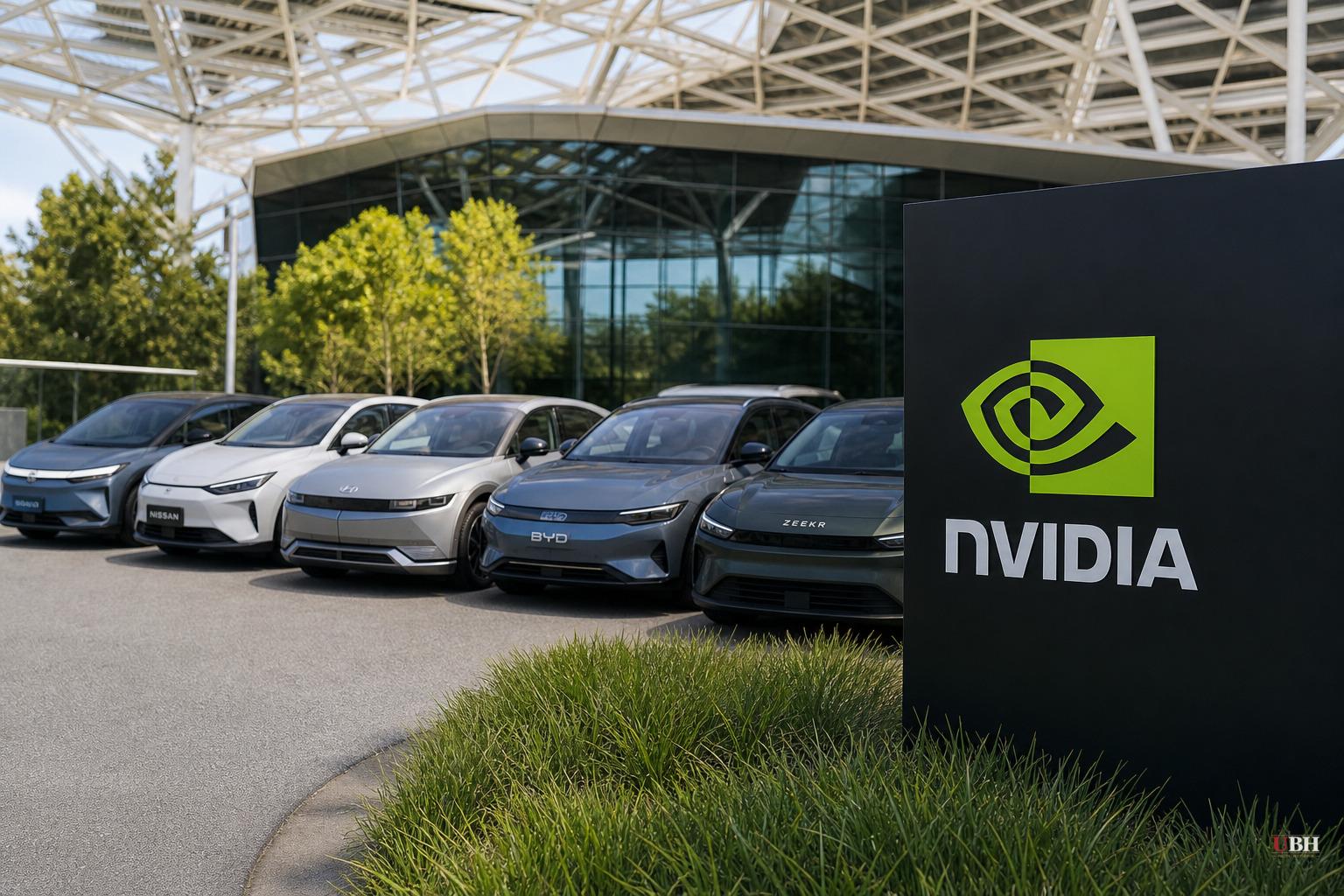
Nvidia just locked up a chunk of the global auto industry for its self-driving software stack. At its GTC conference in San Jose, the chipmaker announced that BYD, Geely, Nissan and Isuzu will adopt its DRIVE Hyperion platform to build Level 4-capable autonomous vehicles. Hyundai Motor Group and Kia, already tied to Nvidia through their Motional robotaxi joint venture, are deepening that relationship.
CEO Jensen Huang did not undersell it. He called this the ChatGPT moment for autonomous vehicles, according to Nvidia's own announcement. ChatGPT went from novelty to 100 million users in two months. Self-driving cars have been "five years away" for over a decade. Huang's comparison is a bet, not a fact.
The DRIVE Hyperion platform is the product being sold here. It bundles three pieces: Halos OS, a safety architecture built to meet Level 4 autonomy standards; Alpamayo 1.5, Nvidia's real-time decision-making model; and Omniverse NuRec, a simulation tool that lets automakers test vehicles in virtual environments before they touch a real road. Automakers buy into the stack instead of building their own from scratch.
The Uber Deal Is the Bigger Story
Separate from the automaker signings, Nvidia and Uber announced plans to build a robotaxi network together. The initial fleet, running Nvidia's DRIVE AV software, is planned to launch in Los Angeles and the San Francisco Bay Area in the first half of 2027. From there, Nvidia says it's targeting 28 cities worldwide by 2028.
Uber is not going it alone on the ride-hailing side either. Bolt, Grab and Lyft have also committed to using the Nvidia platform, per the announcement.
Uber already tried to build self-driving tech in-house and it didn't work. Uber's Advanced Technologies Group burned years and money before Uber sold it off to Aurora Innovation in 2020. This time, Uber is renting the technology instead of building it, which is a smarter bet financially even if it means sharing the upside with Nvidia.
Huang put a number on the opportunity, calling autonomous vehicles "the first multitrillion-dollar robotics industry," according to Nvidia. This is Nvidia's own framing of its addressable market. Take it for what it is: a company selling chips and software talking up the size of the market it wants to sell into.
The Hyundai Angle Is Worth Watching
The Hyundai and Kia expansion runs through Motional, their existing robotaxi joint venture that has been running pilot programs in Las Vegas and other cities. Motional already has real-world operational data, which pairs with Nvidia's simulation tools in a way a brand-new partnership wouldn't. That's an operational advantage over automakers starting from zero.
The Skeptical Read
A 2027 robotaxi launch and a 28-city buildout by 2028 is an aggressive timeline. Waymo, which has actual paying robotaxi riders on the road today in multiple U.S. cities, took roughly 15 years and billions of dollars to get where it is. Tesla has promised full self-driving "next year" for close to a decade running.
Nvidia is not the one that has to build and operate the cars. It sells the chips and software to companies that do. That's a good business model for Nvidia regardless of whether Uber's robotaxi fleet actually hits the road on schedule. If the 2027 launch slips, Nvidia still gets paid by BYD, Geely, Nissan, Isuzu, Hyundai and Kia for the hardware and software licenses. The downside risk sits with the automakers and Uber, not with Nvidia's balance sheet.
None of these partnerships have produced a single Level 4 vehicle on a public road yet. This is a framework of agreements and a target date, not a working fleet. Nvidia's press materials, which is functionally what this announcement is, don't include a public timeline for regulatory approval in California or anywhere else Nvidia plans to operate, a step that has slowed every other robotaxi operator including Waymo and Cruise, which shut down its robotaxi operations in 2023 after a safety incident in San Francisco.
The next real checkpoint is whether Nvidia and Uber file for or receive permits to test and operate autonomous vehicles in Los Angeles and the Bay Area ahead of the planned 2027 launch. Until that paperwork shows up, this is a roadmap, not a rollout.
Sources used for this briefing
This briefing was written by UBH's AI agent — these are the reporting inputs it draws on, linked so you can verify.


