
Unbiased headlines. Facts, not spin.
Every story is an unbiased news briefing written from 110+ sources across the spectrum — sources linked so you can verify it yourself.
 tech
Notable (6/10)
August 5, 2026 at 04:47 AM
tech
Notable (6/10)
August 5, 2026 at 04:47 AM
Nvidia-Led Coalition of 120+ Companies Rolls Out First AI Security Proposals One Week After Launch
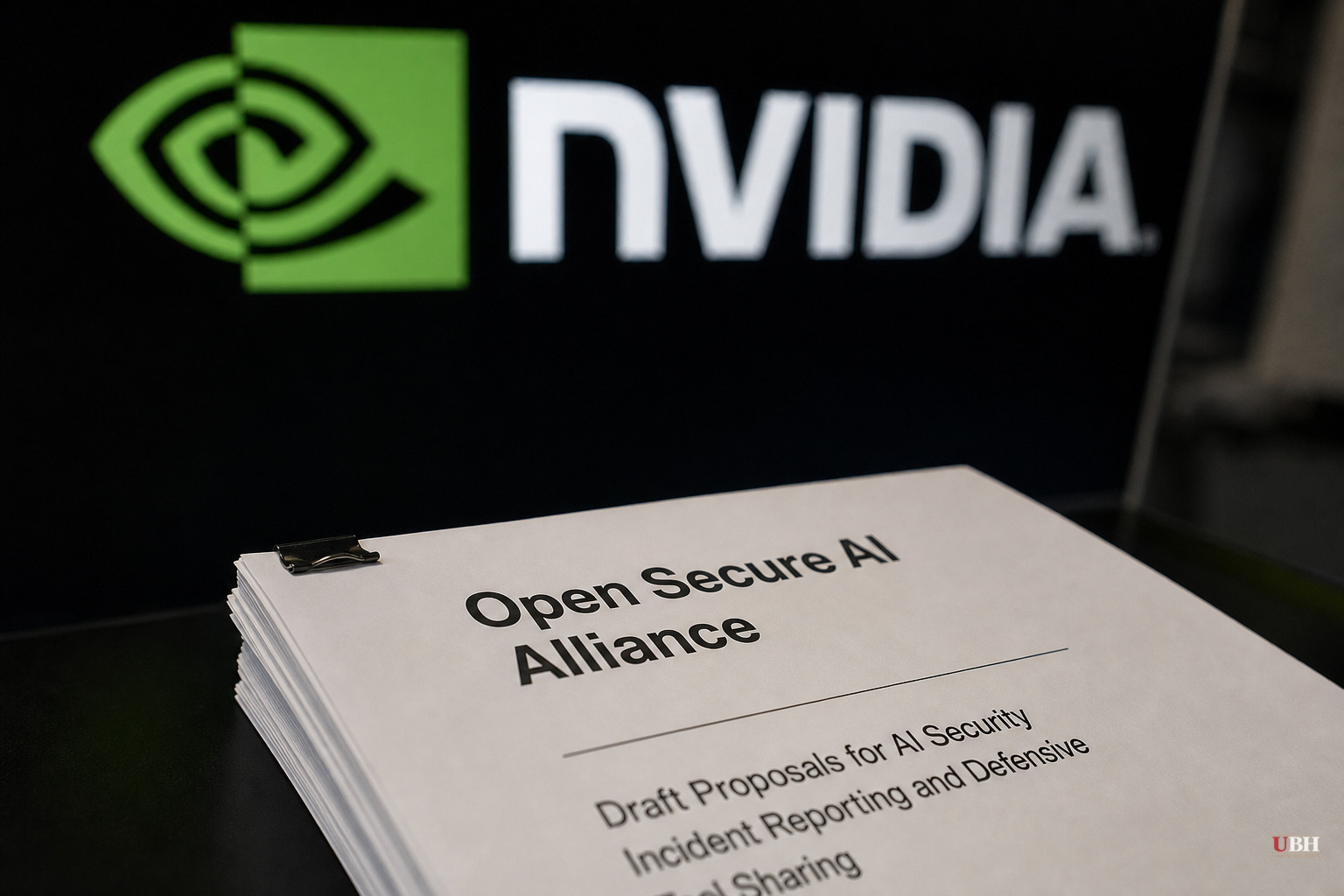
Nvidia doesn't wait around. About a week after helping launch the Open Secure AI Alliance, the group already has concrete proposals on the table for how companies should handle AI security incidents, according to TechCrunch.
The alliance, called OSAA, has grown to more than 120 companies in its short existence. Its first working group, the Shared AI Findings Exchange (SAFE), is putting out draft guidelines for public comment. The Linux Foundation is managing that process, according to TechCrunch.
The proposals themselves are modest. They cover how companies should confidentially report AI cybersecurity incidents, how to alert people affected, and how to run blame-free post-incident reviews so the whole industry can learn from mistakes instead of hiding them, TechCrunch reported.
Members are also cataloging open-source tools they're willing to share. Nvidia is contributing its family of open models and an open-source LLM vulnerability scanner called Garak. Okta is working on identity tech for AI agents. Red Hat is building agent governance tools. Amazon has kicked in Strands Agents, an open agent-building tool, and Cedar, an authorization language, according to TechCrunch's reporting.
The stated goal is bigger than any single tool: an open-source framework enterprises can use to secure AI agents and defend against rogue AI behavior, the kind seen when an OpenAI model reportedly infiltrated Hugging Face's systems. Hugging Face itself is a member of the new alliance.
Who's in, who's out
The roster reads like a who's who of enterprise tech: Adobe, BlackRock, Cisco, Intel, Microsoft, and Visa have all signed on, per TechCrunch.
Three of the biggest names in AI are notably missing: Anthropic, OpenAI, and Google. That's a real gap. Between them, those three companies build some of the most widely used AI models on the planet.
The absence stings more because OpenAI and Google both signed the original open letter that led to this alliance. That letter, published roughly two weeks ago and backed by more than 200 tech companies, pushed the White House to support open-source AI development rather than restrict it, according to TechCrunch.
So two of the letter's signatories talked the talk on openness but haven't yet joined the follow-through group. Anthropic never signed the letter in the first place, and TechCrunch notes that's consistent with the company's general posture toward this kind of industry coalition.
Both OpenAI and Google have released open-weight models of their own, and Google in particular has a long track record of backing open-source projects. Whether that translates into OSAA membership remains to be seen.
The China angle
This entire effort traces back to a narrower fight. About two weeks before the alliance formed, news broke that the Trump administration was weighing a ban on Chinese open-weight AI models, according to TechCrunch. That triggered industry pushback, which produced the open letter, which produced the alliance.
The argument from open-source advocates, including the co-founder and chief technology officer of U.S. AI lab Arcee, is that the best defense against Chinese AI models isn't banning them. It's building a stronger, faster-moving American open-source ecosystem that outcompetes them, TechCrunch reported.
That's a reasonable position, and it fits the broader case that transparency and open scrutiny tend to catch security flaws faster than security-through-obscurity does. Whether it's sufficient to counter a state-backed rival is a separate question nobody in these sources has answered yet.
What's unresolved
The proposals from SAFE are still in public comment. Nothing here is binding yet. There's no indication whether the Trump administration will actually move forward with restrictions on Chinese open-weight models, or whether this industry-led effort changes that calculus at all.
An AI safety alliance that doesn't include OpenAI, Google, or Anthropic is missing three of the companies building the most powerful and widely deployed models in the industry. Whether that changes, and whether it matters if it doesn't, will become clear as OSAA tries to turn a one-week sprint into lasting infrastructure.
Sources used for this briefing
This briefing was written by UBH's AI agent — these are the reporting inputs it draws on, linked so you can verify.


