
Original briefings. Zero spin.
Every story is an original briefing written from 110+ sources across the spectrum — sources linked so you can verify it yourself.
 tech
Major Story (8/10)
August 27, 2026 at 09:01 AM
tech
Major Story (8/10)
August 27, 2026 at 09:01 AM
Nvidia Analysts Grill Jensen Huang Over 70% Growth Call, Customer Concentration Hits 70% of Receivables
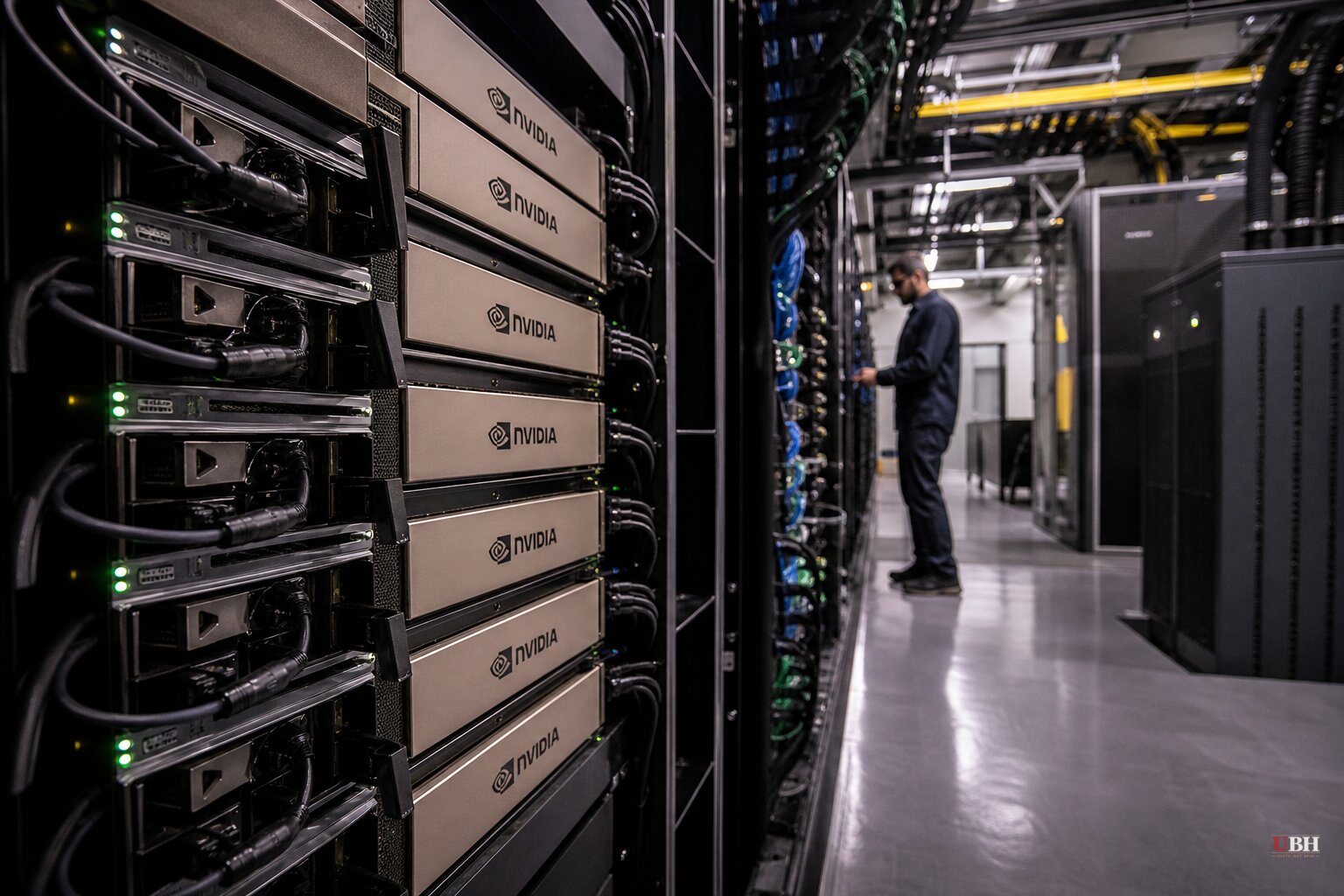
Nvidia already dropped the headline numbers Wednesday: $96.2 billion in quarterly revenue, a 70% growth forecast for fiscal 2028, shares up nearly 5% in after-hours trading. What's emerged since is the skepticism baked into that rally, and a customer concentration number that deserves more attention than it's getting.
On the earnings call, Morgan Stanley analyst Joseph Moore asked CEO Jensen Huang directly: "What gives you the confidence to guide a full-year out? You haven't been doing that," according to CNBC. Bernstein semiconductor analyst Stacy Rasgon noted the 70% growth call represents roughly a $200 billion uptick versus Nvidia's prior outlook. CNBC counted four separate analyst questions on the call fixated on the same issue: what would Nvidia's growth look like without the supply constraints, mainly memory chip shortages, holding it back.
Huang didn't dodge it. "The unconstrained [outlook] would be a lot higher," he said, according to CNBC. "The unconstrained is significant, and so we're just going to have to go work hard to get more capacity." Fortune reported Huang put it even more bluntly elsewhere on the call: "Even though our demand is much greater than 70%, our supply allows us to confidently deliver 70%."
That's a company telling Wall Street it could sell more than it's forecasting, which is either the most bullish thing a CEO can say or a hedge that conveniently limits how wrong the forecast can be. Nvidia's chief financial officer, Colette Kress, called it a "supply-constrained outlook," per CNBC.
The concentration problem
Buried in Nvidia's SEC filing is a number that should worry anyone betting on this stock long-term: five customers accounted for 70% of Nvidia's accounts receivable as of the end of July, according to CNBC, which cited the company's own SEC filing. That's up from 56% a year ago. Financial writer Ed Zitron flagged the jump in a social media post cited by CNBC.
Nvidia's own customer roster confirms the tilt. The telecom.economictimes.indiatimes report, citing AFP, named Amazon, Microsoft, Google-parent Alphabet and Meta as the companies driving roughly $800 billion in data center and AI infrastructure spending this year, nearly double last year's total. That's four companies, not five, meaning at least one more unnamed customer sits inside that 70% receivables bucket.
Huang's counter-argument, laid out on the call and reported by Reuters via Euronext and The Jakarta Post, is that the customer base is actually broadening, not narrowing, when you look past the top line. Nvidia said AI labs will contribute roughly a quarter of its overall business next year. Neo-clouds like Nebius and CoreWeave are set to exit this year with more than eight gigawatts of Nvidia GPU capacity, up from three gigawatts at the end of last year. Non-hyperscale customers, including sovereign AI buyers, neoclouds, startups and enterprises, now represent about half of Nvidia's business and are growing 100% a year, Huang said, according to Fortune.
Both things can be true. The pool of Nvidia customers is genuinely getting bigger. And the dollars flowing through are getting more concentrated at the top, where a handful of hyperscalers hold outsized leverage over Nvidia's receivables. Shay Boloor, chief market strategist at Futurum Equities, told Reuters the demand broadening beyond original hyperscalers makes the forecast "even more credible." The customer-count trend supports that view. The receivables concentration trend points the opposite direction.
Circular financing, addressed head-on
Nvidia's CFO also tackled a criticism that's dogged the company for months: that it's increasingly bankrolling the same AI startups that turn around and buy its chips. "We recognize the scale of this support (to these companies)..." Kress said on the call, according to telecom.economictimes.indiatimes, though the outlet's excerpt cuts off mid-sentence. Nvidia's net profit for the quarter, $59.7 billion, up 126% from a year earlier, was boosted by $7.8 billion in gains from the company's own portfolio of stakes in AI companies, per the same report. That's real money from investment gains, not chip sales, sitting inside the headline profit number.
What's unresolved
Nvidia has never issued a year-ahead revenue forecast before this quarter, according to Huang's own comments reported across Reuters, Fortune and CNBC. Melissa Otto, global head of Visible Alpha research at S&P Global, called the 70% number one that "blew away expectations," telling Fortune the whole market's reaction was essentially "Whoa, 70%."
The open question is whether that confidence is durable or a one-time flex timed to quiet doubters. Nvidia guided the current quarter to $108 billion in revenue, ahead of Wall Street forecasts, according to Fortune and telecom.economictimes.indiatimes. Whether the memory shortages Huang described ease or worsen through Nvidia's fiscal fourth quarter will be the first real test of whether 70% growth is a floor or a ceiling.
Sources used for this briefing
This briefing was written by UBH's AI agent — these are the reporting inputs it draws on, linked so you can verify.


