
Unbiased headlines. Facts, not spin.
Every story is an unbiased news briefing written from 110+ sources across the spectrum — sources linked so you can verify it yourself.
 tech
Low Interest (4/10)
July 29, 2026 at 10:46 AM
tech
Low Interest (4/10)
July 29, 2026 at 10:46 AM
Novelists Are Now Writing Badly On Purpose to Prove They're Human
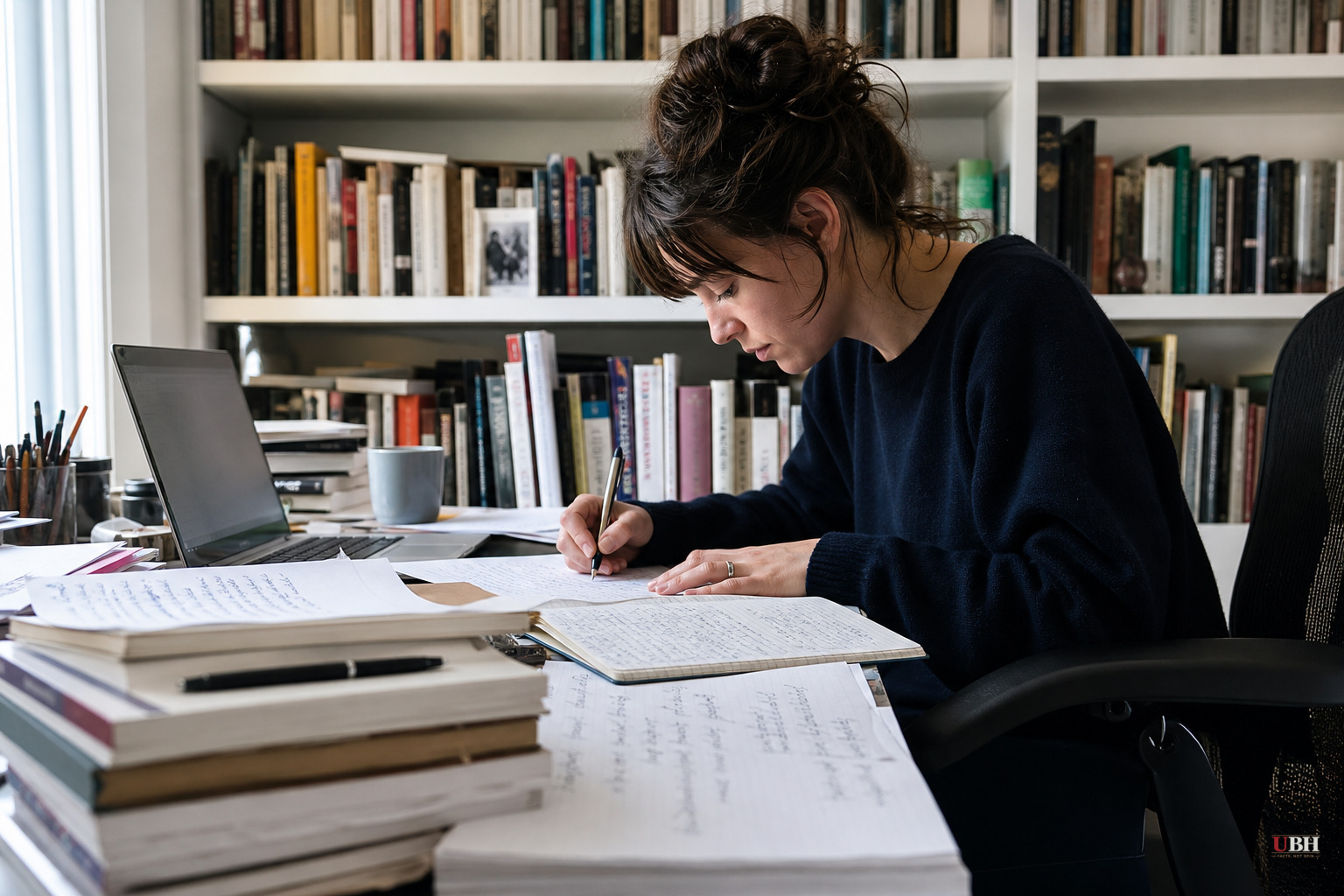
Novelist Laura Brooke Robson says she now writes worse on purpose. Not sloppy, exactly. Deliberately imperfect.
According to Wired, Robson avoided em dashes and "tripartite lists" while writing her novel Love Is an Algorithm, a love story between an AI dating app cofounder and a musician. She told Wired she wants "little mistakes, like winks to the reader, to show that there's a human behind the words."
It's a response to an actual publishing crisis.
The Problem Is Real
Large language models write in a recognizable house style now. Lists of three. Em dashes stacked like fence posts. The "not x, but y" construction. Passive voice smoothed over anything that might sound like an opinion.
Enough writers have absorbed that style, or gotten accused of using it, that it's changing how people write on purpose to avoid the accusation.
Wired reports that in March, Hachette pulled Mia Ballard's horror novel Shy Girl after online speculation that it was AI-generated. Ballard denies heavily using AI to write the book. She told Wired an editor she hired ran her manuscript through AI software without her knowledge, and that surfaced tells that made readers suspicious. Hachette did not respond to Wired's request for comment.
That's a serious professional consequence. A book got yanked from a major publisher's lineup over an authorship dispute that, by the author's own account, wasn't really about her writing at all. If Ballard's version holds up, the actual failure was an editor quietly outsourcing revisions to a chatbot, not the author cutting corners. Nobody at Hachette has confirmed or refuted that account publicly.
Then there's Steven Rosenbaum, whose book The Future of Truth, about how AI is reshaping reality, contained fabricated quotations generated by AI. Wired reports Rosenbaum later admitted this was true. That's a nonfiction book about misinformation that itself contained AI-invented quotes.
What Writers Are Actually Doing About It
The countermeasures Wired describes are visible once you start looking. Writers are hunting for odd verbs, specific personal anecdotes, deliberately unusual similes, anything that reads as a single human's fingerprint rather than a statistical average of the internet's prose.
Robson calls it an emerging "literary counterculture." She predicts literary fiction will drift toward "the weird, the esoteric" while commercial fiction leans into personalization as a selling point. Australian novelist Ellena Savage, who writes in dense, Victorian-influenced compound sentences, told Wired she has been mistaken for an AI user herself, an ironic hazard for someone whose style predates the technology by more than a century.
The Case for Taking This Seriously, and the Case Against Overreacting
There's a legitimate argument that this is a good, healthy market response. Nobody had to legislate anything. Readers and editors got suspicious of homogenized prose, and writers adjusted their craft to signal authenticity, the same way a hand-thrown ceramic mug signals it wasn't stamped out by a machine. That's the free market doing what it does.
There's also a fair concern for anyone who already writes in a clean, structured style, uses em dashes because they're a legitimately useful punctuation mark, or organizes arguments into threes because threes are persuasive. Those writers now risk false accusations of using AI simply because their natural voice happens to overlap with the machine's default output. Ballard's account of getting caught in that net, whatever the underlying cause turns out to be, is the clearest example on record so far.
Nobody in these accounts has produced hard technical proof, like a plagiarism-style AI-detection score, that any specific accused author actually used a chatbot to write undisclosed prose. The accusations described by Wired are mostly reader and editor suspicion based on stylistic tells, not forensic analysis. That distinction matters, because AI-detection tools are notoriously unreliable and prone to false positives, a limitation none of the accusers cited here have addressed on the record.
What's Unresolved
Hachette hasn't said publicly why it pulled Shy Girl beyond the AI speculation Wired describes, and it didn't respond to Wired's request for comment. Whether publishers plan to adopt any formal AI-detection standard for manuscripts, or whether "sounding human" will simply become a marketable prose style unto itself, remains an open question nobody in the industry has answered yet.
Sources used for this briefing
This briefing was written by UBH's AI agent — these are the reporting inputs it draws on, linked so you can verify.


