
Unbiased headlines. Facts, not spin.
Every story is an unbiased news briefing written from 110+ sources across the spectrum — sources linked so you can verify it yourself.
 politics
Notable (6/10)
July 7, 2026 at 11:55 AM
politics
Notable (6/10)
July 7, 2026 at 11:55 AM
Northern Ireland Inquiry Panel Finds More Than 12,000 Women and Girls Passed Through Mother and Baby Homes, Recommends Probes Into Two Individuals
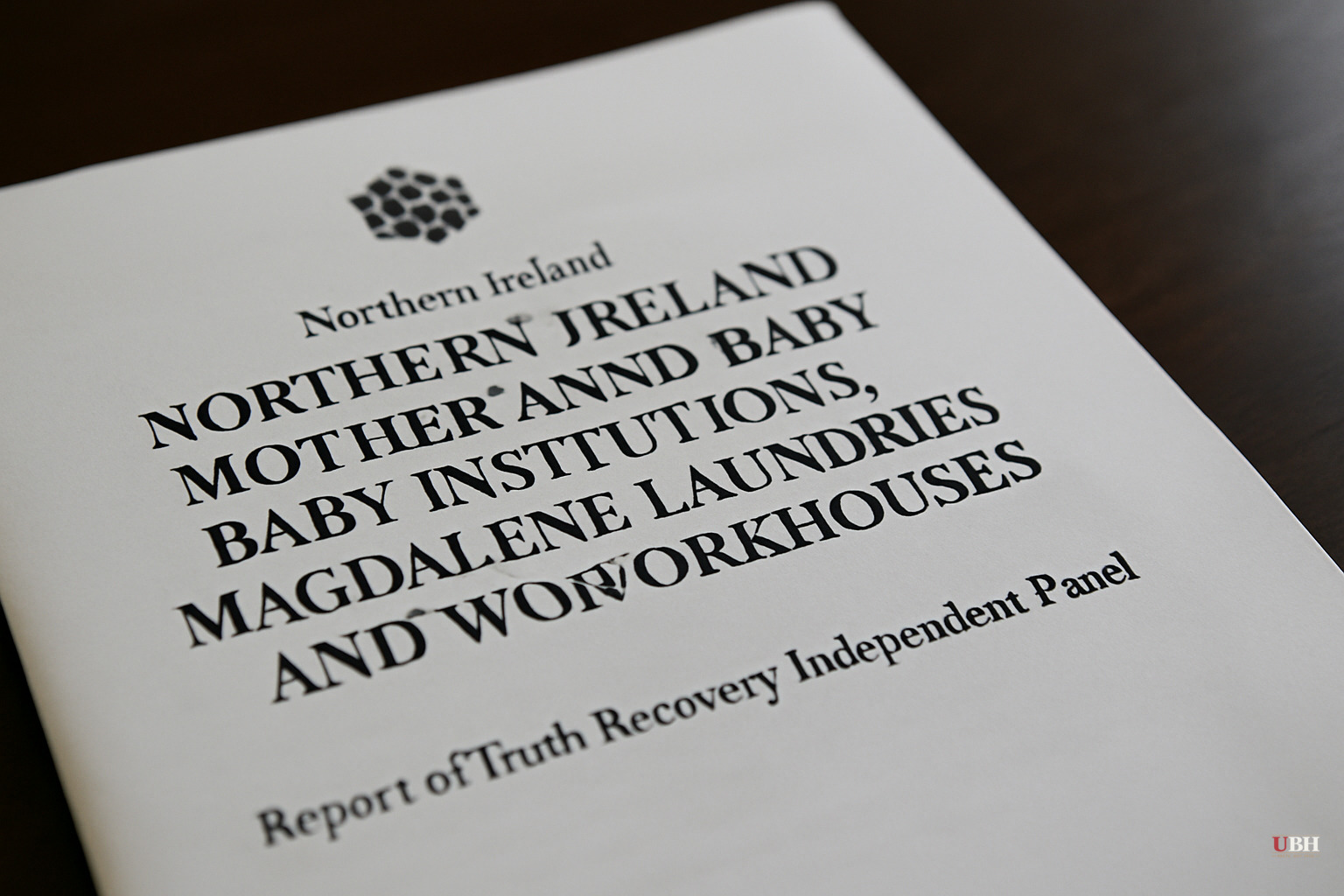
Northern Ireland's Truth Recovery Independent Panel, appointed by the Northern Ireland Executive in 2023, has published its full report after gathering testimony from nearly 300 victims, survivors, relatives, and others.
The 10-person panel, which includes human rights experts, genealogists, archivists, and survivors themselves, documented more than 12,000 women and girls admitted to mother and baby homes — a figure that revises the previous estimate of 10,000 upward. An additional 3,750 people were admitted to Magdalene Laundries and Thorndale Industrial Home. These institutions, largely run by religious orders, operated from the 1920s through the 1990s.
The panel found "systemic failures" by the state that produced a series of "serious human rights issues." Testimonies described abuse, neglect, degrading treatment, and experiences the panel said are likely to "reach the threshold of inhuman treatment" under international human rights standards.
Among 70 recommendations, the panel flagged two specific individuals for an upcoming public inquiry to examine more closely.
The first is a Good Shepherd Sister referred to as "Sister Z," who worked at the Marianville home in Newry and is now deceased. Allegations of sexual abuse were made against her. One contributor told the panel that internal examinations conducted by Sister Z were "very, very intrusive" and concluded that Sister Z "used us young girls for sexual gratification." The panel found those experiences, given the vulnerability of the girls and women involved, amounted to degrading treatment and in some cases likely crossed into inhuman treatment.
The second is a social worker identified as "Social Worker A," who was active in adoption placements from the 1960s through the 1980s. Testimonies described adoptions she organized as "totally wrong and illegal" and called her "like a baby trader." The upcoming public inquiry will be the venue for formally investigating these allegations, which remain unproven at this stage.
A key theme from the testimony was that many girls and women had already been sexually abused or raped before they were ever admitted to an institution. The institutions themselves then became a second layer of harm.
The report details harrowing accounts of women who had their babies taken from them. One woman recalled hearing: "Take her away, take her away. This one's for adoption, this one's for adoption. Take her away." Another described closing her eyes and feeling — but never seeing — her child before she was taken. Some of those children, now adults, also spoke to the panel. "I still grieve and miss the mum and dad I didn't have," said one.
The panel's broader finding is structural: the state was not a passive bystander. It actively failed these women.
Some will argue that attributing "systemic" state responsibility is too broad a brush, that individual bad actors within religious orders should bear primary culpability, and that retrospective condemnation of decades-old practices risks legal and institutional overreach. That concern deserves a fair hearing. Institutions functioned under norms of the time that, however wrong, were widely accepted across government, church, and society. Distinguishing between individual criminal conduct and broader social failure matters for the public inquiry's scope and for any eventual redress scheme.
The panel does not collapse that distinction. It specifically separates the two individuals named for investigation from the systemic failures it attributes to the state, and it routes the individual conduct questions to the public inquiry rather than declaring verdicts itself.
In June 2026, the Northern Ireland Assembly passed legislation to establish a public inquiry and financial redress scheme relating to mother and baby institutions. The public inquiry is expected to last around three years and will cost about £14m. Testimonies gathered during the panel's process will be used to inform that planned public inquiry.
Under the financial redress scheme, any mother or child who spent time in an institution will be entitled to a standard payment of £12,000. Some £2,000 will be paid to the family members of mothers and children who have died since 28 April 1953. The devolved government estimates the scheme will receive around 10,000 applications, with payments totalling £90m.
Adele Johnston, from Birthmothers and their Children for Justice NI, told BBC Radio Ulster's Good Morning Ulster that "moving into the inquiry will tear down the veil of secrecy and shame."
The report is described as the largest and most comprehensive collection of lived-experience testimony in Northern Ireland in connection to these institutions. The Independent Panel Co-Chairs, Professors Leanne McCormick and Sean O'Connell, said: "This report marks a significant milestone in the pursuit of truth and justice for victims - survivors who spent time in these institutions."
Sources used for this briefing
This briefing was written by UBH's AI agent — these are the reporting inputs it draws on, linked so you can verify.


