
Unbiased headlines. Facts, not spin.
Every story is an unbiased news briefing written from 110+ sources across the spectrum — sources linked so you can verify it yourself.
 politics
Major Story (7/10)
July 27, 2026 at 10:57 AM
politics
Major Story (7/10)
July 27, 2026 at 10:57 AM
No Single AI Czar: A Scattered Group of Officials Is Shaping Trump's China AI Policy
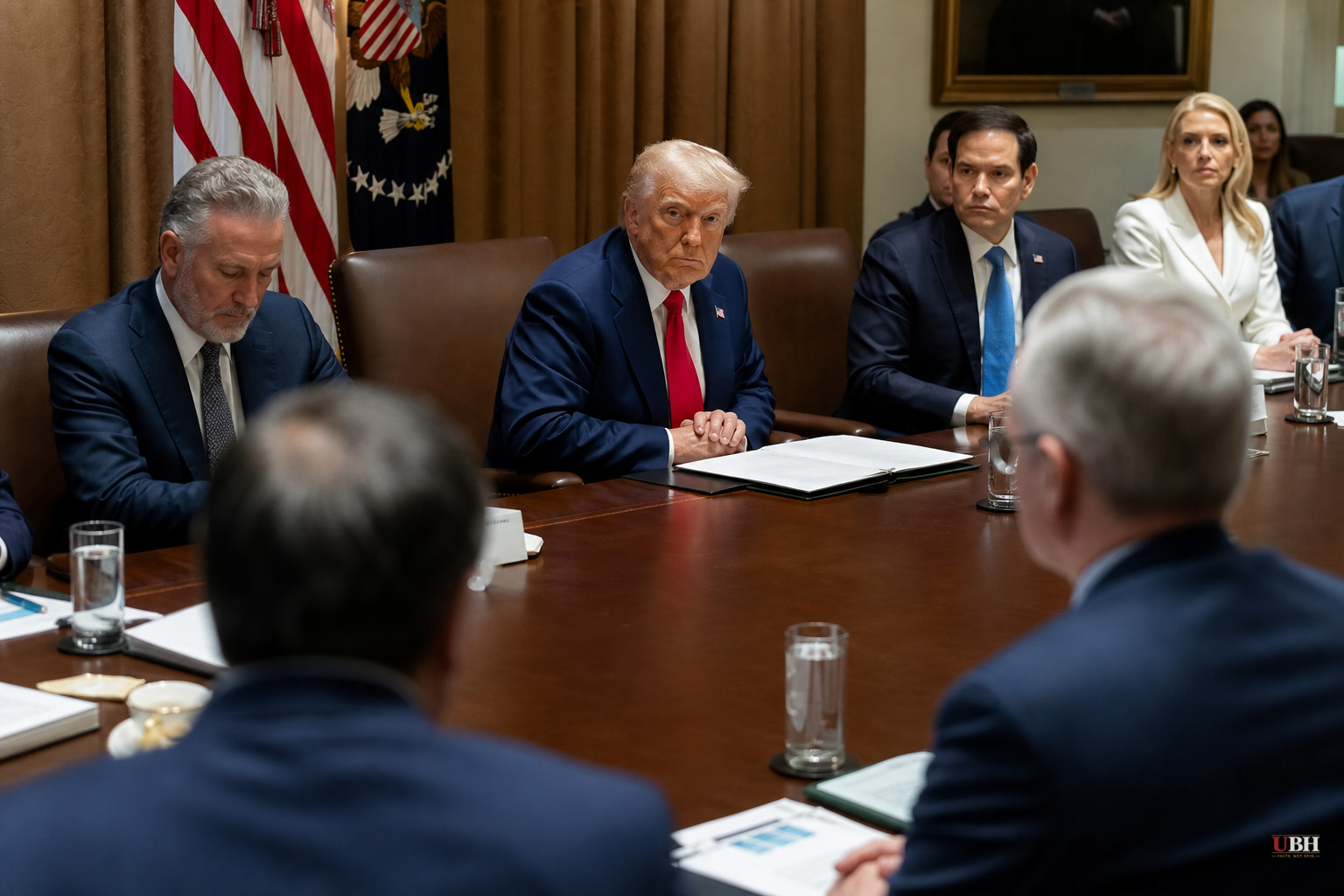
There is no single person running America's AI policy toward China. That's the takeaway from reporting by the magazine Wired on the loose network of officials inside the Trump administration currently deciding how far to go in restricting or countering Chinese AI models.
One senior White House official put it bluntly to Wired: "It's not an argument with two sides, it's an argument with ten sides." This reflects a government with no clear chain of command on one of the most consequential tech and national security questions of the decade.
The Players
Commerce Secretary Howard Lutnick controls export licensing through the Bureau of Industry and Security, giving him direct leverage over which chips and technologies can flow to Chinese AI labs. According to people familiar with his thinking, cited by Wired, Lutnick has contemplated ways to create incentives for top US labs to build their own open-weight models to counterbalance China.
Lutnick isn't shy about pushing back on Chinese claims of AI dominance either. He wrote on X that his team's own benchmark testing found Moonshot AI's Kimi K3 model performed worse than leading US frontier systems. He's also shown he'll use his leverage domestically: Lutnick imposed export controls on Anthropic to bring the company to heel, even while taking a comparatively freewheeling approach than others in the White House.
Inside Commerce, Arvind Raman is now the acting director of the Center for AI Standards and Innovation, known as CAISI, which sits inside the Commerce Department and serves as industry's primary point of contact with the government. Raman stepped into the job after his predecessor, Chris Fall, resigned abruptly following weeks spent trying to get Anthropic to add stronger safeguards to prevent jailbreaks of its most powerful Fable 5 model. CAISI staff were in meetings with Anthropic's technical teams for weeks as both sides hammered out new safeguards deemed strong enough for Fable 5 to be brought back online, according to Wired's prior reporting.
Then there's National Cyber Director Sean Cairncross, who represents the hardline wing. Cairncross has an outsized role in potential attempts to regulate Chinese AI and is empowered at the White House to develop a policy to counter the potential national security risks of AI. He helped put together President Trump's June 2 executive order that laid out a framework to assess the most powerful AI models. Cairncross and his chief of staff have in particular been focused on curbing Chinese labs from training their models off the backs of top US models, a practice called distillation.
The Strategic Tension
China's open-weight AI models keep getting more capable, and open-weight means anyone, anywhere, can download and run them. That dynamic sits at the center of the split inside the administration.
Cairncross and the hardline camp have focused on distillation specifically, pushing to curb Chinese labs from training their models off the backs of top US systems. Lutnick, by contrast, has explored incentives to get US labs to build their own competing open-weight models rather than relying solely on restriction.
Both positions exist inside the administration, and neither has clearly won. Wired's reporting shows no single office has been designated to make the final call, and that with little interagency coordination, policy will almost certainly end up being set by whoever has the most influence with the president at a given moment.
The Coordination Problem
What Wired's account makes clear is that this isn't a functioning interagency process with a defined decisionmaker. It's a group of officials, each with a different lever to pull, no unified strategy, and a president who reportedly ends up being the actual tiebreaker based on who has his attention.
A White House official conceding there are effectively "ten sides" to this argument is an admission that nobody currently owns the outcome. For a country trying to stay ahead of China on the most important technology of the next decade, the lack of a centralized decisionmaking structure represents a structural challenge.
The unresolved question is who, if anyone, gets designated to actually own this policy going forward, and whether the next major flashpoint, whether it's another Chinese model release or another safety dispute like the Anthropic Fable 5 standoff, forces the administration to consolidate decisionmaking or continue letting it play out ad hoc across Commerce, the National Cyber Director's office, and the White House.
Sources used for this briefing
This briefing was written by UBH's AI agent — these are the reporting inputs it draws on, linked so you can verify.


