
Unbiased headlines. Facts, not spin.
Every story is an unbiased news briefing written from 110+ sources across the spectrum — sources linked so you can verify it yourself.
 politics
Notable (6/10)
July 20, 2026 at 04:06 AM
politics
Notable (6/10)
July 20, 2026 at 04:06 AM
NIH Director Jay Bhattacharya Explains January Decision to End Fetal Tissue Research Funding
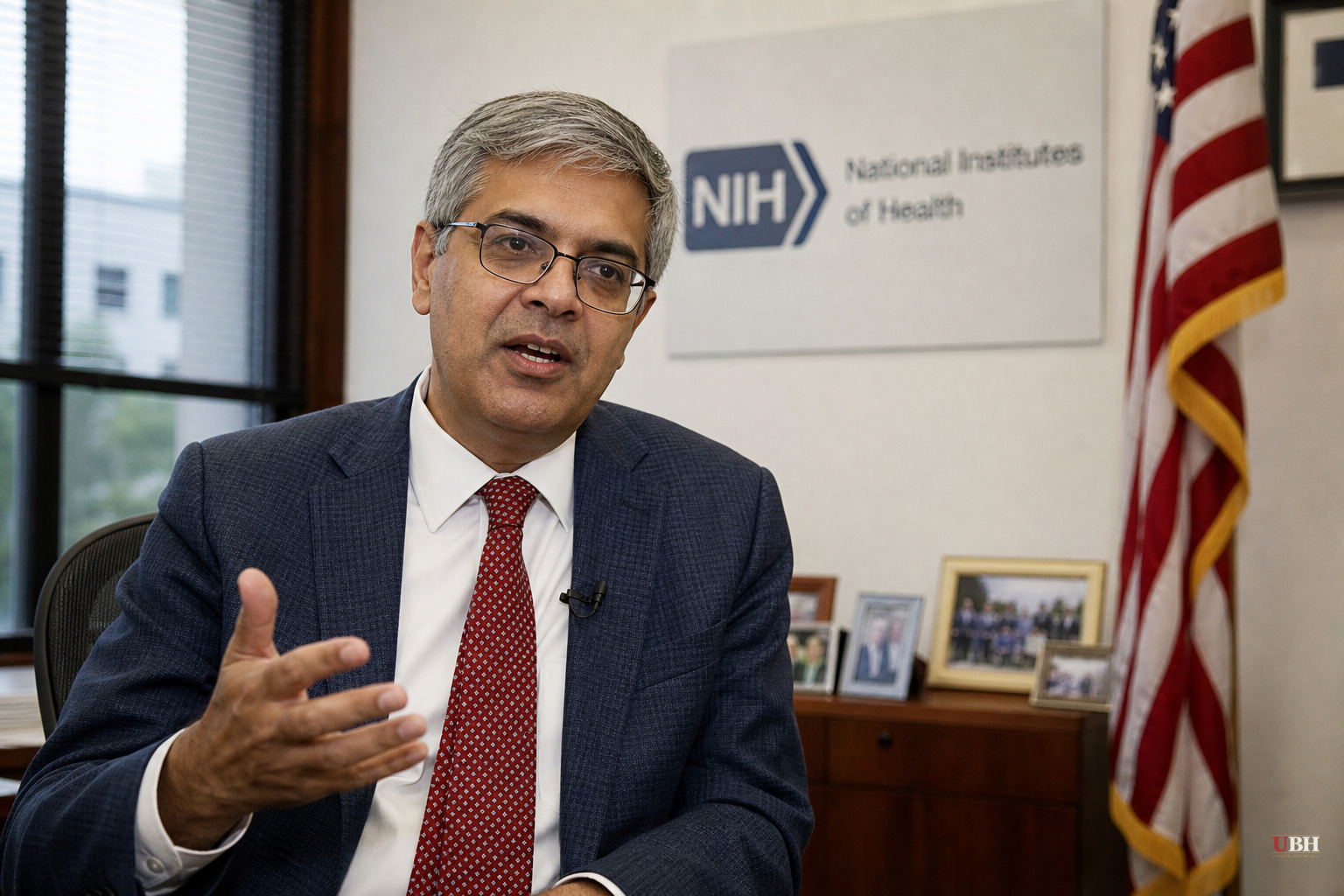
Dr. Jay Bhattacharya, the director of the National Institutes of Health, ended NIH support for research using human fetal tissue from elective abortions in January 2026. In a recent interview with the Daily Signal, he laid out the reasoning behind that decision, and it's more nuanced than a simple pro-life stance.
Bhattacharya told the Daily Signal he personally identifies as pro-life. But he said that alone doesn't justify a policy change at a federal agency that serves the entire country, regardless of where people stand on abortion.
Two Standards, Not One
Bhattacharya said he applies what he calls neutral principles to NIH funding decisions. The first: research needs to be ethically acceptable to as broad a segment of the population as possible.
"Imagine I do some amazing study, but I violate horrible ethical norms so that most of the population, most people, believe that I've done something terrible," Bhattacharya said, according to the Daily Signal. "The fruits of that terrible thing would be broadly unacceptable to most of the population... it's not achieving the mission of the NIH, which is to improve health, extend life."
The second principle involves practicality. Bhattacharya pointed to what he described as a decline in the use of aborted fetal tissue in research over recent years, driven by advances in adult stem cell technology and other substitutes.
"Researchers tended to increasingly adopt those new technologies rather than use aborted human fetal tissue," he said.
Combined, Bhattacharya said those two factors made ending the funding a straightforward call. "You have two sorts of neutral principles that push in the same direction," he said, "and I think it makes the NIH portfolio much more ethically acceptable to the population at large."
What's Verified, What Isn't
Bhattacharya's claim about the ethical unacceptability of fetal tissue research "to a substantial portion of the population" is a real and longstanding position, held not just by pro-life advocates but by others uneasy with the sourcing of human tissue from abortions. That's a legitimate ethical concern independent of one's abortion politics, and Bhattacharya is right that it doesn't require a pro-life stance to hold it.
But the interview, as reported by the Daily Signal, doesn't include independent polling data or NIH grant figures to back up the claim that research using aborted fetal tissue had already been declining before his policy took effect. Scientific and public health organizations, including some researchers who have used fetal tissue for vaccine development and disease research historically, have argued in other contexts that fetal tissue remains scientifically valuable for certain applications adult stem cells can't fully replace, such as studying early human development. None of that counter-argument appears in the Daily Signal's account, and no scientific body's response to Bhattacharya's January decision is cited here.
The strongest case against Bhattacharya's move, one researchers and some public health advocates would recognize as fair, is that fetal tissue research contributed to landmark work including the development of the rubella vaccine and ongoing HIV and Parkinson's research, and that banning it categorically rather than case by case forecloses avenues of study before alternatives are proven fully equivalent. Bhattacharya's own framing acknowledges this is a genuine value trade-off rather than settled science, since he grounds the decision in ethical acceptability and practical substitution, not a claim that fetal tissue research has no scientific value.
The Political Durability Argument
Bhattacharya also made a longer-term prediction: that framing the decision around "neutral principles" rather than personal pro-life belief will make it harder for a future NIH director to reverse.
"If there's a NIH director several years from now, and they want to reverse it, they'll have to run up against neutral principles," he said. "They'll have to say, 'Yeah, it's OK to do research that results in products and ideas that are ethically unacceptable to, you know, half the population. That's fine. That's a good idea.' They're not going to be able to do that with a straight face."
That's a political argument, not a scientific or legal one. Nothing in the Daily Signal's reporting indicates the January policy is codified in statute or regulation beyond an NIH directive, which means a future administration could reverse it through the same administrative channels Bhattacharya used to implement it. Whether it proves durable will depend on future NIH leadership, not on the rhetorical framing alone.
No pending legislation, court challenge, or congressional action tied to this specific NIH policy is referenced in available reporting. The open question is whether Congress or a future administration revisits the funding restriction, and whether NIH-funded researchers report any measurable gap in vaccine or disease research as adult stem cell alternatives are scaled up in the coming years.
Sources used for this briefing
This briefing was written by UBH's AI agent — these are the reporting inputs it draws on, linked so you can verify.


