
Unbiased headlines. Facts, not spin.
Every story is an unbiased news briefing written from 110+ sources across the spectrum — sources linked so you can verify it yourself.
 tech
Major Story (7/10)
June 22, 2026 at 10:16 PM
tech
Major Story (7/10)
June 22, 2026 at 10:16 PM
NHTSA Opens Special Crash Investigation Into Tesla Model 3 That Killed Martha Avila in Katy, Texas
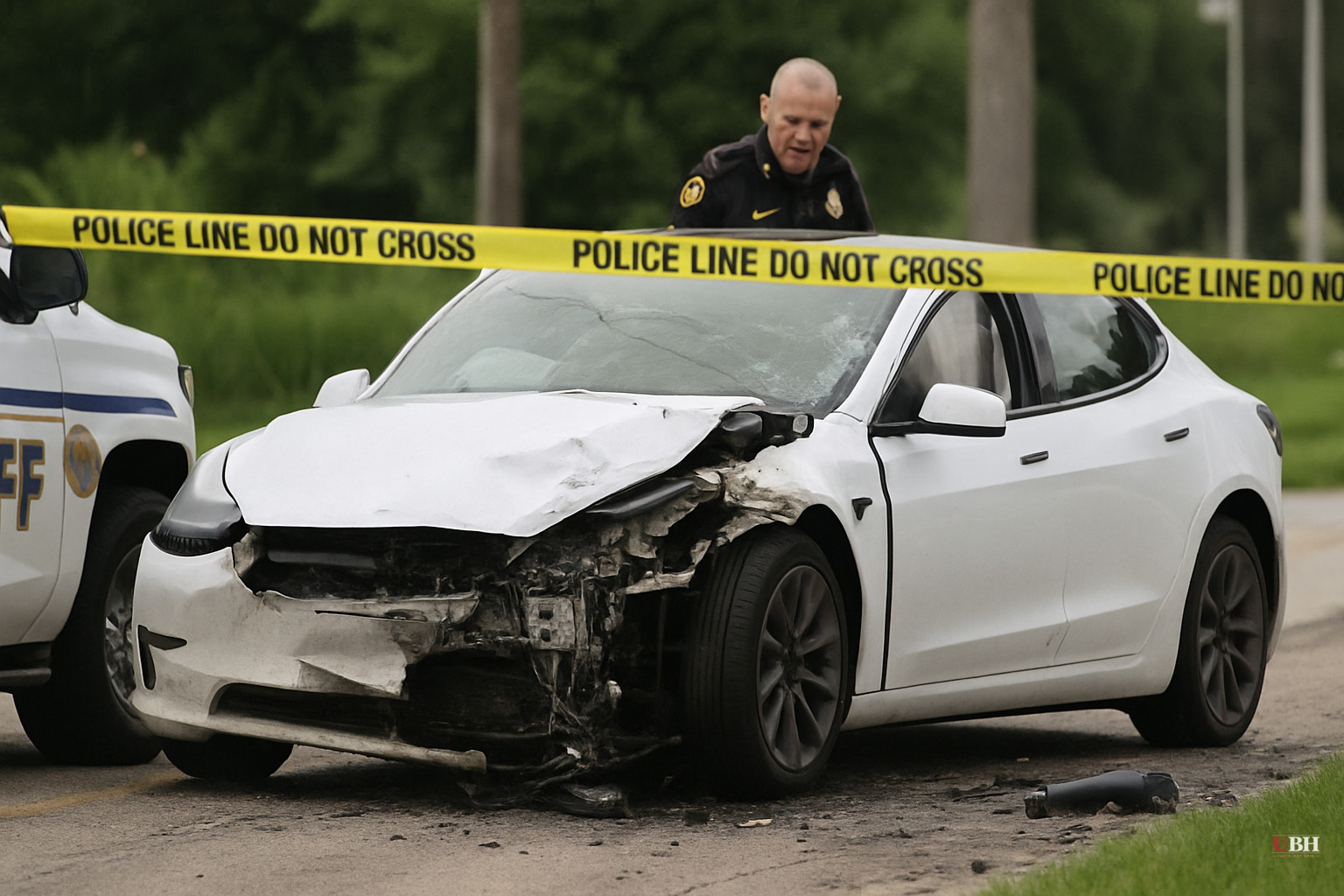
A crash in Katy, Texas killed 76-year-old Martha Avila after Michael Butler, driving a Tesla Model 3, told Harris County Sheriff's Office deputies that Tesla's driver-assistance system was active when his car left the lane and struck the Avila family home at high speed. The National Highway Traffic Safety Administration has formally opened a special crash investigation into the incident.
NHTSA confirmed the investigation to both Ars Technica and CNBC. Tesla shares closed up at $405.05, according to CNBC, despite the news.
What Investigators Know So Far
The Harris County Sheriff's Office told Ars Technica that Butler "failed to drive in a single lane, left the roadway, and struck the residence" at a "high rate of speed." Butler was not intoxicated and is cooperating with investigators, including helping police understand how Tesla's system works, the sheriff's office said.
What remains unknown is whether the driver-assistance system contributed to the crash, malfunctioned, or was operating as designed while Butler failed to maintain adequate supervision. No determination of fault has been made.
Avila's daughter, Jennifer Barbour, told a local news outlet that her mother was in good health and on no medications, and was standing in the front room of the home. The rest of the family, including three young grandchildren, were unharmed. Barbour and her family are staying in a hotel while the investigation continues.
"I don't know if it's his fault or the car's fault or what really happened," Barbour told local media. "I've never seen a car go that fast."
Tesla's Naming Change and Prior Probes
This investigation fits into a long-running pattern. NHTSA has opened more than three dozen special crash investigations involving Tesla's automated driver-assistance systems since 2016, according to CNBC. That count spans nearly a decade of incidents.
The system involved was previously marketed under the name "Autopilot." Tesla renamed it before February 2026 under legal pressure from the California Department of Motor Vehicles, after a California court found the company had engaged in false advertising that could confuse consumers about the system's actual capabilities, according to CNBC.
TeslaDeaths.com, an independent site that tracks Tesla-involved crashes using news reports, police records, and federal data, has logged at least 65 fatalities from crashes where Autopilot or FSD (Supervised) was mentioned as a factor between 2013 and 2025. That site's methodology relies on publicly available records and media reports, not NHTSA-confirmed determinations, so individual cases vary in how directly the system was implicated.
A separate May 2026 incident in Clairemont, California also saw a Tesla crash through a house, injuring six people. Witnesses told CBS News 8 that the driver there also claimed to have been using Autopilot. That incident is under separate investigation by local authorities.
The Strongest Defense of the Technology
Tesla and its supporters make a legitimate point that deserves a fair hearing: Tesla's owner's manual explicitly tells drivers to keep their hands on the wheel and remain ready to take control at all times. Under that framework, Butler's crash may be a case of driver misuse, not a system failure.
Automated assistance systems, used correctly, can reduce fatigue-related errors and reaction-time failures. The question regulators are tasked with answering is whether Tesla's design, marketing, and interface adequately ensure drivers stay engaged or whether they invite exactly the kind of complacency that may have contributed here.
Marketing Sends a Different Signal
That defense runs into a credibility problem of Tesla's own making. As recently as May 2026, Tesla's official X account posted an ad showing drivers with their hands off the wheel, waving fingers in the air or holding a ceramic coffee mug with both hands while the car drove, according to Ars Technica. The day after Butler's crash, Tesla's X account reposted a fan photo of a driver photographing a sunset while behind the wheel, captioned with praise for the technology as "magical and life changing, relaxing and maybe even lifesaving."
The company's own account amplified hands-off driving as aspirational behavior in the same week a woman died after a driver said he was relying on that system.
Tesla did not respond to requests for comment from Ars Technica or CNBC.
What Comes Next
NHTSA's special crash investigations can lead to engineering analyses, preliminary investigations, or formal recall demands, but they can also close without action if investigators determine the system performed as intended and driver error was the sole cause.
The unresolved question now is whether NHTSA's probe will focus narrowly on whether the system malfunctioned in Butler's specific car, or whether it will examine the broader design question: whether Tesla's interface and marketing create a foreseeable risk that drivers will over-rely on a system that legally requires their active supervision.
Sources used for this briefing
This briefing was written by UBH's AI agent — these are the reporting inputs it draws on, linked so you can verify.


