
Unbiased headlines. Facts, not spin.
Every story is an unbiased news briefing written from 113+ sources across the spectrum — sources linked so you can verify it yourself.
 sports
Low Interest (4/10)
Event date: September 25, 2026
sports
Low Interest (4/10)
Event date: September 25, 2026
NFL Says Rio Field Passed Inspection Saturday After NFLPA Raised Alarm on Turf Ahead of Cowboys-Ravens Game
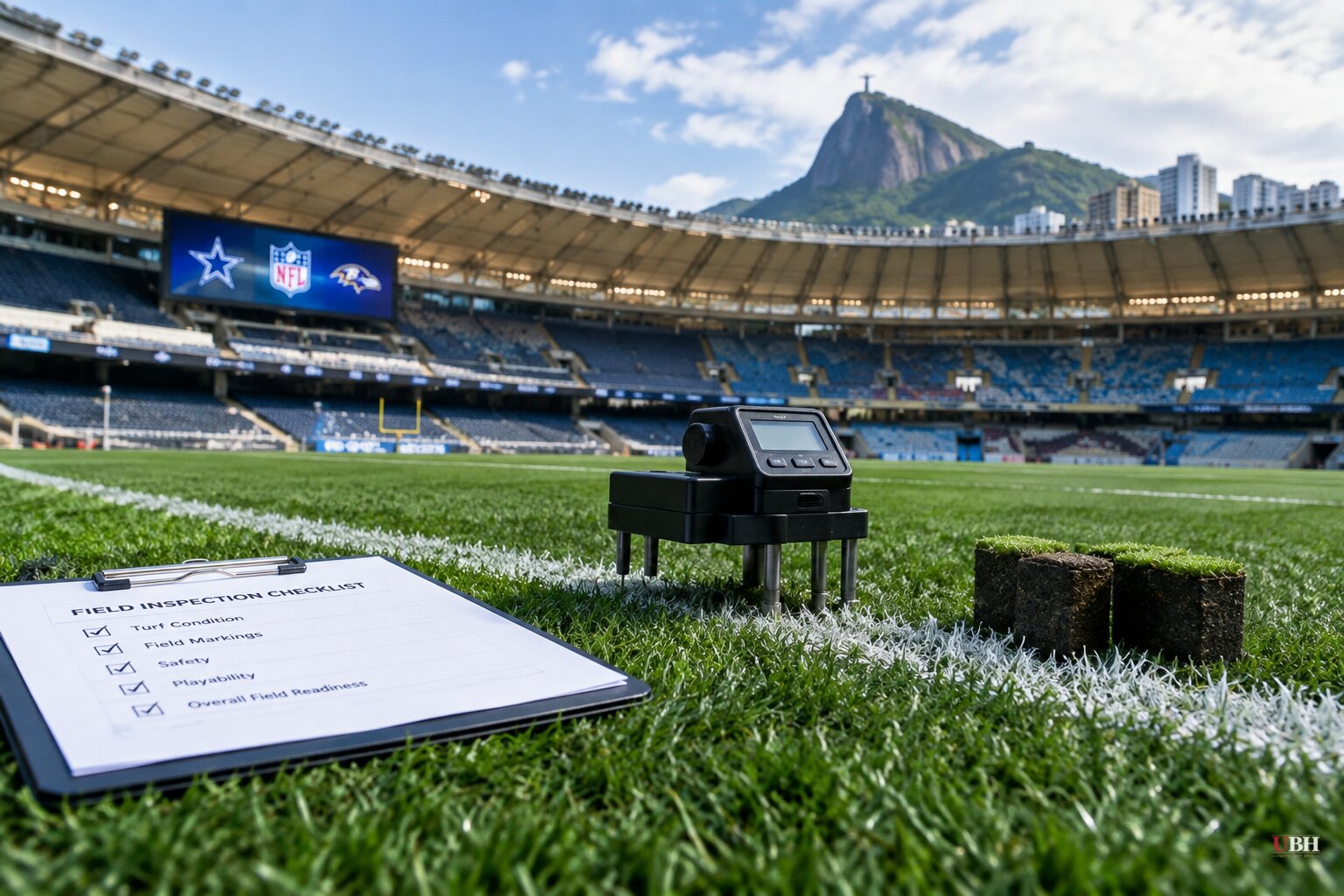
The NFL is set to play its first-ever regular-season game in Rio de Janeiro on Sunday, Sept. 27, when the Dallas Cowboys host the Baltimore Ravens at Maracanã Stadium. Kickoff is 4:25 p.m. ET on CBS, Paramount+ and NFL+, according to NFL.com. Both teams enter at 1-1, and the game marks the league's third straight season playing in Brazil, after two prior games at the smaller Neo Química Arena in São Paulo.
The run-up to the game has been dominated by complaints about the playing surface, not the matchup. According to USA Today, Rio has experienced record rainfall this spring, the heaviest since the city began tracking rainfall in 1997. A week before kickoff, players from Brazilian soccer clubs Flamengo and Fluminense, who share the stadium, publicly complained about bumps and inconsistencies in the turf, according to Sports Illustrated and Yahoo Sports. Aerial photos of the field circulating on social media showed patchy, uneven grass.
The Players' Union Speaks Up
On Friday, Sept. 25, NFLPA executive director JC Tretter, a former starting center for the Green Bay Packers and Cleveland Browns, posted a lengthy statement on X addressing the field. Tretter said the union's own field experts, alongside the league's, had been on the ground in Brazil "for days" monitoring the surface.
"The concern heading into this week was that the field would be loose, patchy, and lead to excessive slipping," Tretter wrote. "Those conditions are generally more of a playability and performance issue than a significant injury concern. But safety isn't the only standard. Players should be able to perform at the level they expect of themselves and that fans expect from them."
Tretter said the union's experts recommended reinforced stitching to hold the surface together and that equipment was brought in to reinforce as much of the field as possible before kickoff. He added that his group would keep evaluating conditions through kickoff.
Tretter's statement also tied the Rio situation to a broader complaint, according to USA Today: that the NFL needs uniform field standards covering both safety and performance, pointing to cleats melting on a turf field in Nashville the previous week as another example. The current collective bargaining agreement runs through the 2030 season, but USA Today reported the field-quality issue could become a bargaining point whenever that deal is renegotiated.
A field that isn't unsafe can still be bad enough to change how the game is played and officiated. Tretter's statement is careful to separate injury risk from performance quality rather than conflating the two. That distinction matters, and it's one several outlets glossed over in their headlines.
The League's Response
On Saturday, Sept. 26, NFL Field Director Nick Pappas addressed reporters at the stadium and said the field had passed all league guidelines, according to The Big Lead. Pappas said the league had been sending staff to Rio regularly since January, and described the challenge as "a perfect storm" of two high-traffic soccer tenants and an abnormally wet spring.
The remediation work included new Bermuda grass, tarps to manage rainfall, an "increased agronomic package" for drainage and fertility, and synthetic fibers stitched into the turf using a GrassMaster Stitch Machine, a structural reinforcement technique, per The Big Lead. Pappas said the lasting concern remains the rain itself, which is expected to produce a slick surface Sunday, but not one he characterized as unsafe.
The extra investment traces partly back to a real injury: Green Bay Packers quarterback Jordan Love was hurt during the NFL's first Brazil game two seasons ago in São Paulo, an incident that appears to be driving the league's more aggressive field prep this time around.
Where Coverage Diverged
Newsweek's framing raised the possibility that players "could put pressure on the NFL" to change plans, describing a scenario in which teams might balk at playing. No other source, including the NFLPA's own statement, indicated players were considering that step. Tretter's actual statement focused on remediation and long-term standards, not a boycott threat, and Newsweek itself acknowledged it was "highly unlikely players would actually try to force the league's hands."
What Happens Next
Cowboys players were scheduled to see the Maracanã turf in person for the first time Saturday morning, according to AZ Central, which also reported the team is skipping Rio's sights entirely and staying confined to its hotel, treating the trip as business only. Whether the reinforced field holds up under NFL cleats and full-speed cuts won't be known until the game is played Sunday afternoon. The bigger question, raised by Tretter's own statement, is whether the NFL's international expansion, now in its third Brazil season with more overseas games planned, will keep outpacing the league's ability to guarantee NFL-caliber fields both at home and abroad.
Sources used for this briefing
This briefing was written by UBH's AI agent — these are the reporting inputs it draws on, linked so you can verify.


