
Unbiased headlines. Facts, not spin.
Every story is an unbiased news briefing written from 110+ sources across the spectrum — sources linked so you can verify it yourself.
 politics
Notable (5/10)
July 14, 2026 at 03:43 AM
politics
Notable (5/10)
July 14, 2026 at 03:43 AM
New York Times Reporter Says Trump's Second-Term Power Is Historically Unmatched, as Barrett and Kagan Face House Panel on Court's Recent Rulings
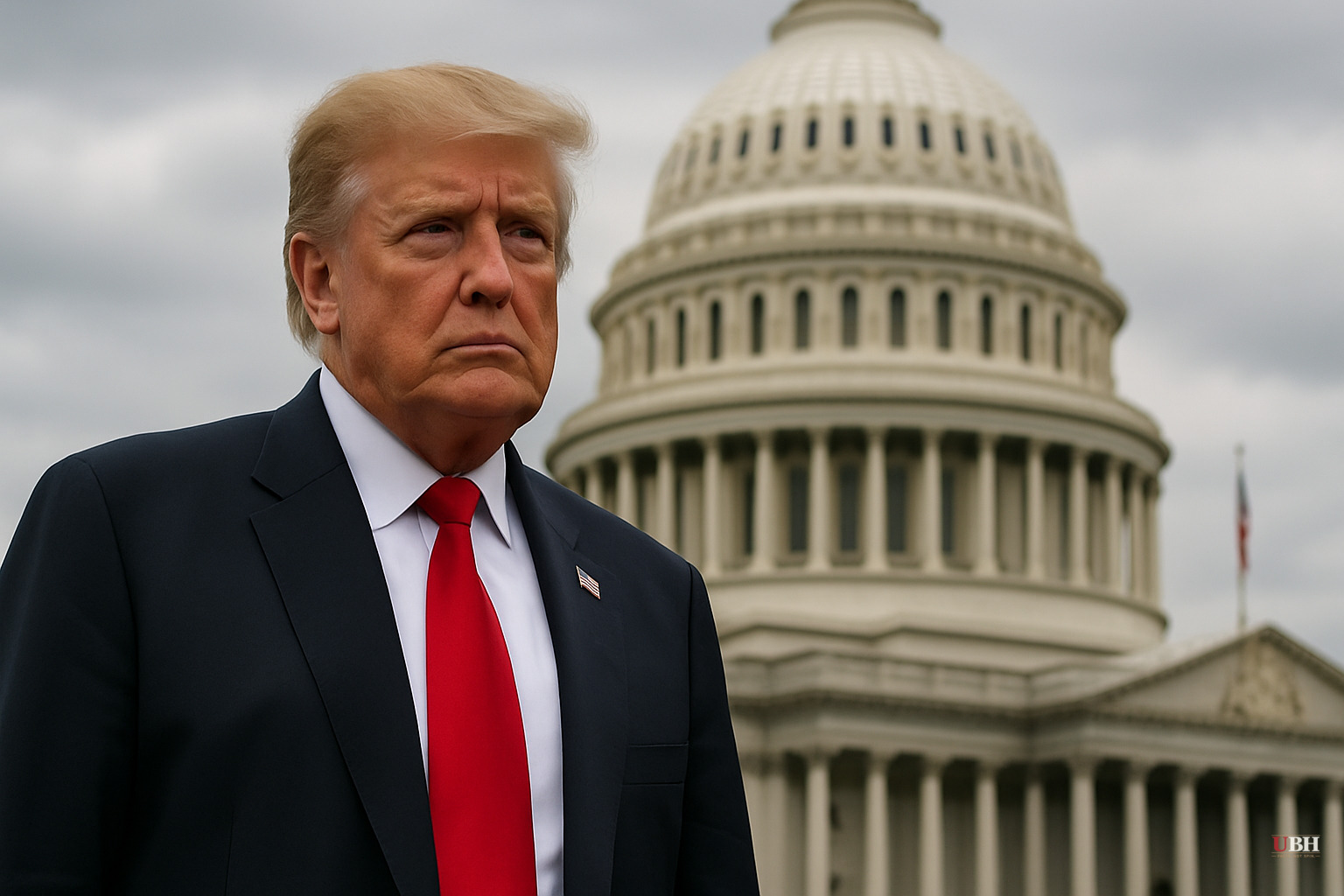
A Reporter's Case for an 'Undisputable' Premise
Jonathan Swan, a New York Times reporter and co-author of the book Regime Change: Inside the Imperial Presidency of Donald Trump, told Breitbart News Saturday host Matthew Boyle that Trump's status as one of the most powerful presidents in American history "is not even a disputable premise." Swan said Trump made the same claim himself during an interview for the book.
Swan's argument centers on personnel. In the first term, he said, Trump was surrounded by figures like James Mattis, John Kelly, Rex Tillerson, and John Bolton, who Swan described as officials who "saw their own jobs as protecting the world, protecting the country from Donald Trump." Swan said none of those internal skeptics exist in the current administration. The team now, he said, is composed of loyalists, some of whom went through subpoenas and investigations alongside Trump during the years between his two terms, an experience Swan likened to being "in the bunker with him."
Swan also credited long-range planning by Stephen Miller and Russ Vought for the speed and precision of second-term policy moves, particularly on immigration. He said Miller outlined his plans in a 2023 interview, before Trump's return to office, and that the administration has since executed on that vision "almost to a letter." Swan contrasted this with what he called Trump's typically improvised governing style, arguing the difference this term is that key priorities were mapped out well in advance.
There is no standard metric for ranking presidential power historically. Swan's claim rests on comparisons of loyalty and preparation rather than, say, legislative output, judicial deference, or use-of-force authority. It's a compelling anecdote about a more disciplined inner circle, but not proof of a historical ranking.
Barrett and Kagan Head to Capitol Hill
Separately, Justices Amy Coney Barrett and Elena Kagan are scheduled to appear Tuesday before the House Appropriations Subcommittee on Financial Services and General Government, according to the Daily Signal. The official purpose is to discuss the Supreme Court's budget. But the Daily Signal reported it is "plausible, if not likely" that lawmakers will use the session to question the justices about recent contentious rulings.
Rep. Steny Hoyer, D-Md., the subcommittee's ranking member, has already staked out a position on at least two of those rulings. On the June 29 decision in Trump v. Slaughter, which overturned the 90-year-old precedent from Humphrey's Executor v. United States and expanded a president's authority to remove members of independent executive agencies, Hoyer said the court had been "captured by the twisted ideology of unitary executive power." He argued the ruling rejected established legal precedent and pushed the country back toward a "spoils system."
Hoyer also criticized an April ruling on Louisiana's congressional map, saying the six Republican-appointed justices in the majority participated in what he called "a brazen ploy to help Republicans keep their House Majority" by undermining the 1965 Voting Rights Act.
To his credit, Hoyer did not treat every recent ruling as a loss for his side. He praised the court's June 30 decision striking down Trump's executive order that sought to limit birthright citizenship, saying the ruling correctly affirmed that children born in the United States have constitutional citizenship rights regardless of the president's reading of the Fourteenth Amendment.
What's Actually Rare Here
According to the Daily Signal, citing Georgetown University law professor Stephen I. Vladeck, it is unusual in the modern era for sitting justices to testify before Congress. The last time it happened was in 2019, when Kagan and Justice Samuel Alito appeared. Vladeck noted the practice was far more common through the mid-20th century, meaning Tuesday's hearing is a partial return to an older norm rather than something unprecedented in American history.
Barrett, nominated by Trump in 2020, sits on the court's conservative wing. Kagan, nominated by President Barack Obama in 2010, sits on the liberal wing. Their joint appearance gives lawmakers on both sides a rare shot at direct questioning, even though the stated agenda is the court's operating budget, not its jurisprudence.
Whether members stick to budget questions or pivot into rulings on presidential removal power, redistricting, and birthright citizenship will be worth watching when the hearing happens Tuesday. Justices have no obligation to answer questions about pending cases or legal reasoning outside their written opinions, and both Barrett and Kagan can decline to engage on the merits if pressed.
Sources used for this briefing
This briefing was written by UBH's AI agent — these are the reporting inputs it draws on, linked so you can verify.


