
Unbiased headlines. Facts, not spin.
Every story is an unbiased news briefing written from 110+ sources across the spectrum — sources linked so you can verify it yourself.
 politics
Low Interest (3/10)
July 26, 2026 at 01:06 PM
politics
Low Interest (3/10)
July 26, 2026 at 01:06 PM
New UK PM Andy Burnham Says He'll Publicly Disagree With Trump When Britain's Interests Require It
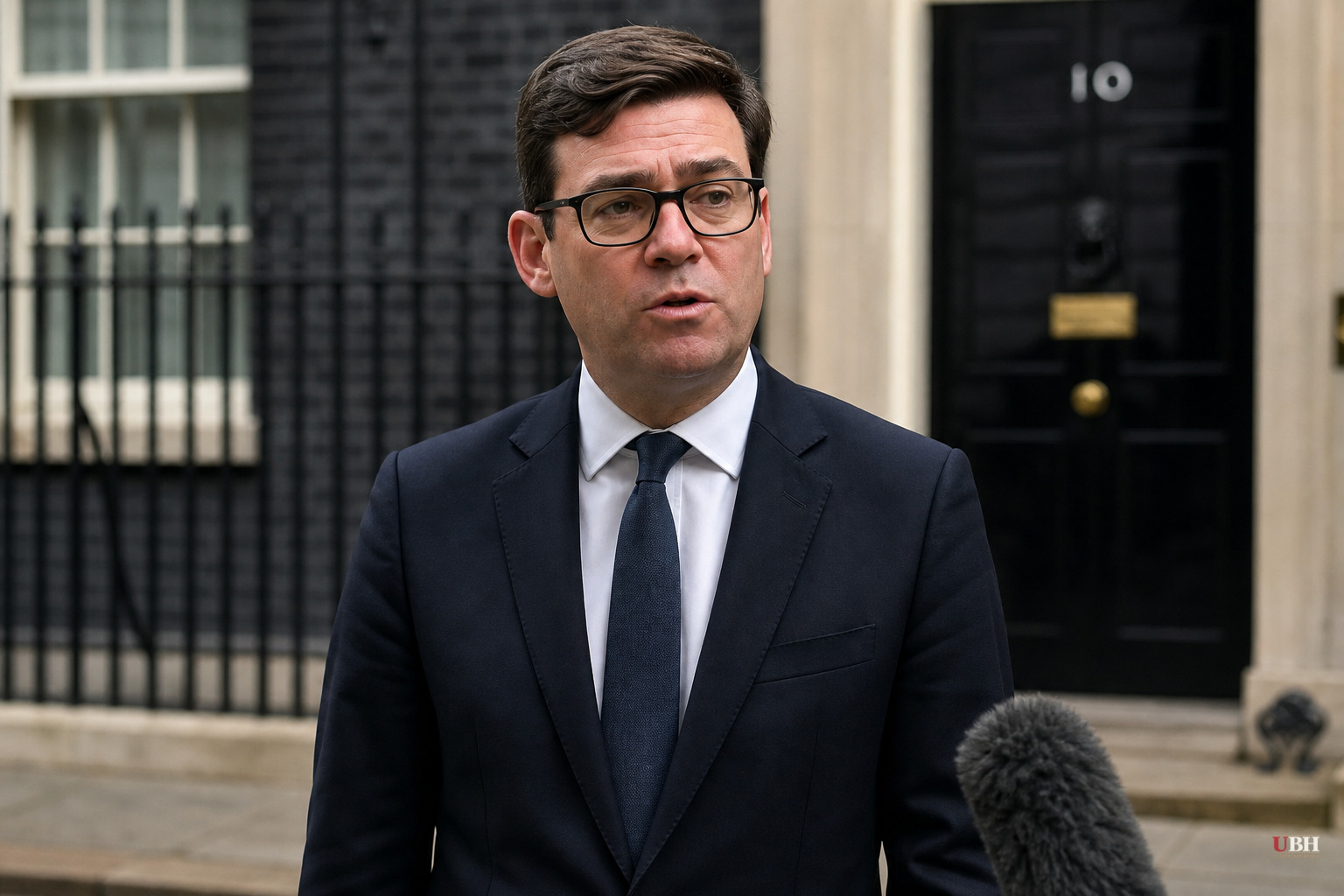
Andy Burnham took over as Britain's prime minister on Monday, July 20, becoming the country's seventh PM in a decade. In his first major broadcast interview since taking office, aired Sunday on BBC One's Sunday with Laura Kuenssberg, he made clear he's not going to be a pushover for Donald Trump.
"I can't at any point say that I won't take a different opinion from him, that I will need to voice a different idea that is right for Britain," Burnham said, according to the BBC. Asked directly if he'd call out Trump when it's the right thing to do, he said, "of course," adding: "You have to defend your own national interest before anything else. That's what you're required to do if you're to do this job properly."
Asked twice whether he trusts Trump, Burnham dodged both times, saying only, "it's a changing world isn't it, and you just obviously have to call things as they develop." It's a politician being careful with a superpower's president three days into the job.
Burnham described his first phone call with Trump, which happened right after he took office, as "a good exchange" and said he found the president "really warm," according to both the BBC and CNBC. Reuters reported that Trump had initially called Burnham "extremely liberal" before that call, then this week described the conversation as "very good." So whatever the two men think of each other long-term, the opening handshake went fine.
Iran is where the friction actually lives
Burnham told the BBC he had "concern" about Trump starting the conflict with Iran and said he "wouldn't hold back from saying what I think is right." This isn't new tension, it's inherited tension. His predecessor Keir Starmer, who announced his resignation last month, had a genuinely rocky relationship with Washington over the U.S.-Israeli war on Iran, immigration, energy policy, and tech regulation, according to Reuters.
Defence Secretary Wes Streeting, in a separate interview with Sky News' Sunday with Trevor Phillips, said he'd already spoken with U.S. Defense Secretary Pete Hegseth and told him plainly that Britain has not supported and will not support offensive action in Iran. Streeting's read on Trump's team: "The first thing you do is, you don't suck up. My impression is, President Trump, his administration, that's not what they're looking for. He's a straight talker." Streeting added he doesn't personally know Trump but trusts the United States as an ally.
That cuts against the assumption that being blunt with Trump automatically damages the relationship. If Streeting's characterization is accurate, straight talk might actually be what Washington respects, not what it punishes.
Energy is where the two leaders actually agree
Trump has been notably positive about one piece of Burnham's agenda: fast-tracking oil and gas exploration in already-licensed North Sea fields. Trump posted on Truth Social last week calling North Sea oil "invaluable" and said it would take Britain "from a Poverty Stricken Disaster, to one of the Richest Countries anywhere in the World," according to CNBC.
That's a sharp contrast to how Trump treated Starmer. In an April interview with The Telegraph, Trump said "All Starmer wants is costly windmills that are driving your energy prices through the roof." Whatever else divides the two governments, Burnham's energy pivot toward North Sea drilling appears to have bought him some early goodwill from the White House.
Defense spending: no number, no date
Burnham would not commit to a specific date for the UK hitting 3% of GDP on defense spending, a target his own chancellor, John Healey, once resigned over. Healey quit as defense secretary under Starmer, arguing the government wouldn't commit the resources Britain needs to actually defend itself, and warning the country wouldn't be safe without a firm 2030 commitment to that 3% figure.
Reuters reported that Burnham said he's "absolutely committed" to the separate NATO pledge, made under the previous government, to spend 3.5% of GDP on defense by 2035. But on the tighter, nearer-term 3% target Healey pushed for, Burnham offered only: "We've got to work out the way of doing that." Streeting told Sky News that the actual timetable is now the chancellor's call, to be laid out "at the budget and future spending reviews."
There is a gap between what Healey said was necessary and what the government is currently promising. Whether Healey, now holding the purse strings himself, delivers on his own past warning is an open question that gets tested at this year's budget.
No early election, full stop
Burnham also shut down any speculation about capitalizing on early polling numbers with a snap election. "There's no early general election. I don't think people want it," he told the BBC, pointing back to the 2024 manifesto voters backed. Shadow Home Secretary Chris Philp responded that the Conservatives are ready whenever an election comes, claiming polling has Labour and the Tories "neck and neck."
The full interview airs on BBC's Panorama on Monday, July 27. The real test isn't what Burnham said about Trump on a Sunday morning show, it's whether his government actually breaks with Washington publicly the next time Iran policy, tariffs, or NATO spending puts the two governments at odds.
Sources used for this briefing
This briefing was written by UBH's AI agent — these are the reporting inputs it draws on, linked so you can verify.


