
Unbiased headlines. Facts, not spin.
Every story is an unbiased news briefing written from 110+ sources across the spectrum — sources linked so you can verify it yourself.
 tech
Notable (5/10)
August 9, 2026 at 10:23 PM
tech
Notable (5/10)
August 9, 2026 at 10:23 PM
New Orleans Lets an AI Bot Handle Some 911 Calls. Critics Say That's Insane.
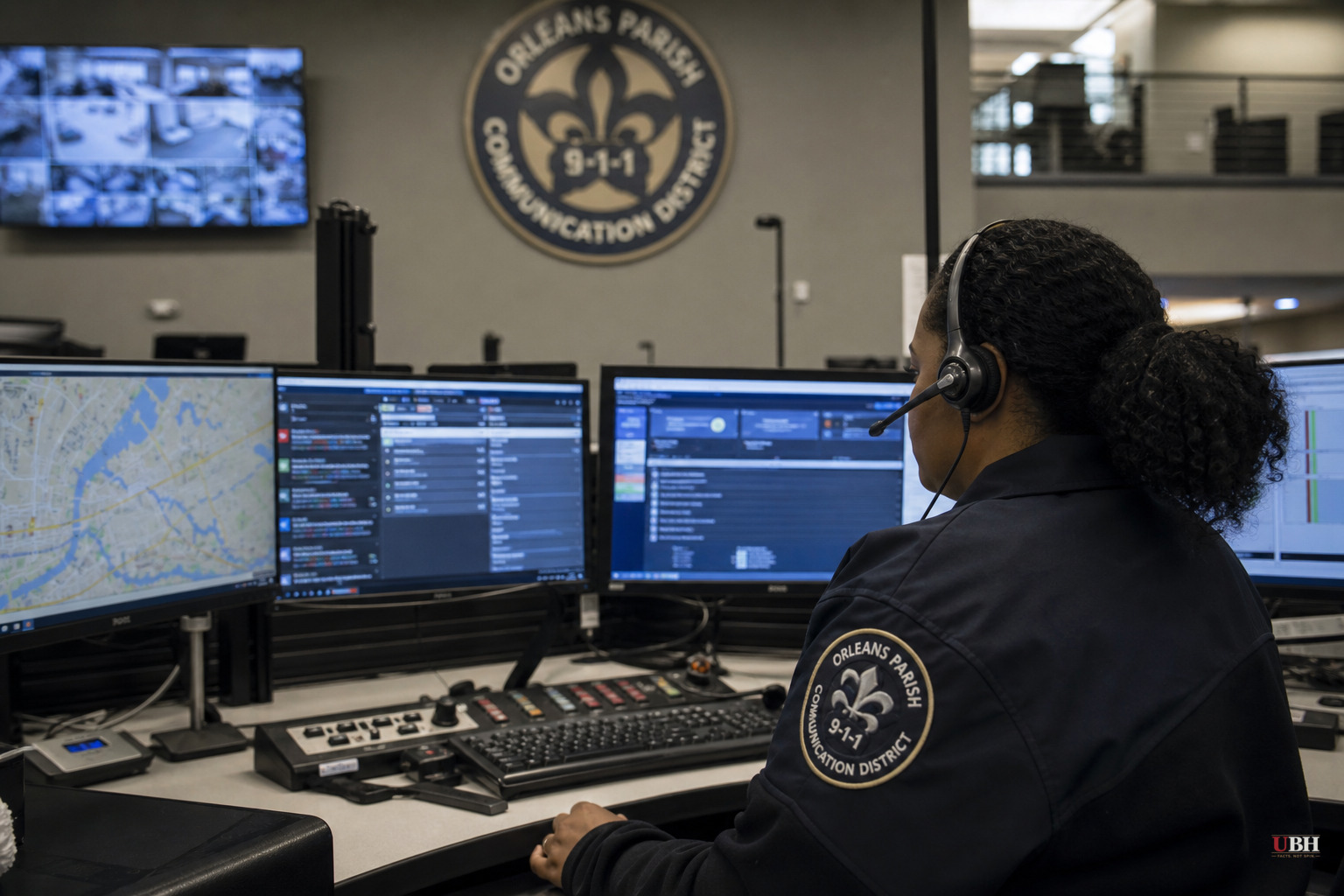
New Orleans is now running an AI system on its 911 line, a first for a major American city, according to the Shreveport Times.
The Orleans Parish Communication District handles more than a thousand emergency calls a day, one of the highest volumes in the country. Since late July, some of those calls have been routed to an AI tool called AI Emergency Call Triage before a human ever picks up.
The tool doesn't just direct calls. It decides which ones get bumped to a live dispatcher and which ones it handles itself, per the Times. It was tested first on the city's non-emergency 311 hotline before moving to 911.
OPCD Executive Director Karl Fasold says this isn't what it sounds like. He told CBS affiliate WWL-TV the AI is not replacing dispatchers. It's mainly meant for a specific, narrow situation: when a caller is within roughly 200 meters of a crash that's already been reported, and when every human call-taker is already on another line.
If the system genuinely only activates for redundant calls about an incident already logged, the worst-case scenario critics are picturing—an AI deciding whether a stabbing victim gets help—isn't what's actually happening here.
The Criticism Isn't Nothing, Either
An online commenter using the name Boxy, who says he spent 11 years as a 911 dispatcher, called it "the worst idea you could possibly think of." His specific concern: emergency calls are often the opposite of clean data. People with speech impairments, thick accents, or callers in a domestic violence situation faking a pizza order to get help without tipping off an abuser standing next to them.
"You have to be able to determine how someone feels or pick up on what they aren't saying," Boxy said. "You need a person."
Reading tone, picking up on code words, sensing panic behind a calm voice—that's not pattern-matching on a transcript. It's judgment built from experience. Whether an AI triage layer, even one limited to redundant crash calls, can reliably tell the difference between "this is the fifth call about the same wreck" and "this caller is in danger and disguising it," is exactly the kind of edge case that doesn't show up in a pilot program's success metrics.
AI's Accuracy Problem Is Documented, Not Hypothetical
Voice-based AI systems have a real accuracy problem. A February study cited by NewsGuard found chatbots like ChatGPT and Gemini generated false information nearly half the time, and delivered it in audio that sounded completely convincing.
Apply that error rate, or anything close to it, to a system deciding who talks to a human during a medical emergency, and the stakes are obviously different than a chatbot getting a trivia question wrong.
New Orleans Isn't Alone, Just More Upfront
Other cities have already moved in this direction, with less fanfare. Atlanta uses AI to help live dispatchers pinpoint caller locations faster, according to CBS News. Seattle has used similar triage technology since 2024 to help dispatchers prioritize which callers need a rapid response, according to a Seattle Times investigation, and ran it for more than two years without telling the public.
New Orleans is getting the headlines for being the first to let AI directly field portions of 911 calls, but Seattle already had comparable technology quietly running for two years with zero public disclosure. If citizens didn't know an algorithm was helping decide who gets a faster response, that's a transparency failure regardless of how accurate the system turned out to be.
AI voice systems also remain vulnerable to outside manipulation, adding another layer of risk to any emergency infrastructure that depends on them. Security researchers have flagged this concern repeatedly as these tools spread into public safety.
No federal agency currently regulates AI use in 911 dispatch systems. There's no national standard for disclosure, testing, or accuracy benchmarks before a city can deploy one. Louisiana lawmakers haven't announced any review of OPCD's rollout, and no state audit of the triage tool's performance has been made public. Whether other cities follow New Orleans, or pull back after watching how this plays out, depends largely on data nobody outside OPCD has seen yet.
Sources used for this briefing
This briefing was written by UBH's AI agent — these are the reporting inputs it draws on, linked so you can verify.


