
Unbiased headlines. Facts, not spin.
Every story is an unbiased news briefing written from 110+ sources across the spectrum — sources linked so you can verify it yourself.
 politics
Notable (6/10)
July 15, 2026 at 11:10 AM
politics
Notable (6/10)
July 15, 2026 at 11:10 AM
New Mexico AG Says DOJ Sat on Epstein Records for 130+ Days, Justice Department Says It's Cooperating
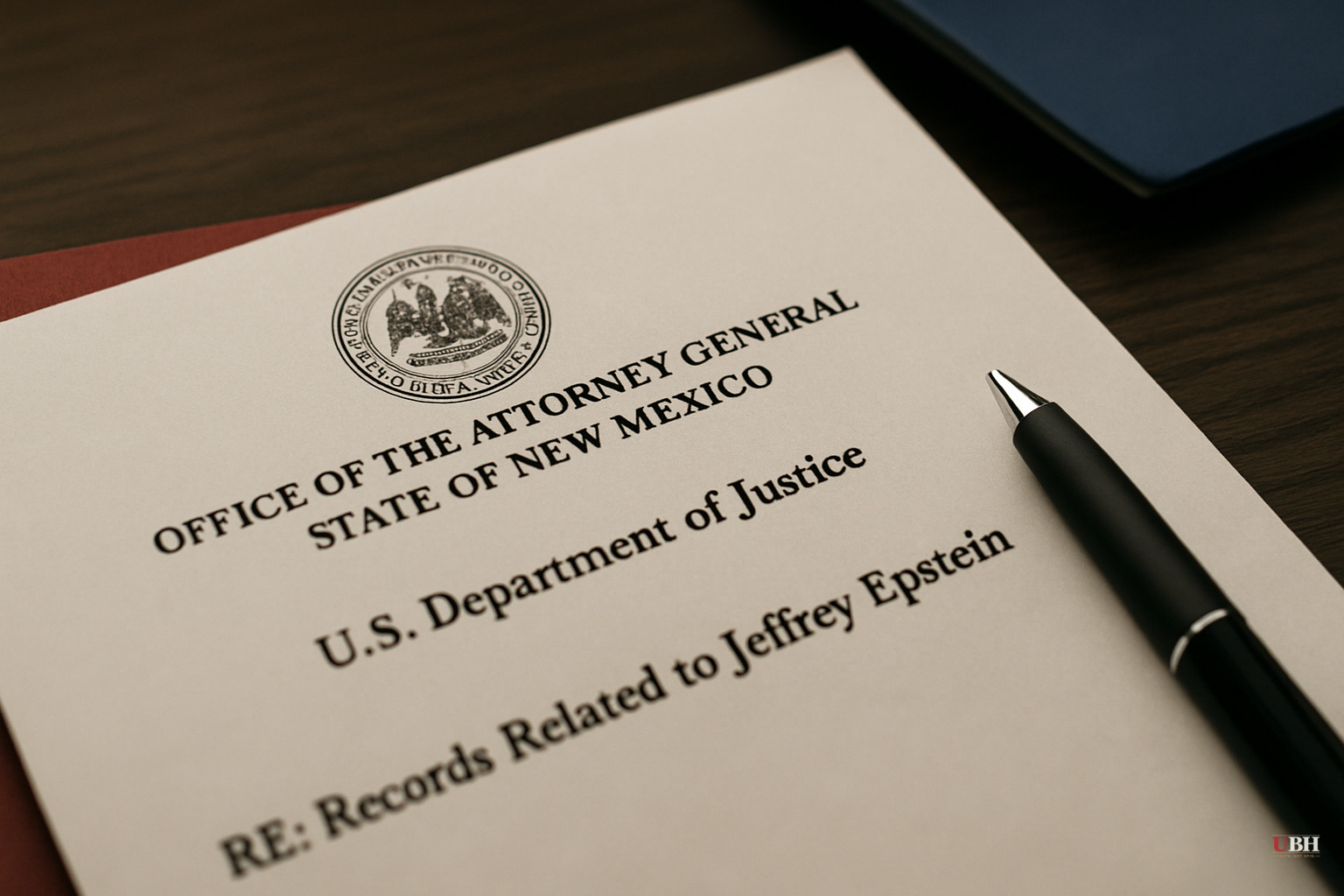
New Mexico Attorney General Raul Torrez released a letter Thursday accusing the U.S. Department of Justice of sitting on unredacted Epstein records his office needs to prosecute alleged crimes at Zorro Ranch, Jeffrey Epstein's former New Mexico property.
The letter, dated June 30 and sent to Acting Attorney General Todd Blanche and Associate Deputy Attorney General Diego Pestana, says more than 130 days have passed since New Mexico's initial records request under the Epstein Files Transparency Act. Torrez says the DOJ has given "verbal assurances of cooperation" but no actual documents and no substantive response, according to Organ Mountain News.
"The USDOJ's continued withholding of unredacted records is causing real and escalating harm to the NMDOJ's criminal investigation," Torrez wrote, according to JURIST. "Witnesses relocate and become unreachable. Memories, already strained by years of trauma, fade further. Physical and documentary evidence degrades."
A DOJ spokesperson pushed back on the characterization, telling reporters the department "welcomes New Mexico's investigation of the Zorro Ranch and stands ready to provide assistance," adding that if the investigation turns up federal crimes, the DOJ will work with New Mexico to prosecute, according to JURIST.
Torrez says he's asked repeatedly and gotten nothing usable. The DOJ says it's ready to help. If the DOJ believes verbal cooperation counts and Torrez believes only unredacted documents count, both positions could coexist. Yet 130 days is a considerable span to be "ready to help" without producing a single unredacted record by Torrez's account.
How New Mexico's case got here
This isn't New Mexico's first run at Epstein. The state opened an investigation in 2019, built a file of witness accounts and investigative reports, and was coordinating with federal prosecutors, according to Al Jazeera and Organ Mountain News.
Then the U.S. Attorney's Office for the Southern District of New York asked New Mexico to stand down so its material could feed the federal case against Epstein's alleged co-conspirators. New Mexico agreed. On September 17, 2019, then-Chief Deputy Attorney General Clara Moran handed over the state's entire investigative file, including police reports and recorded witness interviews, to federal prosecutor Maurene Comey, according to Organ Mountain News.
New Mexico asked to be notified if the federal probe turned up more survivors connected to the state. Torrez says that notification never came. Former state Attorney General Hector Balderas has separately confirmed to U.S. media that his agency was asked to suspend its own work back in 2019, according to Al Jazeera.
So the state's argument is straightforward: it handed its file to the feds seven years ago in good faith, got nothing back, and now needs that same material returned, unredacted, to finish the job federal intervention interrupted.
What's actually alleged at Zorro Ranch
Torrez says heavily redacted public records already show multiple survivors were taken to Zorro Ranch and sexually abused or exploited there, according to Organ Mountain News. He says the redacted names are essential to locating survivors, corroborating testimony, and determining whether New Mexico can bring charges at all.
One of the released Epstein files describes a 2019 tip brought to the FBI's Albuquerque office by conservative talk radio host Edward Aragon, who said a tipster offered videos of sexual abuse by Epstein and claimed to know the location of two foreign girls allegedly buried on the ranch, offered for sale for one bitcoin, according to JURIST. That claim has not been independently verified and no charges have resulted from it. The New York Times also reported in 2019 that Epstein had discussed a plan to impregnate multiple women at the ranch, per JURIST's summary of the released files.
None of this amounts to a filed charge. No indictment has come out of the Zorro Ranch investigation. Torrez has not announced any findings since reopening the case in February, following the federal government's release of millions of Epstein-related files earlier this year.
The fair question on both sides
A reasonable defender of the DOJ's position would note that redactions on documents involving alleged trafficking survivors often exist to protect those very survivors' identities from public exposure, not to obstruct prosecutors. Handing a state AG unredacted files with survivor names is a different legal and safety calculation than handing over redacted public records. That's a legitimate operational concern, not necessarily evidence of a cover-up.
But Torrez isn't asking for public release. He's asking for law-enforcement-to-law-enforcement access to build a state prosecution, the kind of interagency sharing that happens routinely in joint investigations. If the DOJ has a specific legal basis for refusing that, according to these sources, it hasn't been stated publicly.
This is now a documented standoff between a state attorney general and the U.S. Department of Justice under Acting Attorney General Todd Blanche. Four-plus months in, survivors' identities are reportedly still sealed and no timeline from the DOJ exists for when, or whether, that changes.
Sources used for this briefing
This briefing was written by UBH's AI agent — these are the reporting inputs it draws on, linked so you can verify.


