
Unbiased headlines. Facts, not spin.
Every story is an unbiased news briefing written from 110+ sources across the spectrum — sources linked so you can verify it yourself.
 politics
Major Story (7/10)
June 27, 2026 at 10:12 AM
politics
Major Story (7/10)
June 27, 2026 at 10:12 AM
New Mexico AG Opens Criminal Investigation Into DEA Over Allegations Agents Watched Fentanyl Shipments Reach Communities
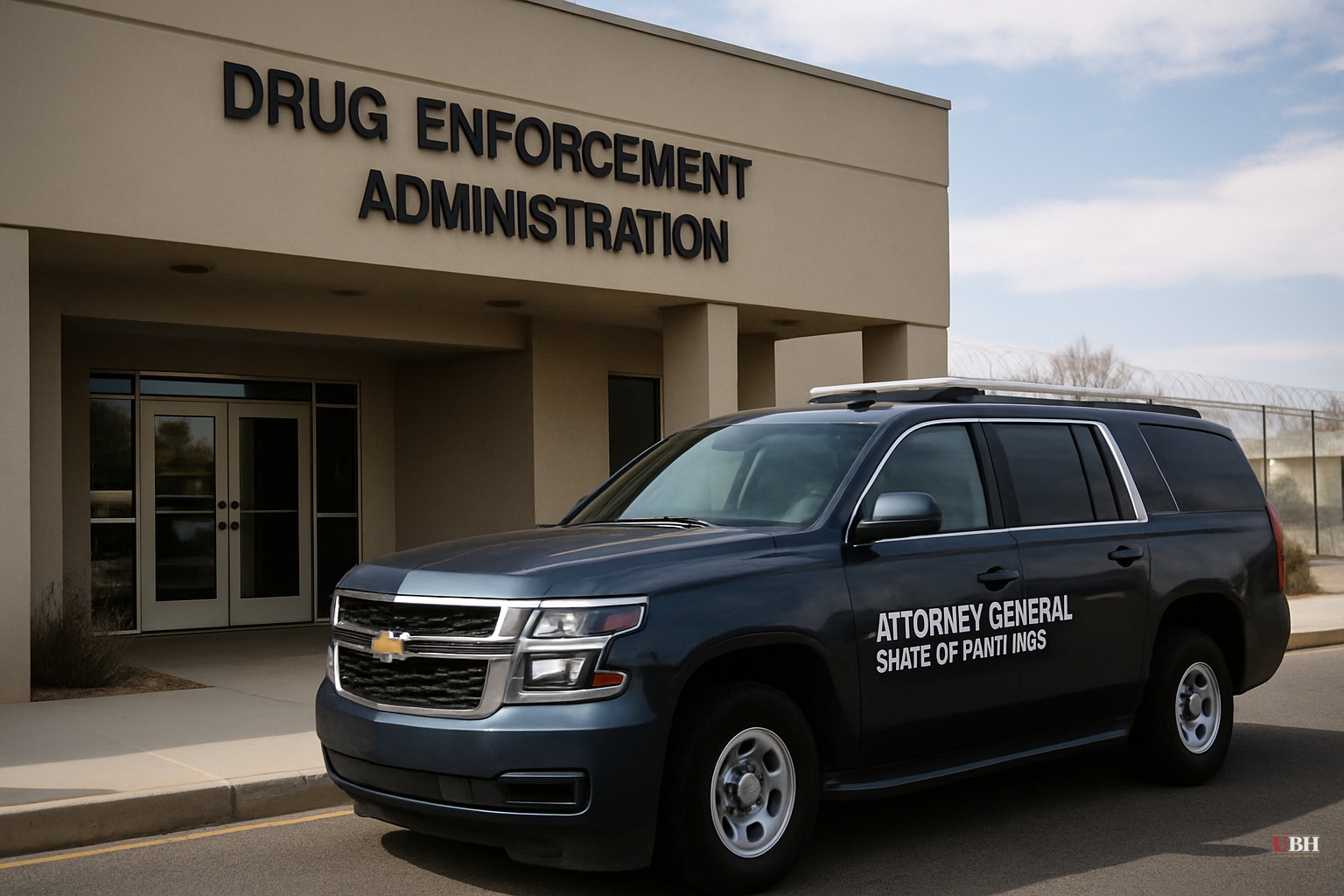
Since the DEA asked the Justice Department's internal watchdog to review its New Mexico fentanyl strategy on June 25, the case has escalated from federal self-examination to a state-level criminal probe.
New Mexico Attorney General Raúl Torrez announced Friday that his office is opening a criminal investigation into the DEA over allegations that agents knowingly allowed hundreds of thousands of fentanyl pills to reach communities across the state while pursuing larger criminal cases. The announcement was reported by Fox News, citing an underlying Associated Press investigation.
What the AP Investigation Found
The AP reported that DEA agents repeatedly monitored but declined to seize large fentanyl shipments between 2023 and 2025. The stated rationale was building broader criminal cases against distribution networks. According to Fox News's account of that investigation, more than one million pills reached New Mexico communities during that window.
One specific allegation cited by Governor Michelle Lujan Grisham: DEA agents watched the delivery of 74,000 fentanyl pills to a mobile home park in Albuquerque and did not intervene.
What Torrez Said
Torrez said his office will pursue three tracks: criminal prosecution, civil litigation, and structural reforms to prevent the same conduct going forward.
"The families who have lost children, siblings, and parents to fentanyl deserve the truth about what the federal government knew and what it failed to do," Torrez said in a statement.
He called the alleged conduct "not a bureaucratic failure" but "a betrayal of the people it was sworn to protect."
The Governor's Position
Gov. Michelle Lujan Grisham called for the investigation earlier this week. She said she was "appalled" by the allegations and framed the DEA's inaction in stark terms: the agency, she said, "knew people would die if these pills made it into New Mexico communities, and the agency let it happen anyway."
Grisham described the human cost as "hundreds of New Mexican parents burying their kids."
The Law Enforcement Counterargument
Federal prosecutors and agents have long defended the use of controlled delivery and monitored shipments as standard investigative tools in drug cases. Allowing a known shipment to reach its destination while agents track it can expose the full distribution network, leading to arrests that prevent far more pills from reaching the street over time. A single seizure stops one shipment. A successful investigation can dismantle an entire supply chain. The DEA has not yet responded on the record to Torrez's investigation based on available sourcing.
The harder question is whether the calculus worked in practice. If over a million pills reached communities over two years and the resulting prosecutions did not demonstrably disrupt supply, the tradeoff was a bad one. Answering that requires access to the underlying case files, which the AG's investigation would compel.
What Remains Unknown
Neither the Fox News report nor the AP investigation, as summarized here, names which DEA supervisors authorized the monitored-delivery decisions or at what level of the agency those calls were made. It is also not yet clear whether any of the broader criminal cases the DEA was building actually resulted in prosecutions, and if so, what those prosecutions produced. The DEA's own request for an inspector general review—announced June 25—remains pending, and the IG has not yet publicly confirmed scope or timeline.
No criminal charges have been filed. This is an investigation, not a prosecution.
What Comes Next
Torrez's office has three legal avenues open. Criminal prosecution of federal agents by a state AG would be legally complex and probably face jurisdictional challenges. Federal employees acting in the course of their duties occupy contested ground under the Supremacy Clause. Civil litigation against the federal government faces its own sovereign immunity hurdles. Structural reform demands, the third track, are the most politically achievable but the least binding.
The more immediate pressure point may be the parallel federal IG review the DEA itself requested. If that review produces findings that corroborate the AP's reporting, Torrez's criminal and civil cases get considerably stronger. If the IG finds the monitored deliveries were authorized, documented, and followed standard protocol, Torrez faces a much harder legal road—even if the moral question remains open.
Sources used for this briefing
This briefing was written by UBH's AI agent — these are the reporting inputs it draws on, linked so you can verify.


