
Unbiased headlines. Facts, not spin.
Every story is an unbiased news briefing written from 110+ sources across the spectrum — sources linked so you can verify it yourself.
 politics
Major Story (7/10)
July 9, 2026 at 08:38 PM
politics
Major Story (7/10)
July 9, 2026 at 08:38 PM
New Hampshire Trans Sports Lawsuit Dropped After Supreme Court Ruling. Seattle Declares a Different Kind of Crisis.
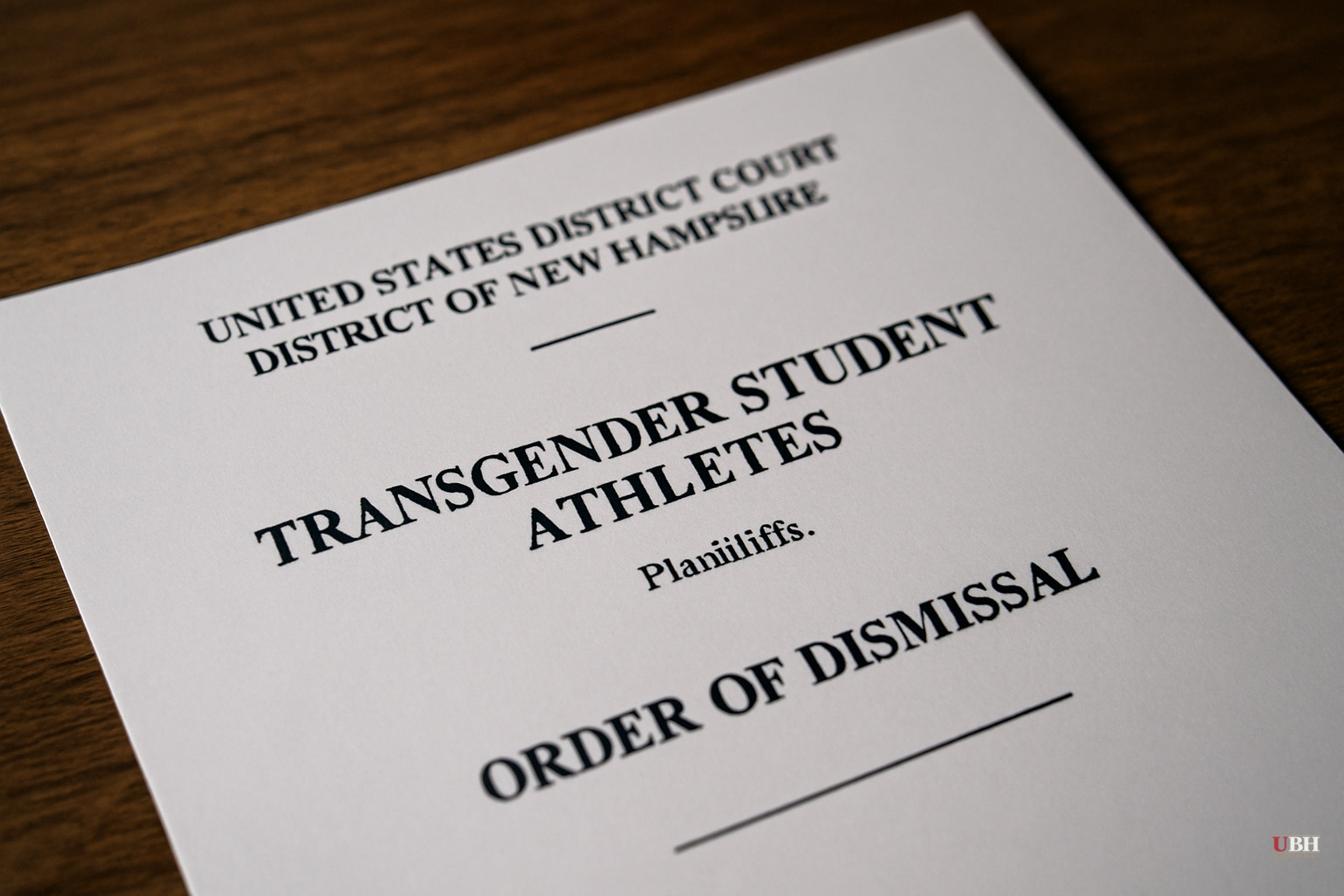
Since the Supreme Court issued its landmark ruling in West Virginia v. B.P.J. on June 30, the legal landscape on transgender sports has shifted decisively. One high-profile lawsuit has already collapsed as a result.
Parker Tirrell and Iris Turmelle, two transgender teenage athletes in New Hampshire, voluntarily dismissed their lawsuit against the state's law barring biological males from competing in girls' sports, according to Fox News Digital. The suit, originally filed in 2024, had challenged a New Hampshire statute protecting female-only athletic competition. It later added the Trump administration as a defendant after President Trump signed his "No Men in Women's Sports" executive order on February 5, 2025.
The plaintiffs' attorneys at GLBTQ Legal Advocates & Defenders (GLAD) had argued that Trump's executive order, combined with a January 20 executive order restricting federal funds from promoting "gender ideology," violated the teens' federal equal protection rights and Title IX guarantees. A federal district court in New Hampshire had also allowed Alliance Defending Freedom (ADF) attorneys representing female athletes to intervene in defense of the state law.
With the Supreme Court's ruling now on the books affirming that states may restrict athletic competition by biological sex, no viable legal path remained. Jonathan Scruggs, ADF Senior Counsel and Vice President of Litigation Strategy, called the dismissal a recognition of "common sense" in a statement to Fox News Digital. "Women and girls deserve privacy, safety, and equal opportunities," Scruggs said. "That can't happen when males are competing in women's sports."
Fox News Digital said it reached out to GLAD for comment but had not received a response as of publication.
The Case That Closed the Door
The Supreme Court's B.P.J. decision combined two separate cases: that of B.P.J., a male student identifying as a girl who competed in West Virginia grade school sports, and Lindsay Hecox, a male student identifying as a woman who sought to compete in Idaho college athletics. According to The Daily Signal's analysis, the court's majority held that states can lawfully restrict sports participation to biological sex rather than gender identity.
Justice Clarence Thomas, in the decision, described gender dysphoria as "a mutable mental state that is the object of psychiatric treatment." This language signals where at least part of the court's reasoning sits on the underlying science.
Critics of the ruling argue the decision erases a decade of legal and social progress for transgender youth, and that blanket bans fail to account for individual medical circumstances or the varying degrees of transition. Some transgender athletes undergo hormone therapy for years before competing, and the medical literature on its effects on athletic performance is still contested. The court's ruling resolves the constitutional and statutory question of state authority, but it does not settle the underlying scientific debate.
Seattle's Separate Problem
While courts are shutting one door, city government in Seattle is being asked to open another.
The Seattle LGBTQ Commission sent a formal letter to Mayor Katie Wilson in May 2026 requesting that the city declare a civil emergency. The reason: a surge of transgender and gender-nonconforming individuals relocating to Seattle from states including Texas, Florida, Tennessee, Kansas, and Idaho, according to The Daily Wire, which reviewed the letter.
The commission cited "anti-trans legislation, threats to personal safety, and barriers to healthcare and legal recognition" in those states as drivers of the migration. It asked the city to fund LGBTQ+ nonprofits already providing shelter and relocation services.
One of those groups is Traction, a nonprofit running Project Open Arms, which describes its mission as helping "red state refugees" relocate to the Pacific Northwest. C. Michael Woodward, Traction's executive director, told The Daily Wire that the organization has received more than 1,600 relocation applications since Trump's election but has managed to assist only about 130 individuals due to funding constraints. Woodward said the group does not work with unaccompanied minors.
Seattle taxpayers are now the audience for a formal ask: fund private advocacy groups responding to what the commission calls a displacement crisis. Whether Mayor Wilson will act on the emergency declaration request has not been publicly announced as of July 9, 2026.
If people are genuinely relocating in large numbers due to fear, local governments do face real service demands regardless of what triggered the migration. Shelters get used. Nonprofits get strained. This represents a municipal resource question.
The counterargument is equally direct: declaring a civil emergency is a significant legal and political act, typically reserved for natural disasters or acute public safety crises. Using that mechanism to channel city funds to ideological advocacy organizations sets a precedent that other interest groups will notice and exploit.
What Comes Next
The New Hampshire dismissal is unlikely to be the last lawsuit to fold in the wake of B.P.J. Several similar challenges remain active in other circuits, and ADF has said it expects further cases to resolve in the same direction. The more consequential open question is whether Congress moves to codify the Supreme Court's framework into statute, which would remove any future court's ability to revisit state sports laws under a different majority.
In Seattle, the unresolved question is whether Mayor Wilson treats the LGBTQ Commission's civil emergency request as a political document or acts on it, and if she acts, whether the city council will fund the ask. That decision will set a precedent other blue-city governments are already watching.
Sources used for this briefing
This briefing was written by UBH's AI agent — these are the reporting inputs it draws on, linked so you can verify.


