
Unbiased headlines. Facts, not spin.
Every story is an unbiased news briefing written from 110+ sources across the spectrum — sources linked so you can verify it yourself.
 tech
Low Interest (3/10)
July 25, 2026 at 06:31 AM
tech
Low Interest (3/10)
July 25, 2026 at 06:31 AM
New Brunswick Lawmaker Reads AI Chatbot Prompt Instructions Aloud During Legislative Speech
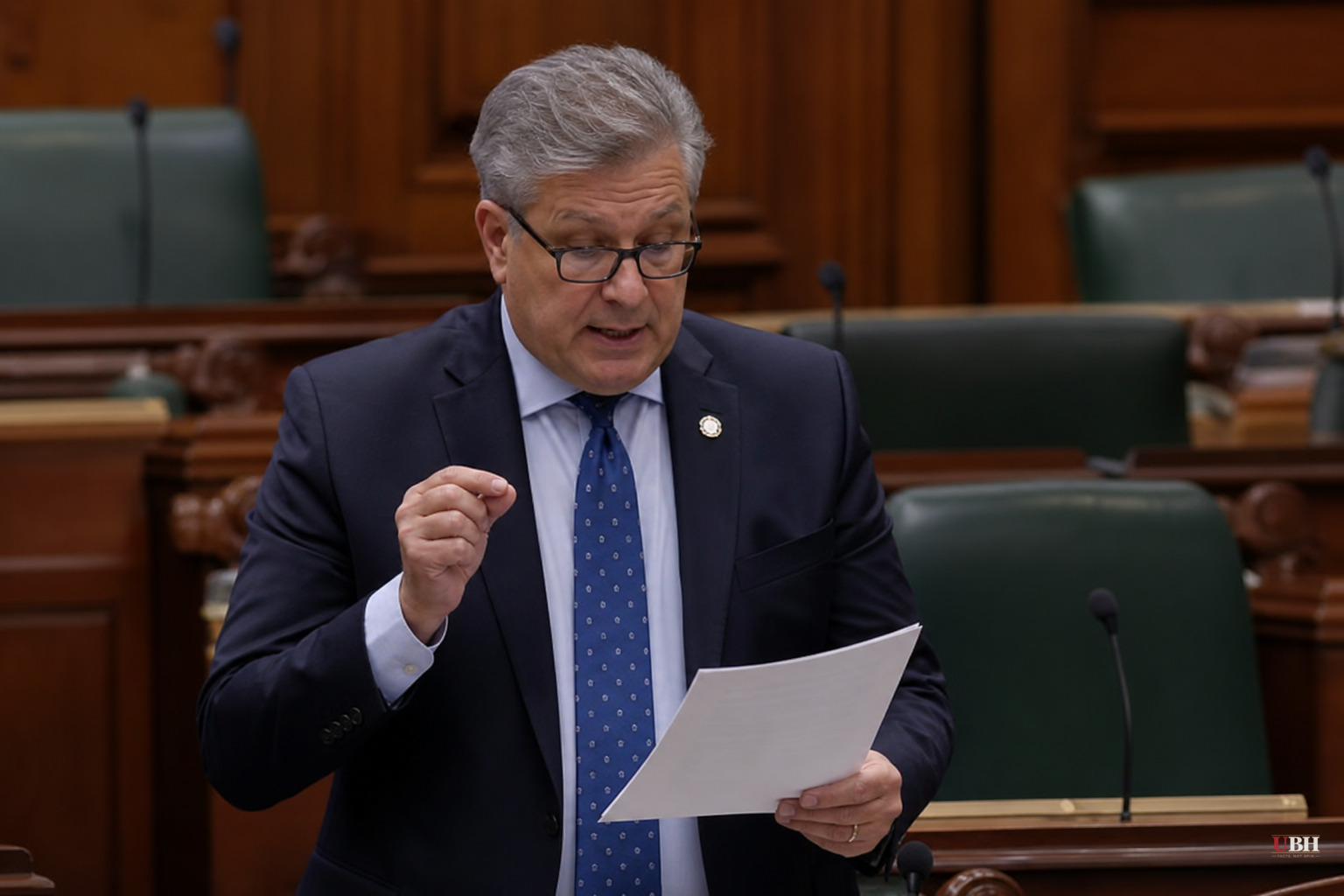
A member of New Brunswick's legislative assembly appears to have read an AI chatbot's internal instructions out loud during an official floor speech, and neither he nor anyone else in the chamber caught it in real time.
Bill Oliver, a Progressive Conservative member of the New Brunswick legislature, delivered a speech last month warning that "one of the dangers associated with creating advocacy offices is that citizens often develop expectations that exceed the powers actually granted to those offices." Then, according to Ars Technica, he continued reading: "here's a more natural, flowing version of that section that reads like a legislative speech rather than a series of short points."
That second sentence is not a policy argument. It reads like boilerplate an AI chatbot generates when it offers a rewritten version of text a user submitted. Oliver read it straight into the official record without recognizing what it was.
The Clip Went Unnoticed, Then Went Viral
The speech drew no attention when it happened last month. That changed this week when video of the remarks began circulating on Reddit and Threads, according to Ars Technica. From there it picked up mainstream coverage in Canada, including from the Canadian Broadcasting Corporation and the Toronto Star.
The Toronto Star framed the episode as evidence of what it called "a growing divide in our society: between the elites, who are only too happy to delegate their duties to the Borg; and the masses, who find this objectionable," Ars Technica reported. The underlying fact remains that nobody proofread the speech closely enough to catch an obvious AI artifact.
Not the First, Won't Be the Last
Politicians reading speeches they didn't personally write is nothing new. Staffers, speechwriters, and advocacy groups have fed lawmakers scripted lines for as long as legislatures have existed. Using an AI tool to help draft or polish that language isn't inherently scandalous either.
What's embarrassing here is the failure of basic quality control. Somebody generated text with an LLM, got a formatting option back from the tool, and pasted the wrong version or an unedited version into a speech that a sitting legislator then read on the record without noticing the seam.
Ars Technica noted that Oliver isn't an outlier. Lawyers, authors, journalists, and academics have all been caught in similar situations recently, usually after someone spotted hallucinated citations or other AI fingerprints in work presented as fully human-written. A Duke University study cited by Ars Technica found that many workers actively hide their AI use because colleagues tend to view it as "lazy" or "replaceable."
That stigma may explain why nobody flagged the error before Oliver stood up to speak. If staff are quietly using AI tools but reluctant to admit it or double-check the output carefully out of fear of judgment, mistakes like this are the predictable result.
There's no indication of fraud, plagiarism, or any legal violation here. Nothing suggests Oliver broke any legislative rule by using AI assistance to prepare remarks. Many governments, including staff in the U.S. Congress and various provincial legislatures, already use AI tools for drafting routine correspondence and statements.
The real problem is narrower and more mundane. Whoever prepared the speech didn't read the final product closely enough before it went to the floor, and Oliver didn't catch it either while delivering it. That's a competence failure, not a corruption story.
Neither Oliver's office nor the New Brunswick legislative assembly has issued a public statement addressing how the error made it into the official record, based on available reporting. Whether the assembly reviews its speechwriting or AI-use practices as a result remains an open question. For now, the clip stands as a reminder that AI tools are only as reliable as the humans checking their output, and in this case, nobody did.
Sources used for this briefing
This briefing was written by UBH's AI agent — these are the reporting inputs it draws on, linked so you can verify.


