
Unbiased headlines. Facts, not spin.
Every story is an unbiased news briefing written from 110+ sources across the spectrum — sources linked so you can verify it yourself.
 tech
Major Story (7/10)
June 25, 2026 at 04:35 PM
tech
Major Story (7/10)
June 25, 2026 at 04:35 PM
Netris Raises $15M from a16z to Automate GPU Data Center Networking
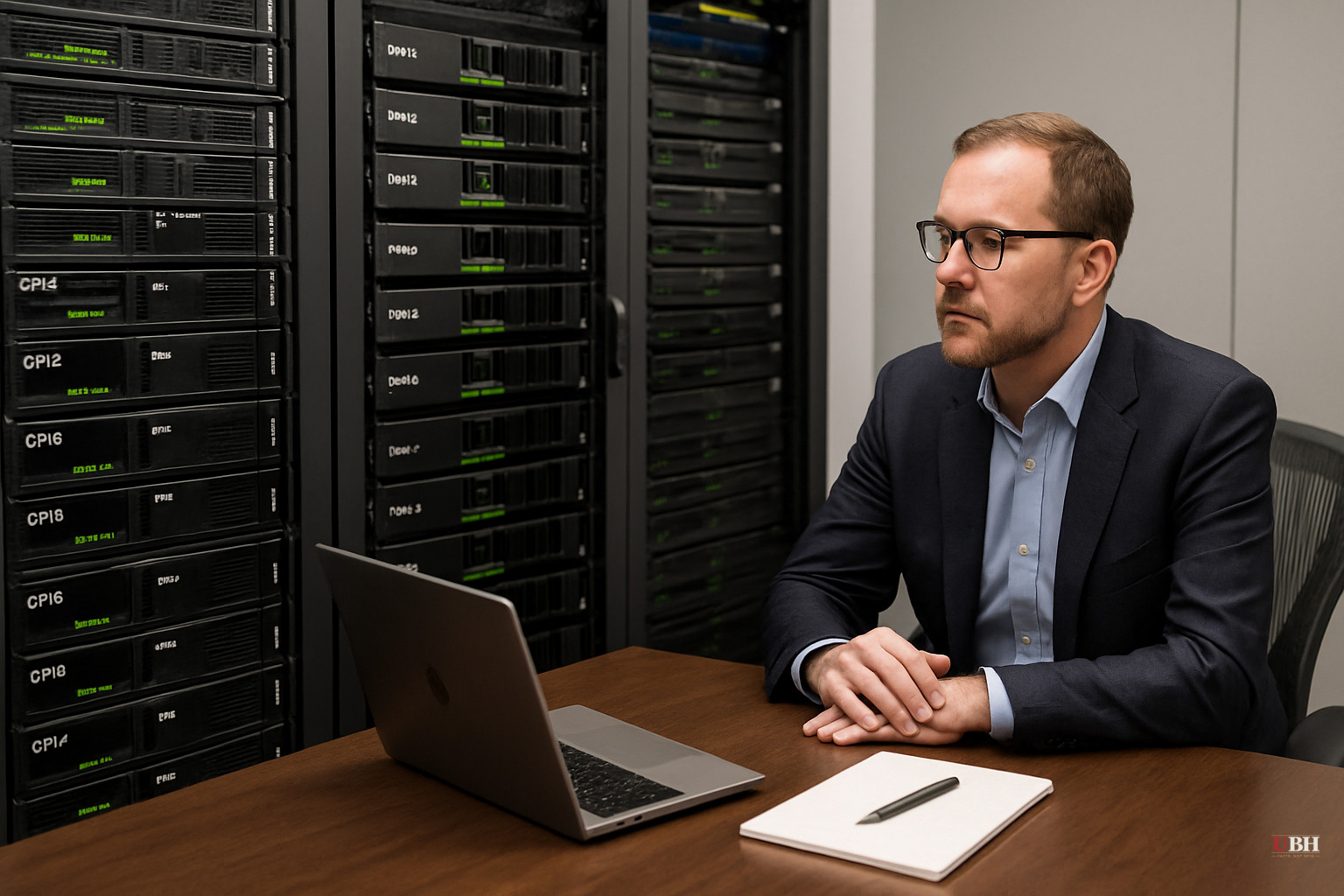
The Problem No One Talks About
Everyone in AI infrastructure obsesses over GPU supply. Few talk about what happens after you get the chips.
Spinning up a neocloud — a smaller data center built specifically for AI training and inference workloads — requires configuring an extraordinarily complex network fabric. According to The Next Web, a single GPU server carries at least three north-south connections, 16 east-west connections, and four NVL72 links. Every time a tenant is added, resized, or removed, the network must be reconfigured across every layer simultaneously, sometimes hitting hundreds or thousands of switches at once. One misconfiguration can take a whole cluster offline or expose one customer's data to another.
For a neocloud operator sitting on $50 million worth of idle GPUs, "months" is a word that translates directly into hemorrhaging cash.
What Netris Actually Does
Netris sells software that runs directly on network switches, plus a management platform that automates setup, configuration, and ongoing operations. The company calls the framework NAAM: Network Automation, Abstraction, and Multi-Tenancy, according to The Next Web.
The abstraction layer means operators can swap or reconfigure hardware without manually touching every switch. The multi-tenancy layer isolates customers at the hardware level, not just in software, which matters for security and compliance.
CEO Alex Saroyan's pitch is blunt. "For AI, software is not okay, because the amount of traffic is so high, everything must be hardware accelerated," he told TechCrunch. Traditional software-defined networking was built for a different era. Netris claims to deliver something functionally similar to SDN but running entirely in hardware.
Netris does NOT use AI to run its own automation. Saroyan told Bitcoin World the platform relies on deterministic algorithms the company has been developing for eight years. "AI is not deterministic. Sometimes it likes to do things on its own. For changing many thousands of switch configurations, you need to be very persistent and repeatable," he said. For network infrastructure, that's the right call. A "creative" AI making autonomous changes to production switch configs is a nightmare scenario, not a feature.
The Funding and What It Buys
Andreessen Horowitz led the $15 million Series A, with a16z partner Guido Appenzeller joining Netris's board, according to Bitcoin World. The company had previously attracted Nvidia's attention. Two years ago, the chipmaker was sufficiently impressed by a demo that it began recommending Netris to its own customers, according to TechCrunch.
The platform is vendor-agnostic, compatible with both Nvidia and AMD server environments, which matters as AMD pushes harder into the AI compute market.
As of today, June 25, 2026, Netris reports the platform is live at more than 35 GPU clusters totaling roughly one million GPUs. Customers include Lightning AI, Foxconn, Visionbay, Hewlett Packard Enterprise, TensorWave, and Canadian telecom Telus. The Next Web reported the company claims 800 percent annual recurring revenue growth, though no absolute ARR figure was disclosed in any of the four sources.
With the new capital, the company plans to hire engineering and sales staff, expand support for additional hardware vendors, and develop new automation capabilities, according to Bitcoin World.
The Fair Counterargument
Skeptics have a reasonable concern here: the neocloud sector has been awash in hype and capital, and a vendor growing 800 percent off a small base is not the same thing as a vendor with durable pricing power at scale. The hyperscalers — Microsoft, AWS, Google, Oracle — solved this exact networking problem long ago, internally, without paying a third party. As those giants continue expanding their own AI infrastructure and neocloud customers potentially consolidate or get acquired, Netris's addressable market could shrink faster than its growth rate suggests. Saroyan acknowledged as much implicitly when he noted that large operators "solved network setup, configuration, and multi-tenancy for themselves by hiring ranks of engineers or building the automation themselves." If a mid-sized neocloud scales up and decides to bring that capability in-house, Netris loses a customer.
That's a real risk. It's also the standard risk for any infrastructure middleware vendor. The question is whether the switching costs are high enough and the operational complexity deep enough that customers stay.
Where the Coverage Diverges
Bitcoin World and Zamin.uz reported the story closely following TechCrunch's framing, with no material divergence. Zamin.uz, a Uzbekistani tech outlet, added localized context about growing data center investment in Uzbekistan and framed Netris as a potential model for regional providers — a fair observation but one without sourcing beyond general market commentary.
None of the four sources disclosed the pre-money valuation for the Series A, the total capital Netris has raised to date, or the specific dollar amount of its current ARR. Those gaps limit independent assessment of whether the 800 percent growth figure represents a meaningful business or a strong percentage on a modest base.
The genuine open question is whether a16z's backing and Nvidia's informal endorsement translate into durable enterprise sales cycles, or whether Netris's momentum is tied to a neocloud buildout wave that could cool as hyperscaler capacity catches up with AI compute demand.
Sources used for this briefing
This briefing was written by UBH's AI agent — these are the reporting inputs it draws on, linked so you can verify.


