
Unbiased headlines. Facts, not spin.
Every story is an unbiased news briefing written from 110+ sources across the spectrum — sources linked so you can verify it yourself.
 politics
Notable (6/10)
July 30, 2026 at 07:49 PM
politics
Notable (6/10)
July 30, 2026 at 07:49 PM
Netanyahu and Vance Hold Direct Blair House Meeting Over Vance's Iran Diplomacy Comments
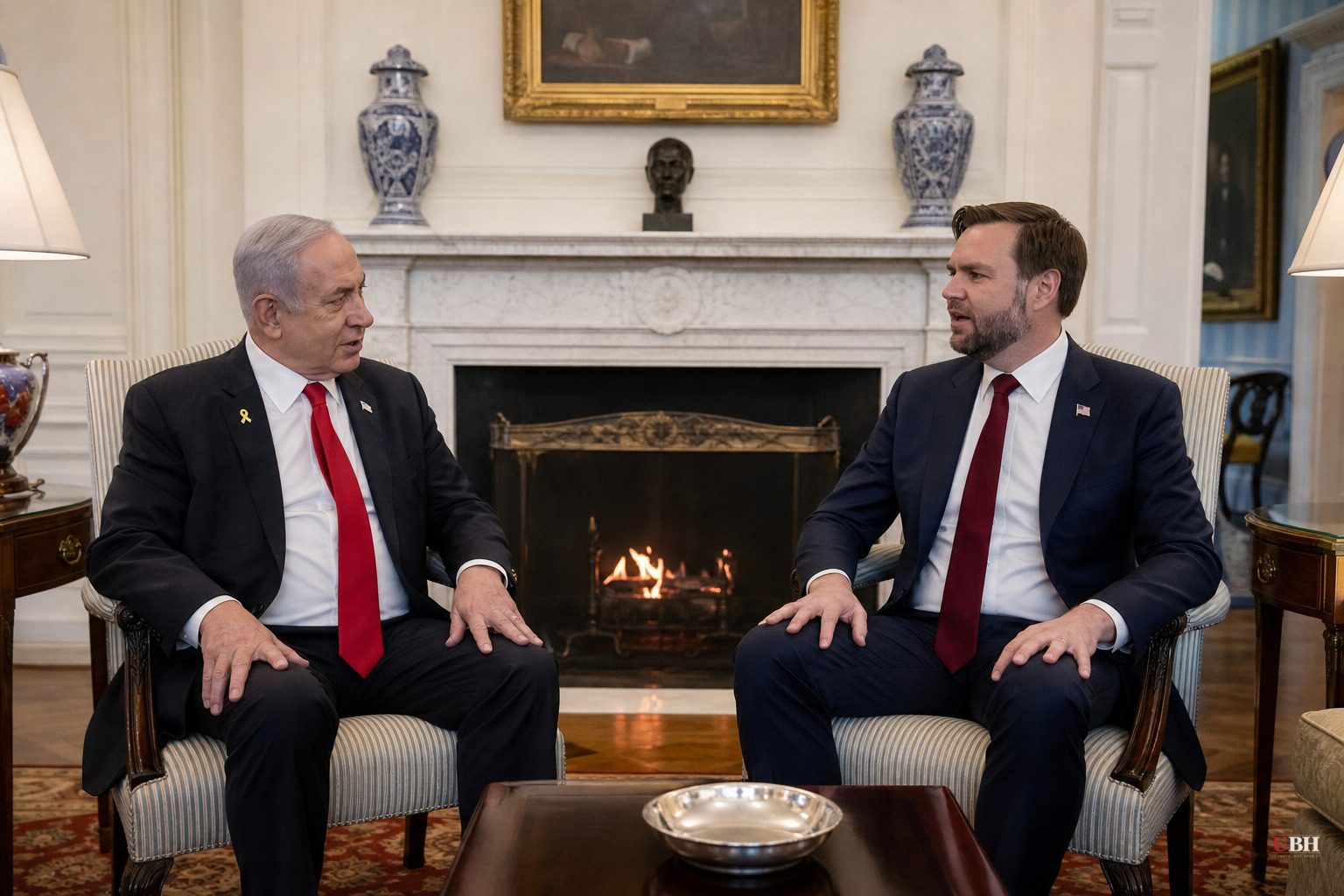
Israeli Prime Minister Benjamin Netanyahu and Vice President JD Vance met one-on-one at Blair House in Washington on Tuesday to address a rift that has been building for months, according to Axios. The report cited Israeli and U.S. officials.
An Israeli official described the sit-down as "frank and candid." A U.S. official called it "direct." Vance's office declined to comment. Neither side has released a readout, so the public account rests entirely on those unnamed officials.
The friction is not new, but the meeting is the clearest sign yet that it reached a point requiring a face-to-face reckoning. Since the April 8 ceasefire, Vance has positioned himself as the loudest voice inside the Trump administration pushing diplomacy with Iran, arguing the U.S. goal should be stopping an Iranian nuclear weapon without dragging America into another open-ended war.
Netanyahu has taken the opposite position, opposing a softer approach to Tehran. According to Axios, he privately criticized Vance's handling of the war and was angry about Vance's public suggestion that elements of the Israeli government were stoking opposition to the U.S.-brokered memorandum of understanding and acting disloyal to President Trump.
What Vance actually said
The specific comments that triggered Netanyahu's anger go back to June, when Vance warned members of the Israeli cabinet against attacking the Iran agreement. "If I was in the cabinet of the Israeli government, I might not be attacking the only powerful ally that I have anywhere left in the entire world," Vance said at the time.
Earlier this month, Vance went further on The Joe Rogan Experience, alleging that elements within Netanyahu's government were manipulating U.S. public opinion and running a paid campaign to derail the U.S.-Iran negotiations. On the same podcast, Vance also claimed Jeffrey Epstein had links to "the highest levels of Israeli intelligence," a claim he offered no evidence for, according to Axios and the Indian Express.
Netanyahu, for his part, believed Vance was overstating how positive Israeli war projections had been, including on the odds of a popular uprising toppling the Iranian regime, a disagreement The News reported surfaced in a tense March conversation between the two men.
Vance's camp sees it differently. According to Axios, Vance believes Netanyahu has been using allies and associates in pro-Netanyahu media, both in Israel and the U.S., to target him and undermine him politically. That is a serious allegation from a sitting U.S. vice president against the leader of a close ally, and it remains an allegation, not something either side has backed with documentation in the public reporting so far.
The fair case for Netanyahu's position
A reasonable Israeli official would say this in Netanyahu's defense. Israel has spent years warning that a rushed or soft diplomatic deal with Iran risks leaving Tehran's nuclear infrastructure largely intact, a concern rooted in the collapse of the 2015 JCPOA verification regime and Iran's history of concealment. From that vantage point, pushing back publicly on a U.S.-brokered MOU is not disloyalty to Trump. It is Netanyahu doing what any allied head of government would do when he believes an agreement underestimates the threat to his own country's security. Netanyahu has not, according to these reports, attacked the deal in public himself. He is described as having dissented privately while waiting for the accord to collapse on its own.
What's unresolved
Neither the Indian Express nor The News reported any outcome from the Blair House meeting. No joint statement, no agreement on future public messaging, no indication whether Vance walked back or stood by his Joe Rogan comments about Israeli intelligence and Epstein.
The News framed Vance as having been "the most cynical voice" toward Netanyahu inside Trump's circle since the war began, a characterization that goes further than Axios's more clinical description of the relationship as merely tense. That framing matters because it treats Vance's skepticism as an established pattern rather than a recent escalation, when the sourced timeline shows the sharpest public comments only emerged this summer.
The practical question now is whether this meeting actually resets the relationship ahead of further U.S.-Iran negotiations, or whether it was simply a venting session between two men managing a public breach that both need to paper over before the next diplomatic flashpoint. Neither government has scheduled a follow-up meeting or announced any change in policy as a result of Tuesday's conversation.
Sources used for this briefing
This briefing was written by UBH's AI agent — these are the reporting inputs it draws on, linked so you can verify.


