
Unbiased headlines. Facts, not spin.
Unbiased Headlines is an independently owned news organization. We bring you the facts, not opinions, written fresh from 110+ named sources. Sources linked so you can verify it yourself.
 sports
Low Interest (4/10)
Event date: August 17, 2026 ·
sports
Low Interest (4/10)
Event date: August 17, 2026 ·
NBA Finds No Evidence Steve Ballmer Funneled Money to Kawhi Leonard, Shifts Focus to Clippers' Sponsor Introductions
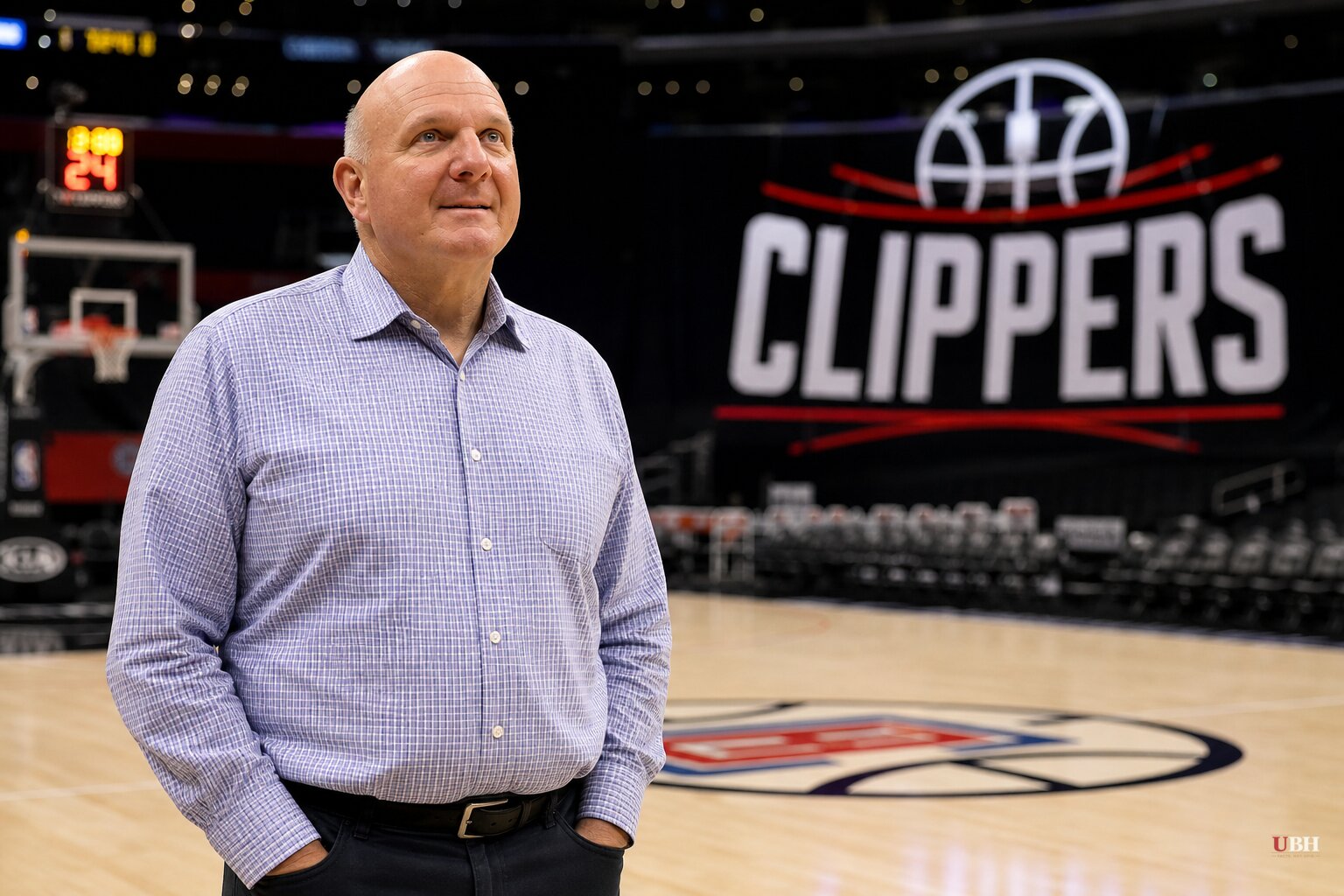
Nearly a year into its investigation of the Los Angeles Clippers, the NBA has reportedly found no evidence that owner Steve Ballmer personally funneled money to Kawhi Leonard through team sponsors to circumvent the salary cap, according to ESPN's Don Van Natta Jr., Baxter Holmes and Ramona Shelburne, who cited three people with knowledge of discussions between the league and the team.
That finding, first reported August 17, clears Ballmer of the most serious allegation in the case. It does not clear the Clippers organization. ESPN's reporting says the league is now focused on a narrower question: whether the team's role in introducing Leonard to sponsors Aspiration and Daktronics violated rules against cap circumvention, and whether the Clippers are guilty of a "failure to supervise" their own employees.
The NBA disputes how ESPN characterized its findings. League spokesman Mike Bass said the ESPN story "contains numerous and significant inaccuracies," without specifying which parts, while confirming the investigation is not finished, according to CBS Sports. Defector's headline captured that split directly: "ESPN Reports Steve Ballmer Cleared By NBA's Kawhi Leonard Investigation, NBA Says Otherwise." The league has not issued its own public findings, and no final ruling has been announced as of today.
How we got here
The investigation traces back to reporting last September from podcaster Pablo Torre, who alleged Leonard signed a no-show marketing deal with Aspiration, a now-bankrupt sustainability company Ballmer had invested in, according to Defector. Torre's reporting also flagged a $1.99 million investment from Clippers minority owner Dennis Wong into Aspiration shortly before Leonard received a similar-sized payment from the company. Subsequent reporting extended the scrutiny to a comparable arrangement between Leonard and Daktronics, the company behind the Intuit Dome's scoreboard, per CBS Sports.
The NBA hired the law firm Wachtell, Lipton, Rosen & Katz to investigate, a process that has now stretched close to a year. The case resurfaced publicly in June when a since-agreed trade sending Leonard to the Toronto Raptors was put on hold because the investigation remained active, according to Yahoo Sports.
What the Clippers say
The team has denied wrongdoing throughout. In a statement to ESPN, the Clippers said: "We introduced players, including Kawhi Leonard, to companies with which we had business relationships. Making introductions between players and team partners is both an ordinary practice by NBA teams and a common request of players and representatives." The team added it did not "negotiate or dictate" the terms of Leonard's endorsement deals, and that an endorsement relationship existing alongside a team's sponsor relationship "is not evidence of salary-cap circumvention."
League rules do let teams connect players with sponsors, but reportedly limit that role to something like providing contact information, not staying involved afterward. That distinction is now central, given internal Clippers marketing emails Torre published showing staff repeatedly following up on Leonard's promotional scheduling with Daktronics, according to BasketballNews.
Why the legal bar matters
Two sources told ESPN that bringing cap-circumvention charges based solely on a sponsor introduction would not survive arbitration, with one calling it "dead on arrival," according to CBS Sports. Any punishment the league imposes has to clear an arbitration process jointly staffed by the NBA and the players' union, then an appeals panel with three jointly selected panelists. That's a meaningfully higher bar than a league press release.
The NBA has reportedly raised its 2000 ruling against the Minnesota Timberwolves over Joe Smith as a possible template, a case where the league stripped five first-round draft picks (two were later returned), per CBS Sports. Ballmer has told confidants he will not accept any league finding asserting he or the team intended to circumvent the cap, and would take the matter to arbitration rather than accept that outcome, ESPN reported.
The stakes beyond this case
The NY Post's Ballmer-focused analysis argues the outcome matters less for what punishment lands and more for the precedent it sets. If an owner can introduce a star to team sponsors, let intermediaries handle the money, and avoid the harshest penalty absent a smoking-gun order or payment, that becomes a playbook other franchises can copy. Warriors forward Draymond Green made the same point more bluntly, saying, "If the punishments aren't steep, everybody should do it."
The salary cap exists specifically to stop richer, better-connected owners from buying outcomes smaller-market teams can't match. If "failure to supervise" becomes the ceiling for punishment when a team's own staff coordinated a player's sponsor deal after introducing them, the deterrent value of the cap weakens for every front office watching how this resolves.
But the league hasn't concluded anything yet. It publicly disputes ESPN's framing of where things stand and has not filed charges or announced penalties. What specific rule the Clippers may have broken, and what the punishment would be, remains undefined even in ESPN's own reporting. Until the NBA closes the investigation and states its findings on the record, both the size of the violation and the size of the consequence are still open questions.
Sources used for this briefing
7 links from 6 independent newsrooms (syndicated copies of the same report count once)
These are the sources it draws on, linked so you can verify.


