
Unbiased headlines. Facts, not spin.
Unbiased Headlines is an independently owned news organization. We bring you the facts, not opinions, written fresh from 110+ named sources. Sources linked so you can verify it yourself.
 defense
Major Story (7/10)
Event date: October 26, 2026 ·
Navy Says It Has Helped 3,000 Ships Cross Hormuz in Six Months as Carrier Deployments Hit Records
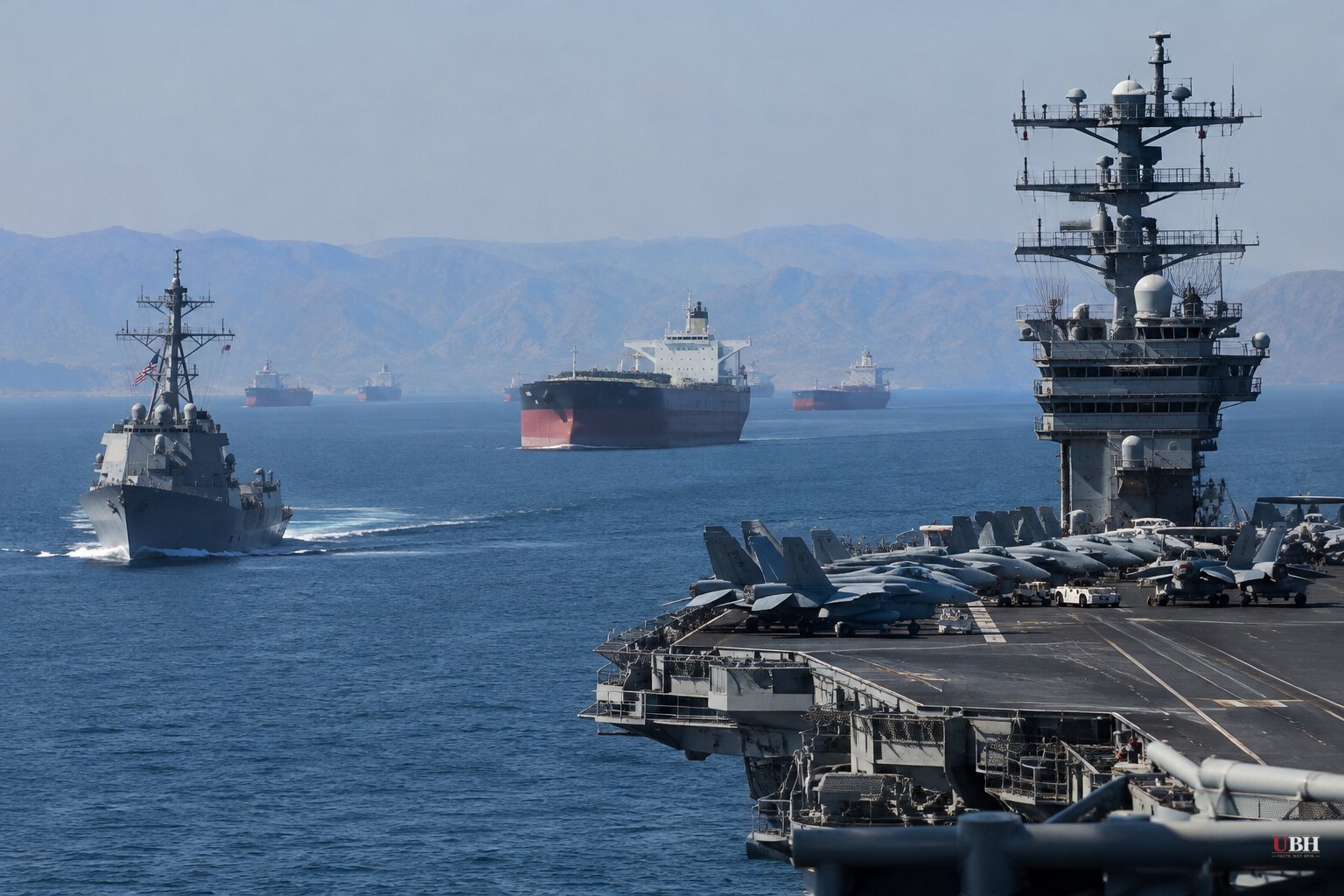
Since the U.S. and Israel launched their war on Iran in late February, the Strait of Hormuz has been the one place where the fighting never really stopped. New details of what it takes to keep it open show a military that is succeeding and wearing down at the same time.
U.S. Central Command said Sunday, Oct. 25, that more than 3,000 commercial vessels have transited the strait with American support over the past six months. It also said Gulf producers have exported more than 1.5 billion barrels of oil since June. Adm. Brad Cooper, the CENTCOM commander, flew over the waterway that weekend in a U.S. Army helicopter and said the primary transit routes are free of Iranian mines.
The flow numbers back up the claim. Kpler data shows at least 16.5 million barrels a day left the Gulf in September, equal to the prewar average and excluding Iran. Analysts have credited a mix of ship-to-ship transfers, U.S. military escorts and more pipeline use.
Oil is still expensive. Brent futures sat around $114.50 a barrel on Sunday, after easing about 2% from a nearly six-month high the previous week.
What the mission looks like from the deck
On the USS George Washington in the Arabian Sea, F-35C and F/A-18 pilots launch at night loaded with air-to-air missiles. They link up with electronic-warfare aircraft, airborne radar planes and submarine-hunting helicopters to cover tankers moving through the strait. Their job is to shoot down Iranian cruise missiles and drones aimed at commercial ships.
The flying is near-daily and spread across two carriers, an amphibious assault ship and air bases around the region. U.S. officials familiar with the missions say it is straining aircraft, crews and the mechanics who keep jets flying. Carriers have set modern records for deployment length and consecutive days at sea without a port call. Destroyers enforcing the blockade have had their deployments extended too.
Adm. Daryl Caudle, the chief of naval operations, said this week the Navy is setting up a ship maintenance hub on Diego Garcia and planning more port calls. He is also working with Pentagon leaders on deployment extensions. "Sailors will do long deployments, but they need a port call," Caudle said.
The bill and the opportunity cost
The U.S. has 50,000 troops and 20 Navy ships in the Middle East. The Congressional Budget Office estimates the conflict costs $2 billion to $3 billion a month, as the Pentagon burns through munitions, jet fuel and supplies.
Officials also acknowledge the effort is hampering the military's ability to counter Chinese influence and respond to crises elsewhere. Some U.S. officials increasingly view the situation in the strait as untenable without more international help, according to The Wall Street Journal, which first reported the strain on crews and ships.
That trade is real. Every carrier tied to Hormuz is not in the Western Pacific.
How safe is the strait?
CENTCOM spokesman Navy Capt. Tim Hawkins said the "vast majority" of Iran's attempted attacks fail. He put the share of ships that have crossed without being hit at about 97%. Cooper said about 400 merchant ships transited in a recent seven-day span and that the International Maritime Organization has counted more than 20 civilian mariners killed by Iranian attacks since February.
The misses do not make the hits trivial. CENTCOM said the GFS Pride, a Singapore-flagged, Cyprus-owned container ship, was struck by an Iranian projectile and sank while being towed ashore after a fire.
Iran's position is that the strait problem is American presence. An Iranian Army spokesperson said the waterway will reopen "if America leaves the region." The 97% figure is CENTCOM's own.
The blockade and the money
The U.S. naval blockade of Iranian crude, reimposed in July, remains in place. Cooper said it has denied Iran at least $25 billion in oil exports. CENTCOM has also helped U.S. agencies freeze nearly $350 million in cryptocurrency. Treasury Secretary Scott Bessent said at the start of October that September was the first month on record in which Iran loaded no crude for export.
Cooper said Tehran is "withholding salaries, pensions, and benefits" across oil, manufacturing, construction and the IRGC itself. He also said there are reports that Iran-aligned militias are withholding their own fighters' pay to send money back to the IRGC. Those are Cooper's characterizations of reports, not independently verified figures.
What comes next
The Pentagon is moving more troops and ships to the region as President Trump considers a new round of strikes to break the stalemate, according to the Journal. The White House said the blockade will stay in "full force and effect" and that the U.S. will not attack Iran before the midterm elections on Nov. 3.
U.S. officials and people familiar with the matter say Vice President JD Vance is separately talking to one of Iran's most powerful hard-liners to revive peace negotiations, even as Trump threatens to restart the war after the vote.
Caudle is already working on the question that matters most. If strikes resume after Nov. 3, will the Navy have the ships, aircraft and maintenance capacity to fight a new campaign while still escorting tankers? The Navy has not given the crews a firm end date.
Sources used for this briefing
6 links from 6 independent newsrooms (syndicated copies of the same report count once)
These are the sources it draws on, linked so you can verify.


