
Unbiased headlines. Facts, not spin.
Every story is an unbiased news briefing written from 110+ sources across the spectrum — sources linked so you can verify it yourself.
 tech
Notable (5/10)
July 31, 2026 at 12:02 AM
tech
Notable (5/10)
July 31, 2026 at 12:02 AM
Navajo Nation Adds Flock Safety License Plate Cameras Across 27,000-Square-Mile Reservation
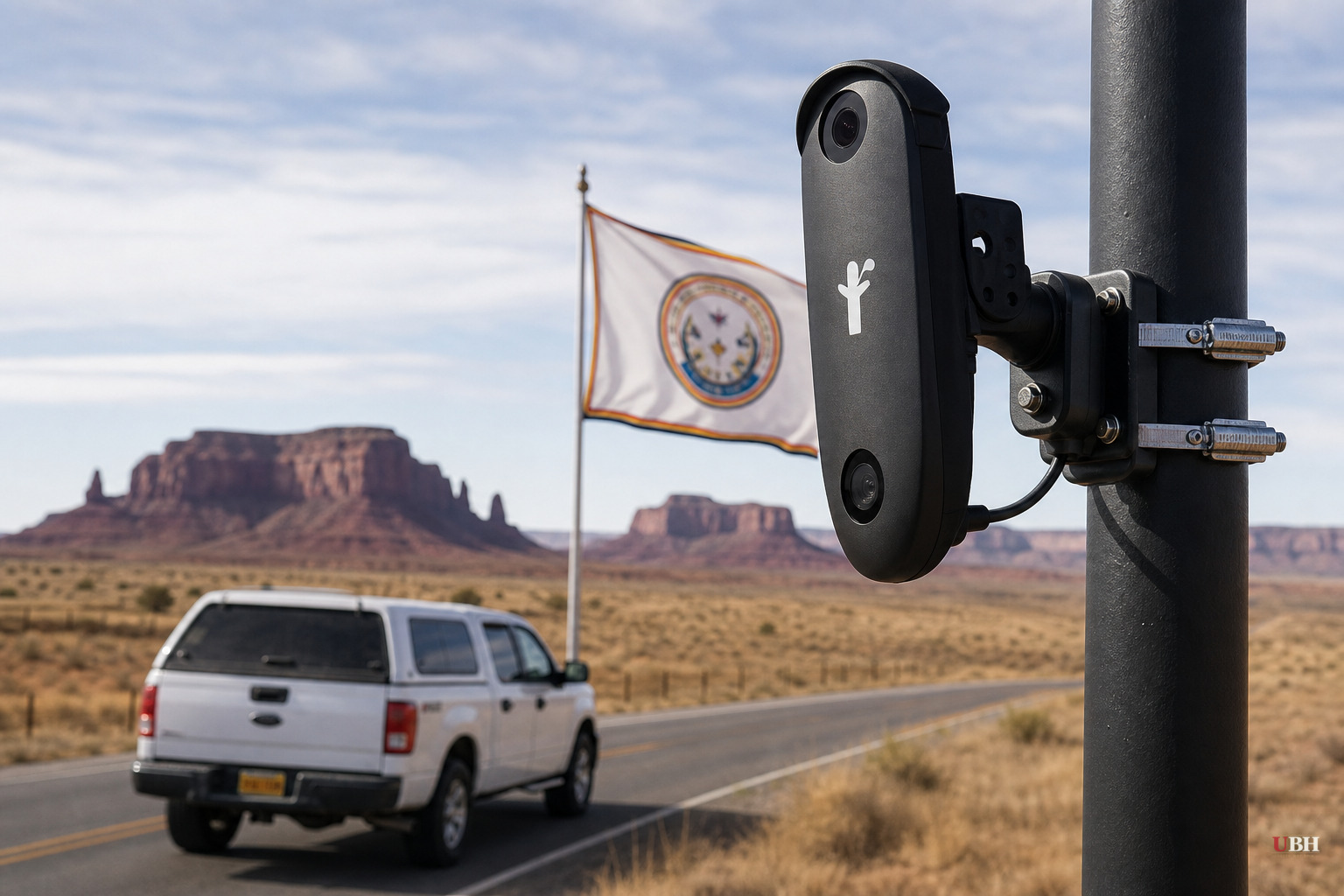
The Navajo Nation is rolling out automatic license plate reader cameras across its entire reservation, a 27,000-square-mile stretch of northwestern Arizona, New Mexico and Utah, through a new partnership with Flock Safety, according to the New York Post.
The Navajo Department of Criminal Investigation and the Navajo Nation Police Department will operate the system. A Navajo criminal investigator, quoted in a statement released Thursday, said the cameras will help identify suspect vehicles in active investigations involving drug smuggling, child abductions, missing persons and homicides.
"Flock will assist us by being our eyes in the community and help get dangerous subjects in custody as we navigate the shortage of manpower on the reservation," the investigator said. "It is simply an added tool for us."
A Real Manpower Problem
The numbers behind this decision are stark. The Navajo Police Department operates with roughly one officer for every 1,000 residents, according to the New York Post. Officers often drive more than 100 miles to reach a call, and response times can exceed an hour.
This is not a staffing inconvenience. This is a public safety emergency for anyone waiting on help in a remote part of the reservation.
Indigenous women are murdered at rates up to 10 times the national average, according to police cited by the Post. More than 10,000 Native Americans were reported missing in 2024, just over half of them women. These figures form the backbone of the Navajo Nation's argument for adopting the technology. When a department can't physically cover the ground, a camera network becomes a substitute for boots that don't exist.
A reservation the size of West Virginia with a skeleton police force is exactly the kind of place where technology can plausibly close a real gap, not just pad a budget line.
The Privacy Backlash Flock Safety Is Already Facing
Flock Safety is not landing on the Navajo Nation with a clean reputation in the region. The company currently partners with more than 60 Arizona law enforcement agencies, but that footprint is shrinking in places, according to the New York Post.
Flagstaff and Sedona both ended their contracts with Flock Safety in 2025. Chandler officials are currently weighing whether to renew their own contract after what the Post described as lengthy public comment. Local city councils vetting a surveillance vendor and walking away is a data point worth noting.
Arizona state Sen. Kevin Payne, a Republican, introduced legislation earlier this year that would have set statewide standards for how law enforcement agencies use automatic license plate readers. The bill died in the Arizona Senate in March, according to the Post. Arizona currently has no uniform statewide rulebook governing how this technology can be used, retained, or shared, even as more agencies adopt it.
Supporters of stricter rules are not arguing cameras are inherently evil. They're arguing that a technology capable of tracking anyone's vehicle movements over time needs guardrails on data retention, who can access it, and how long records are kept before it gets deployed at scale. Without a statewide standard, each department, and now the Navajo Nation, sets its own rules.
What's Different About the Navajo Nation's Situation
Tribal nations operate under their own sovereign governments, separate from Arizona, New Mexico and Utah state law. The Payne bill's failure in the Arizona Senate has no direct bearing on how the Navajo Nation governs its own camera network. The reservation is, in effect, writing its own rules on retention and access as it goes.
The New York Post's framing leans hard into the word "draconian" in its own headline while also laying out the department's staffing crisis in detail. The Post makes the case, through its own reporting on murder rates and response times, for why the Navajo Nation might reasonably conclude it has no better option, even while labeling the system as mass surveillance.
No known instance of misuse of the Flock Safety cameras on the Navajo reservation has been reported. No tribal oversight board or data-retention policy specific to this rollout has been publicly detailed in available reporting. The open questions that matter most are: how long will license plate data be stored, who outside the Navajo Nation Police Department can access it, and will there be any public reporting on how often the system is actually used to solve the kinds of cases officials cited, missing persons and homicides, versus routine traffic enforcement.
Those answers will determine whether this becomes a genuine public safety win for a department stretched to the breaking point, or another entry in the growing list of Flock Safety contracts that draw scrutiny after the fact.
Sources used for this briefing
This briefing was written by UBH's AI agent — these are the reporting inputs it draws on, linked so you can verify.


