
Unbiased headlines. Facts, not spin.
Unbiased Headlines is an independently owned news organization. We bring you the facts, not opinions, written fresh from 110+ named sources. Sources linked so you can verify it yourself.
 defense
Major Story (7/10)
Event date: November 11, 2026 ·
NATO Weighs Dropping Requirement to Plan for a Europe War and Overseas Missions at the Same Time
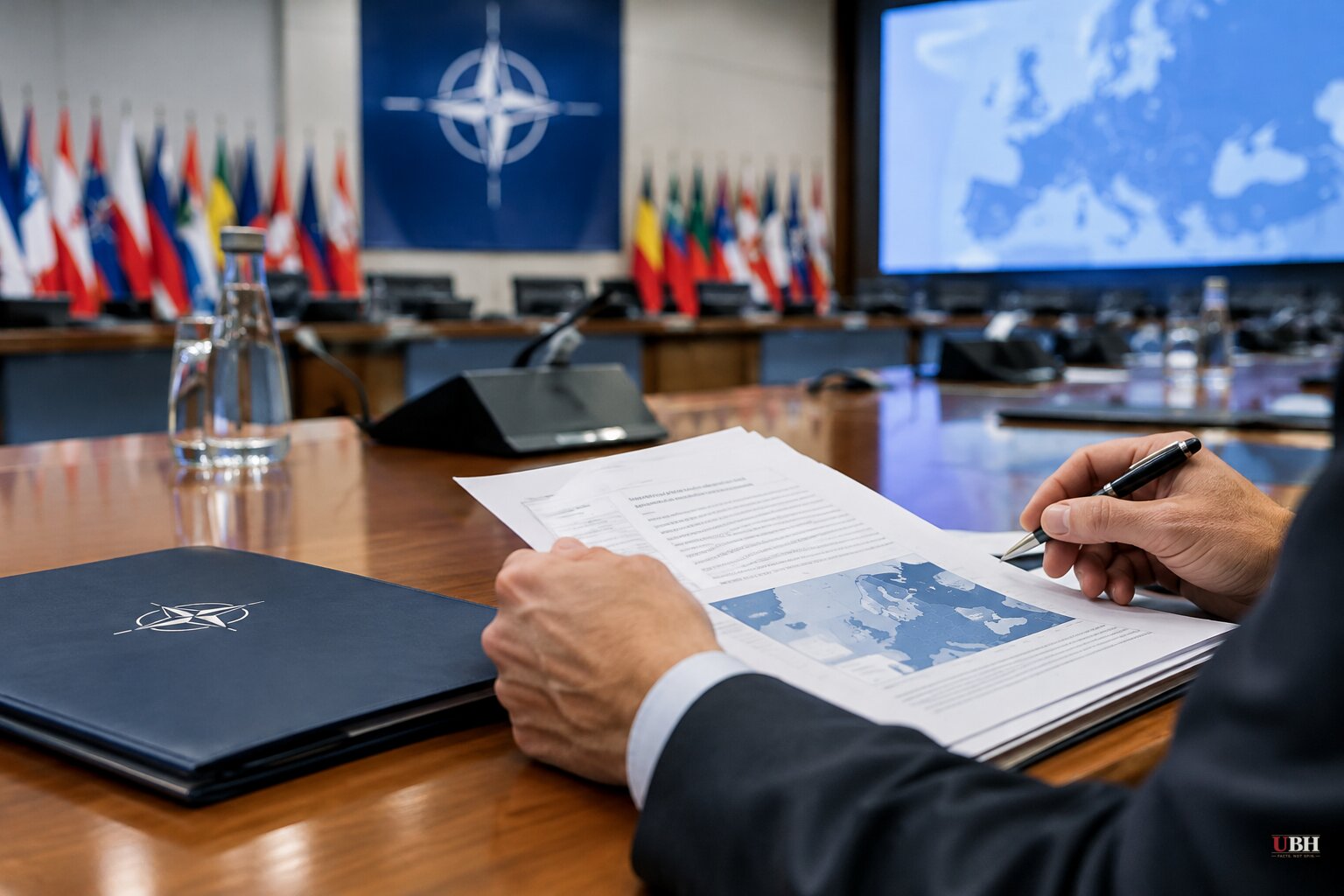
NATO allies are considering the biggest overhaul of their military planning in at least two decades. The draft would put a major war in Europe ahead of keeping enough spare forces for several overseas crisis-management missions.
Four NATO diplomats briefed on the draft planning document described the proposal to Politico, which reported it on Nov. 10.
One scenario or the other
The draft would drop a longstanding requirement for members to provide enough forces for both scenarios simultaneously. Instead of preparing for a major European conflict AND several smaller operations, allies would prepare for one OR the other.
"It makes a big difference if you choose 'and' or 'or,'" a senior NATO diplomat told Politico. The diplomat stressed that negotiations are at an early stage.
The language sits inside NATO's Political Guidance, the document that shapes new force and equipment requirements. Members are expected to finalize it by February. The wider capability-planning process concludes in 2029.
Camille Grand, a former NATO assistant secretary-general for defense investment, said the draft reflects "a very clear understanding that no matter what, for NATO, a major contingency in Europe will overtake any other priorities or events."
What would not change
The shift would not automatically end existing NATO missions in Kosovo or Iraq. A senior NATO official said the alliance is not abandoning its ability to conduct crisis-response operations.
Former NATO spokesperson Oana Lungescu said, "NATO has come full circle. It makes sense that NATO's main effort as a defensive alliance should be to deter an aggressive Russia and keep Europe safe, especially as the US is reducing its commitment."
The change also aligns with US pressure for European allies to take greater responsibility for defending NATO territory and to reduce emphasis on operations beyond the alliance. Washington has pushed allies to scale back some overseas missions while the Pentagon prepares a review of its military presence in Europe. European officials have repeatedly warned that Russia could pose a direct military threat to NATO territory by 2029.
Pressure on the eastern flank
The planning debate is happening against a backdrop of Russian pressure on NATO states. European governments have reported suspected sabotage, drone incursions, cyberattacks and attacks on critical infrastructure. Germany has directly linked some of those incidents to Moscow.
Lithuanian officials said NATO fighter jets were scrambled twice overnight after suspected drones entered the country's airspace from Belarus. The incursions triggered alerts and temporary airport closures in Vilnius and Kaunas, and at least one unmanned aircraft later crossed into neighboring Latvia. NATO jets detected the object but did not shoot it down.
Patriots for Ukraine
Separately, the US State Department approved a potential $2.1 billion sale of 500 PAC-3 MSE interceptors to Ukraine on a Friday, according to CNN's Oct. 30 report. The PAC-3 MSE is the most advanced Patriot variant currently in service and one of the few weapons capable of shooting down incoming ballistic missiles.
The sale is not subsidized or financed by the US, according to the department's release. Ukraine is covering the estimated $2.1 billion purchase with funds from Canada, Germany and Norway plus a loan from the European Union.
The department said the sale supports US foreign policy and national security objectives "by improving the security of a partner country that is a force for political and economic stability in Europe."
President Volodymyr Zelensky welcomed the approval but warned that delivery may take "a few years." He wrote on X that Ukraine had asked for a winter support package of 100 interceptors a month. Five hundred, he said, "would be enough to protect our skies over the coming months."
Zelensky also claimed the US and its partners "have sufficient stocks of PAC-3 interceptors in their warehouses." He urged them to release those now and replenish their own arsenals later from production already contracted and paid for by Ukraine and its partners.
Ukraine's Patriot supply ran dry, according to CNN's earlier reporting. The department's announcement did not specify when the interceptors would be delivered.
The tension underneath
The two stories point at the same problem: limited stocks and limited forces, with Russia as the stated priority. A sale approval is a permission slip, not a shipment. NATO's planning draft is a choice about which job gets the troops if both arrive at once.
Zelensky wants stockpiled interceptors moved this winter. The State Department's announcement did not specify a delivery date, and CNN has asked it for details about the expected delivery timeline. The planning text is due in February, and the 'and' versus 'or' wording is the line to watch.
Sources used for this briefing
3 links from 3 independent newsrooms (syndicated copies of the same report count once)
These are the sources it draws on, linked so you can verify.


