
Unbiased headlines. Facts, not spin.
Unbiased Headlines is an independently owned news organization. We bring you the facts, not opinions, written fresh from 110+ named sources. Sources linked so you can verify it yourself.
 defense
Major Story (7/10)
Event date: October 21, 2026 ·
NATO Sends Radar, Drones and Patrol Aircraft to Black Sea After Drone Strikes on Cargo Ships
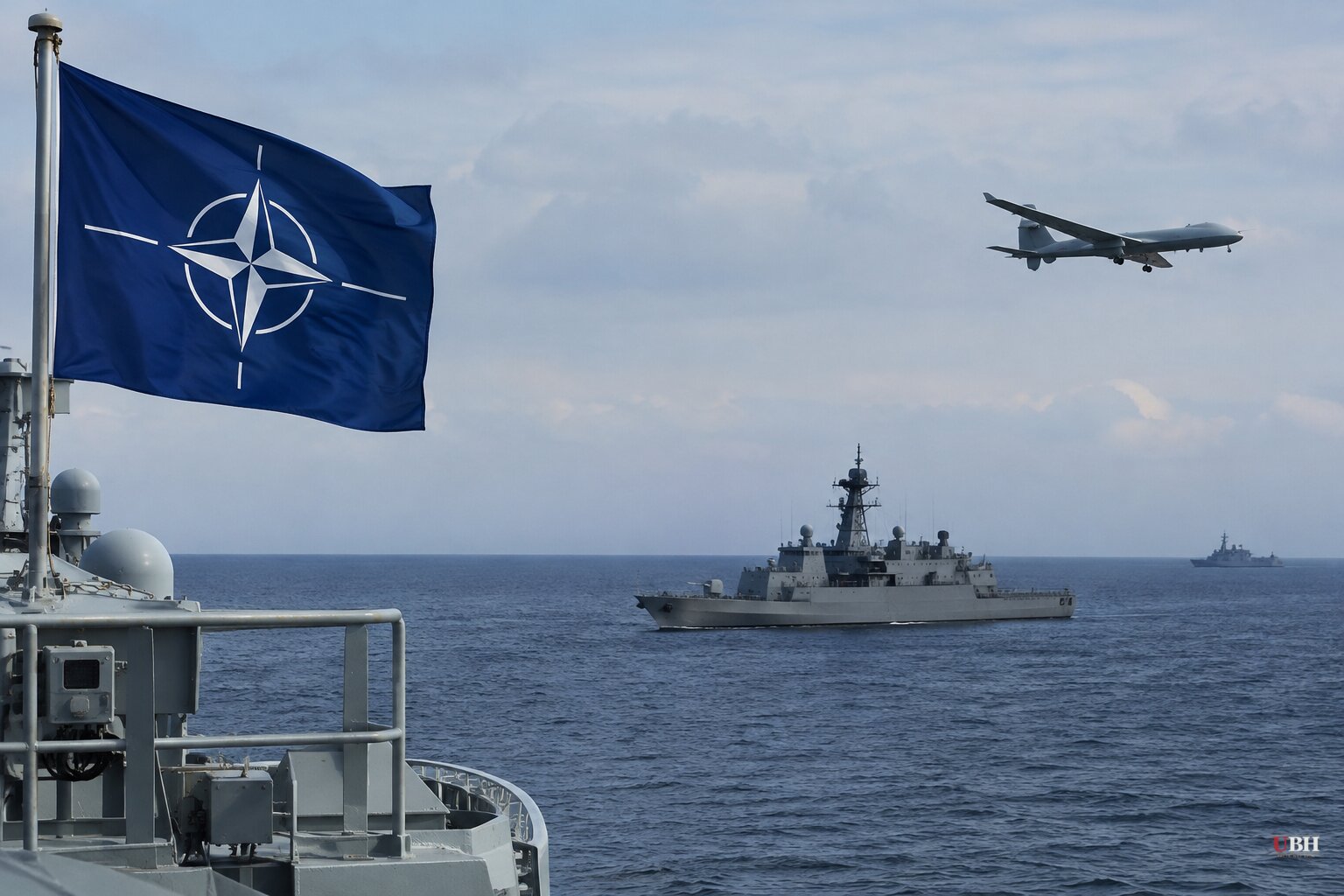
NATO will put more radar, drones and patrol aircraft over the Black Sea after a run of drone strikes on merchant ships near the Romanian and Bulgarian coasts. The decision followed a meeting of NATO ambassadors at the North Atlantic Council.
Allison Hart, NATO's principal spokeswoman, said in an Oct. 20 post on X that the additional assets will support surveillance, reconnaissance and forensic work. "We will continue to stand united and ensure that we are ready and able to address any threat and to keep our one billion people safe," she wrote.
U.S. Army Col. Martin L. O'Donnell, NATO's military spokesman, said allies will send radar systems, drones and patrol aircraft. Allies will also send, or have already sent, intelligence agents and teams to examine the explosives used against the ships.
NATO has not attributed the attacks to any country.
What was hit
Earlier this month, a number of cargo ships were struck off Bulgaria's Black Sea coast within a single week. On Oct. 15, drones hit two chemical tankers near Romania's coast and set both ablaze.
The tankers were anchored near the Sulina Canal, which links the Danube to the Black Sea and serves as a major export route for Ukraine.
Romanian President Nicusor Dan called the situation "serious." "Commercial ships are being attacked and sunk. Seafarers killed, injured, and missing, very close to the shores of Romania and Bulgaria," he said. "Lives, global trade, and critical infrastructure are at stake."
Moscow's reply
Russia is reading the NATO move as a source of danger, not a response to one. Vladislav Maslennikov, director of the European Affairs Department at the Russian Foreign Ministry, told the newspaper Izvestia on Oct. 20 that, against the backdrop of NATO's increased reconnaissance in the Black Sea, "the risk of incidents, including unintentional ones, is indeed increasing."
Maslennikov did not address who struck the ships. NATO has not named a culprit either, so the forensic teams matter. What they find in the wreckage will decide whether this stays a surveillance mission or becomes a diplomatic dispute with a named party.
A sea that has been a war zone since 2022
The Black Sea touches Bulgaria, Georgia, Romania, Russia, Turkey and Ukraine. It has been a combat theater since Feb. 24, 2022, when Russia invaded and declared a prohibition on navigation in the northwestern part of the sea.
Naval analyst H I Sutton's running timeline of the war at sea records the early moves. Russian warships bombarded the coast near Odesa, and amphibious landing threats never materialized. Most of Ukraine's small fleet was captured, sunk or scuttled before March 3, 2022. Turkey closed the Bosporus to naval traffic on Feb. 28, 2022, which kept Russia from sending more warships in from the Mediterranean.
The same timeline says anti-invasion naval mines were laid off the northern coast in late February 2022, likely by Ukraine and possibly in part by Russia.
Sutton also notes that in February 2022 the Russian Navy moved trained dolphin pens to the entrance of Sevastopol harbour.
The wildlife toll
The fighting has also hit the sea's marine life. Ivan Rusev, head researcher at the Tuzly Lagoons national park in southern Ukraine, told Al Jazeera that some 50,000 dolphins died in 2022 alone. He puts the toll above 120,000 by 2026, roughly one in four cetaceans in the Black Sea. That is Rusev's estimate. No second source in the reporting confirms the figure.
He said fishing and poaching along the coast fell sharply after the invasion. Even so, the hostilities are killing "hundreds times more" bottlenose dolphins, short-beaked dolphins and harbour porpoises than nets did.
Rusev's explanation is that explosions, cruise missile launches from warships and military sonar confuse the animals and damage their echolocation. A dolphin that cannot navigate or hunt loses weight fast, he said. "If a dolphin can't fish, it loses weight fast," he told Al Jazeera.
Starving animals burn blubber that has already absorbed pollutants from wastewater, farm runoff, microplastics and antibiotics. Rusev said that weakens their immune systems and leaves them open to lethal respiratory infections caused by morbillivirus.
He added that the sea's ecosystem is also absorbing chemicals from munitions and spills of oil, fuel and vegetable oil from dozens of sunk or damaged warships, tankers and freighters.
What comes next
The new NATO deployment adds eyes and sensors to a sea where shipping is now being hit within sight of two alliance members. Romania and Bulgaria are both NATO states, and Dan has said seafarers are being killed and are missing close to their shores.
NATO has given no timeline for the deployment and no schedule for releasing forensic findings. It is unclear whether the examination of the explosives will produce an attribution, and what the alliance will do if it does.
Sources used for this briefing
3 links from 3 independent newsrooms (syndicated copies of the same report count once)
These are the sources it draws on, linked so you can verify.


