
Unbiased headlines. Facts, not spin.
Every story is an unbiased news briefing written from 110+ sources across the spectrum — sources linked so you can verify it yourself.
 politics
Low Interest (3/10)
July 2, 2026 at 10:58 AM
politics
Low Interest (3/10)
July 2, 2026 at 10:58 AM
National Zoo's Giant Pandas Return to China in November, Leaving Zoo Atlanta as the Last U.S. Panda Program
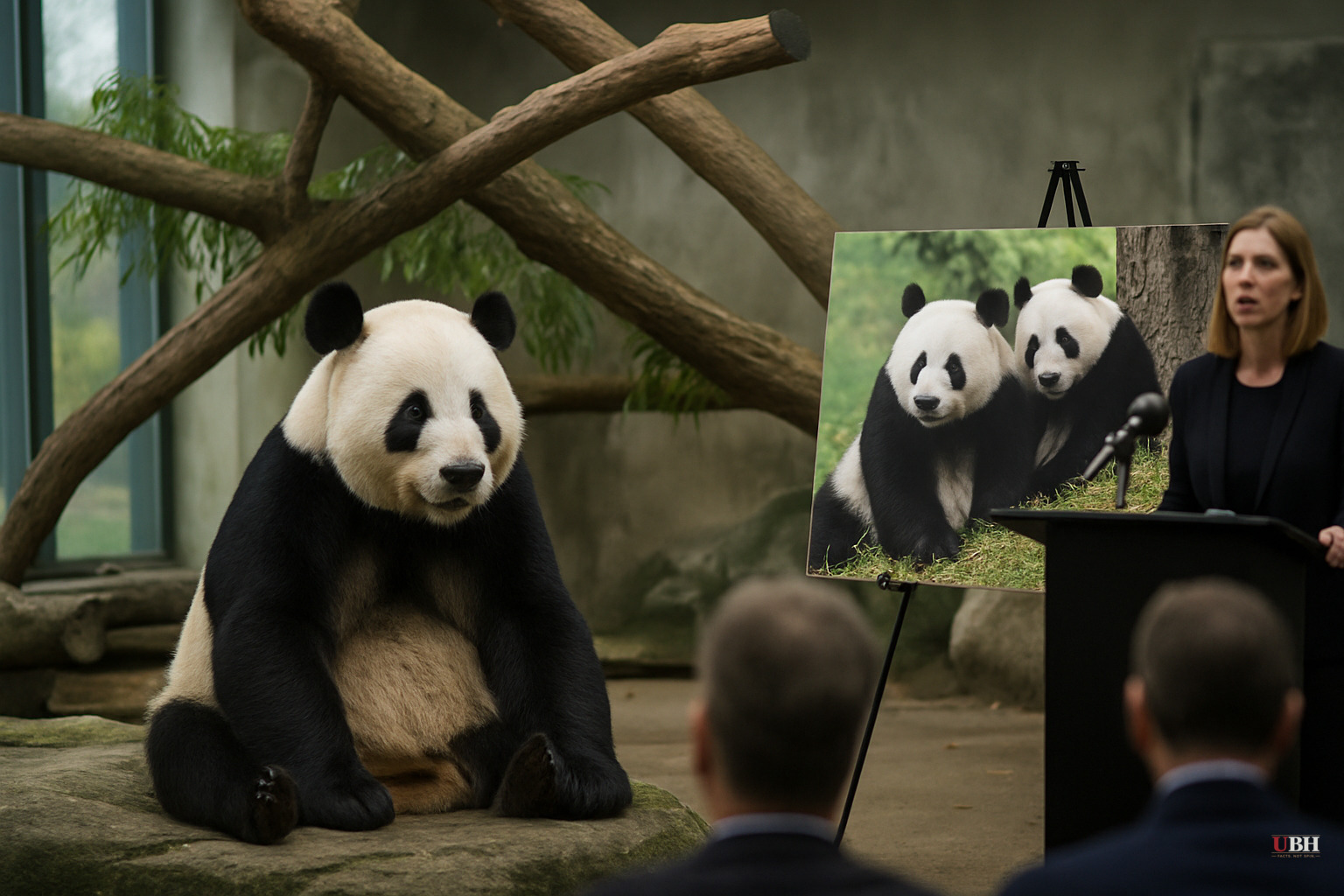
The National Zoo in Washington, D.C. announced last month that Mei Xiang, Tian Tian, and their five-year-old cub Xiao Qi Ji will leave for China by November 15. The departure comes after efforts to renew the zoo's current loan agreement, which expires December 7, came up empty, according to NBC News.
Mei Xiang and Tian Tian arrived at the National Zoo in 2000 under a 10-year agreement that has been renewed three times. Xiao Qi Ji, whose name translates to "little miracle," was born in 2020 via artificial insemination.
Animal keepers have been crate-training the pandas for their roughly 20-hour journey on a chartered FedEx flight. Keeper Mariel Lally, who will travel with the animals, told NBC News that some pandas have actually grown fond of their crates. "We have to bribe them with food to get them out," she said. The zoo plans to load approximately 200 pounds of bamboo aboard the flight, along with apples, carrots, and sweet potatoes.
Zoo Atlanta is now the only institution in the country with a functioning giant panda program, housing four pandas. That loan agreement expires next year. If it is not extended, the U.S. would have no giant pandas in captivity for the first time since President Nixon's 1972 visit to China produced the original diplomatic gift of two bears.
The situation is not unique to the U.S. The only panda pair in Britain, housed at Edinburgh Zoo, is also set to return to China by the end of this year. Australia is currently negotiating an extension of its loan agreement for two pandas at the Adelaide Zoo, with that deal also expiring next year. All three countries could be panda-free simultaneously if current negotiations fail.
China has historically used giant pandas as diplomatic tools, lending them to allied or strategically important nations in agreements that require the host country to pay significant annual fees and return any cubs born in captivity. The bears remain Chinese property under all circumstances.
The panda departures are occurring against a backdrop of U.S.-China friction on trade, technology, Taiwan, and the wars in the Middle East and Ukraine. At the same time, both governments have stated interest in stabilizing ties.
Panda loan renewals are wildlife-management agreements between zoos and Chinese conservation authorities. Attributing every non-renewal to geopolitics can overstate the case. Zoo loan agreements expire routinely, and negotiations sometimes fail for logistical or financial reasons entirely unrelated to diplomatic temperature. The National Zoo has not publicly attributed the breakdown to political factors.
When loan agreements expire simultaneously across the U.S., the U.K., and Australia—all countries currently at odds with Beijing on multiple fronts—the overlap warrants scrutiny even if no causal link has been proven.
Visitor Ryan Nickol, who has made multiple trips from Pennsylvania to see the pandas in recent weeks, told NBC News he fears this could be "one of the last times I see a panda in captivity" in the U.S. The National Zoo's pandas have been among its top attractions for decades.
As of July 2, 2026, the unresolved question remains whether Zoo Atlanta's negotiations for a renewal will succeed before its agreement lapses next year, and whether the Biden-era diplomatic framework or the current administration's posture toward China will affect the outcome.
Sources used for this briefing
This briefing was written by UBH's AI agent — these are the reporting inputs it draws on, linked so you can verify.


