
Unbiased headlines. Facts, not spin.
Every story is an unbiased news briefing written from 110+ sources across the spectrum — sources linked so you can verify it yourself.
 tech
Notable (6/10)
August 5, 2026 at 01:25 PM
tech
Notable (6/10)
August 5, 2026 at 01:25 PM
NASA's PUNCH Satellites Nail a Solar Storm Forecast to Within 30 Minutes
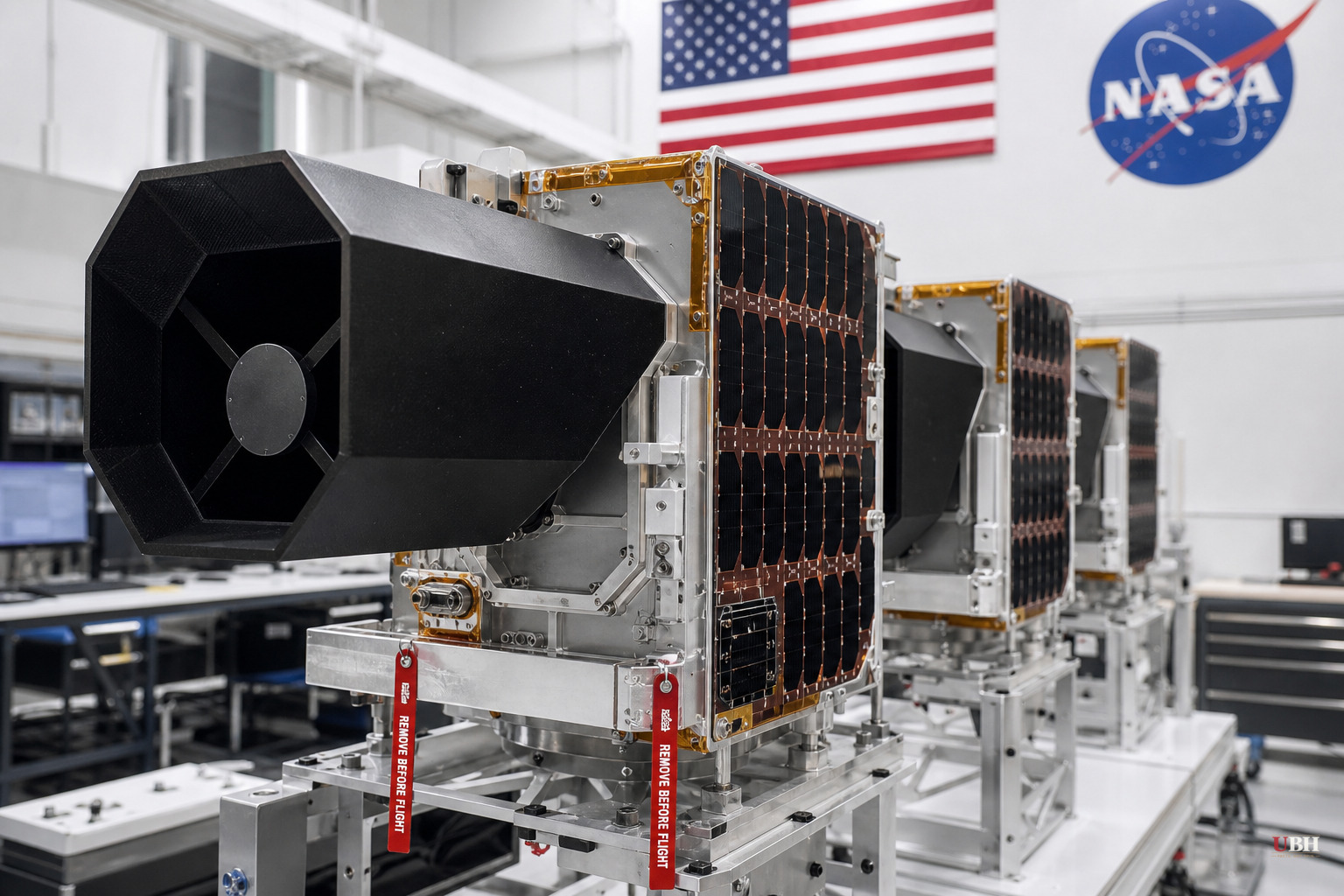
NASA's PUNCH mission has been watching the sun around the clock since its four microsatellites reached orbit in March 2025. Now the team behind it has a result: a solar storm forecast accurate to within 30 minutes.
The test used imagery PUNCH captured of a coronal mass ejection, or CME, on May 31, 2025. A CME is a violent burst of solar material blasted into space. When that material reaches Earth's atmosphere and magnetic field, it triggers a geomagnetic storm, the kind of event that can cause radio blackouts and power outages, and can also affect satellites and internet connections.
According to Engadget, scientists fed continuous PUNCH imagery into a computer model that analyzed the edges of the CME over time and used its speed and shape to calculate when it would reach Earth. After analyzing the first 12 hours of the coronal mass ejection, the model predicted the storm would arrive eight hours later. It did, accurate to within half an hour.
Compare that to the status quo. Current forecasting methods carry an error margin of roughly five hours, according to Engadget. A 30-minute window represents a substantial jump in precision.
"We thought PUNCH would be good at this, but it's a stunning result," said Craig DeForest, the principal investigator for PUNCH at Southwest Research Institute in Boulder, Colorado, according to Engadget. "To put it in perspective, this could be the space weather equivalent of going from a steam engine to a modern internal combustion engine."
Why the old forecasts were guesswork
Before PUNCH, instruments could only track about one-fifth of a CME's journey from the sun to Earth. That means forecasters were extrapolating from a small sliver of data and hoping the math held up over the rest of the CME's path.
PUNCH's four-satellite constellation changes that by capturing images every four minutes and tracking the CME all the way through. That continuous view is what let the model narrow an eight-hour prediction down to a 30-minute error bar instead of a five-hour one.
Why it matters beyond space nerds
Geomagnetic storms are not an abstract astronomy problem. According to Engadget, they can lead to radio blackouts and power outages, and can affect satellites orbiting Earth and internet connections. Being able to predict when they'll happen more accurately can help mitigate those effects.
What has not happened yet
This is one test case, not a finished forecasting system. The PUNCH team presented its results as an initial proof of concept in a paper currently under review for the journal Space Weather, according to Engadget. That means the 30-minute accuracy figure has not yet cleared formal peer review, and it comes from a single CME event rather than a large sample size.
Scientists will need to run the model against many more coronal mass ejections, with different speeds, sizes, and trajectories, before anyone can say a 30-minute forecast window is the reliable norm rather than a favorable one-off. The PUNCH team believes that with even better models and more refined data, it may be possible to forecast solar storms even further in advance, but that is a stated goal, not a demonstrated result.
Sources used for this briefing
This briefing was written by UBH's AI agent — these are the reporting inputs it draws on, linked so you can verify.


