
Unbiased headlines. Facts, not spin.
Every story is an unbiased news briefing written from 110+ sources across the spectrum — sources linked so you can verify it yourself.
 tech
Low Interest (4/10)
August 4, 2026 at 01:17 AM
tech
Low Interest (4/10)
August 4, 2026 at 01:17 AM
Nanit Raises $50 Million to Turn Baby Monitors Into Data Platforms
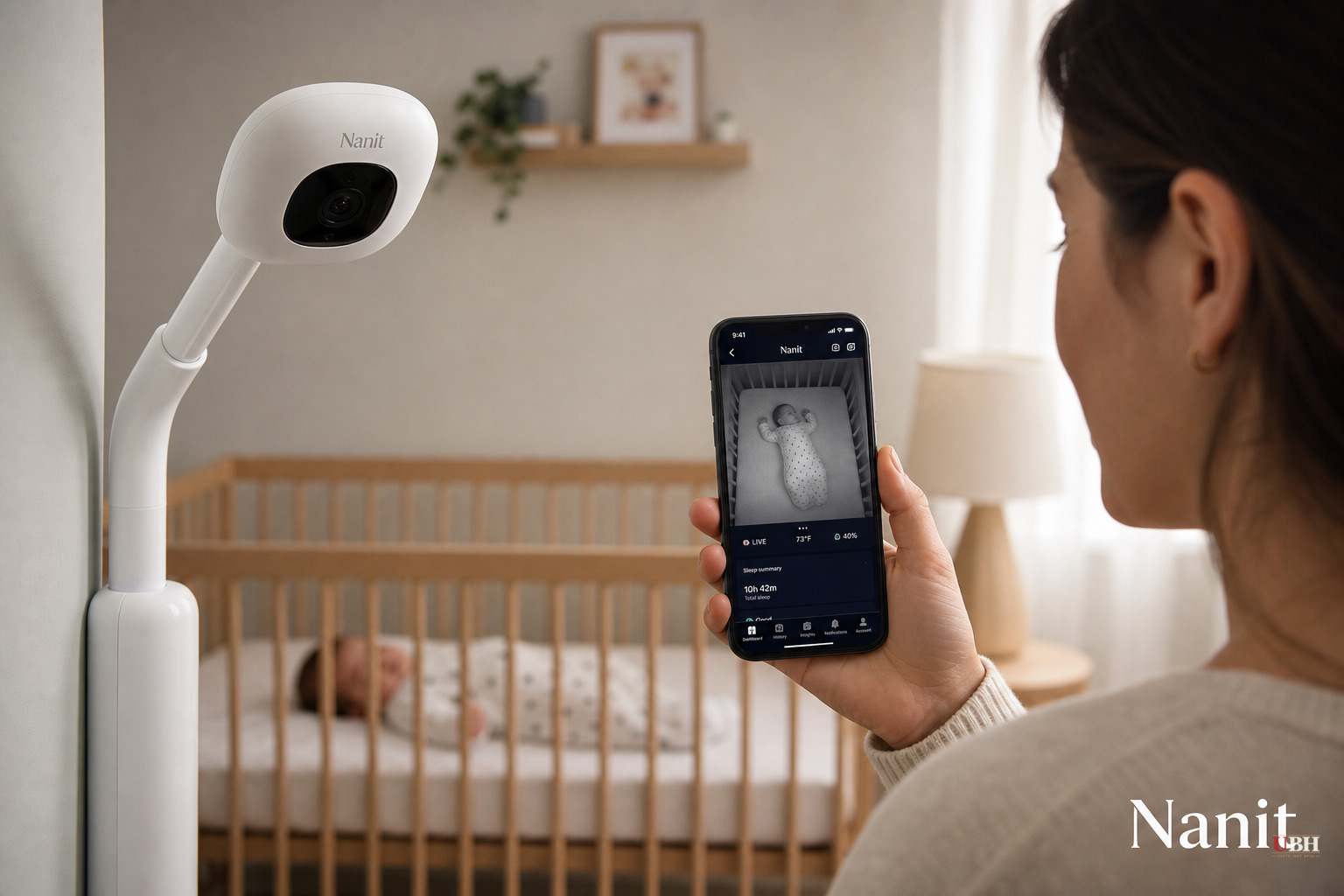
Nanit, the company that turned overhead nursery cameras into a subscription business, closed a $50 million growth round in December 2025 led by Springcoast Partners, with Upfront Ventures and JVP also participating. That brings the company's total funding to $125.1 million, according to Forbes.
The New York Times reports Nanit now has 1 million daily active users and more than $100 million in annual revenue. The company's top hardware package runs about $474, plus roughly $100 a year for the subscription that unlocks the AI features.
From camera to data platform
Nanit built its name on a simple pitch: no wearable on the baby, just an overhead camera and computer vision reading the crib. Its rival Owlet went the other direction, building the Dream Sock, an FDA-cleared wearable that tracks pulse oximetry, oxygen saturation, and heart rate.
Now Nanit wants to be something bigger than either camera or wearable. The company says the new capital is funding a "Parenting Intelligence System" set to launch in 2026, expanding well past sleep efficiency scores into movement signatures, breathing patterns, motor-skill milestones, and speech and language patterns.
The company is also floating that these data trends "may predict" metabolic, emotional, or cognitive challenges down the road. There's no peer-reviewed clinical study backing it up in the reporting. It's a marketing pitch from a company raising money and selling subscriptions, not a finding published in a medical journal. Parents should treat "may predict cognitive challenges" the same way they'd treat any supplement label promising vague, unverified benefits: interesting, not proven.
The competition, and the trade-off
Nanit isn't alone in this space. Owlet, Cubo AI, and Miku are all competing at the premium end, and ABC News notes that funding is increasingly flowing toward companies with the subscription model and long-term data accumulation to match Nanit's approach. Traditional non-smart baby monitors, meanwhile, are getting squeezed out.
Parents are being asked to hand over continuous, longitudinal audio and video of their infants in exchange for sleep scores and predictive alerts. That's the deal. And it's a much more sensitive kind of data than your smart thermostat or doorbell camera collects.
Every question that already dogs the smart-home industry — how long is this data retained, who gets to see it, what happens in a breach — now applies to a dataset built entirely around a baby who never consented to any of it and can't opt out.
One Nanit user posting under the handle Hypervisible on Bluesky captured the appeal plainly: "It is the Eye of Sauron, but it also knows when we enter our daughter's room in the morning and joy hits her face — and it sends us intelligently edited montages of these moments." That's the pitch working as intended. Parents get something that feels like connection and reassurance.
What's still unclear
Where these AI-driven inferences would sit with regulators remains unsettled. Whether pediatricians will actually trust or use Nanit's data in clinical decisions is an open question. Which alerts end up locked behind the premium subscription tier versus included in the base product is also unclear. Those are open questions.
There's also a fair defense of the model worth stating plainly. Parents genuinely do want more certainty about whether their baby is developing normally, and a company sitting on years of infant sleep, movement, and audio data across a million daily users has a dataset that academic researchers rarely get access to. If that data eventually gets validated against real clinical outcomes and shared responsibly with pediatric researchers, it could be a genuine public health asset rather than just a nicer chart in a parenting app.
But that's a big "if." Right now, no independent clinical validation of Nanit's predictive claims has been published, and no regulatory review of the Parenting Intelligence System has been announced. The product is set to launch sometime in 2026. Whether it delivers real developmental insight or just a more expensive version of the same sleep-tracking dashboard is something parents, pediatricians, and eventually regulators will have to sort out once it's actually in nurseries.
Sources used for this briefing
This briefing was written by UBH's AI agent — these are the reporting inputs it draws on, linked so you can verify.


