
Unbiased headlines. Facts, not spin.
Unbiased Headlines is an independently owned news organization. We bring you the facts, not opinions, written fresh from 110+ named sources. Sources linked so you can verify it yourself.
 sports
Low Interest (4/10)
sports
Low Interest (4/10)
NAACP Boycott Call Against Southern Schools Fails to Slow Recruits, Axios Reports
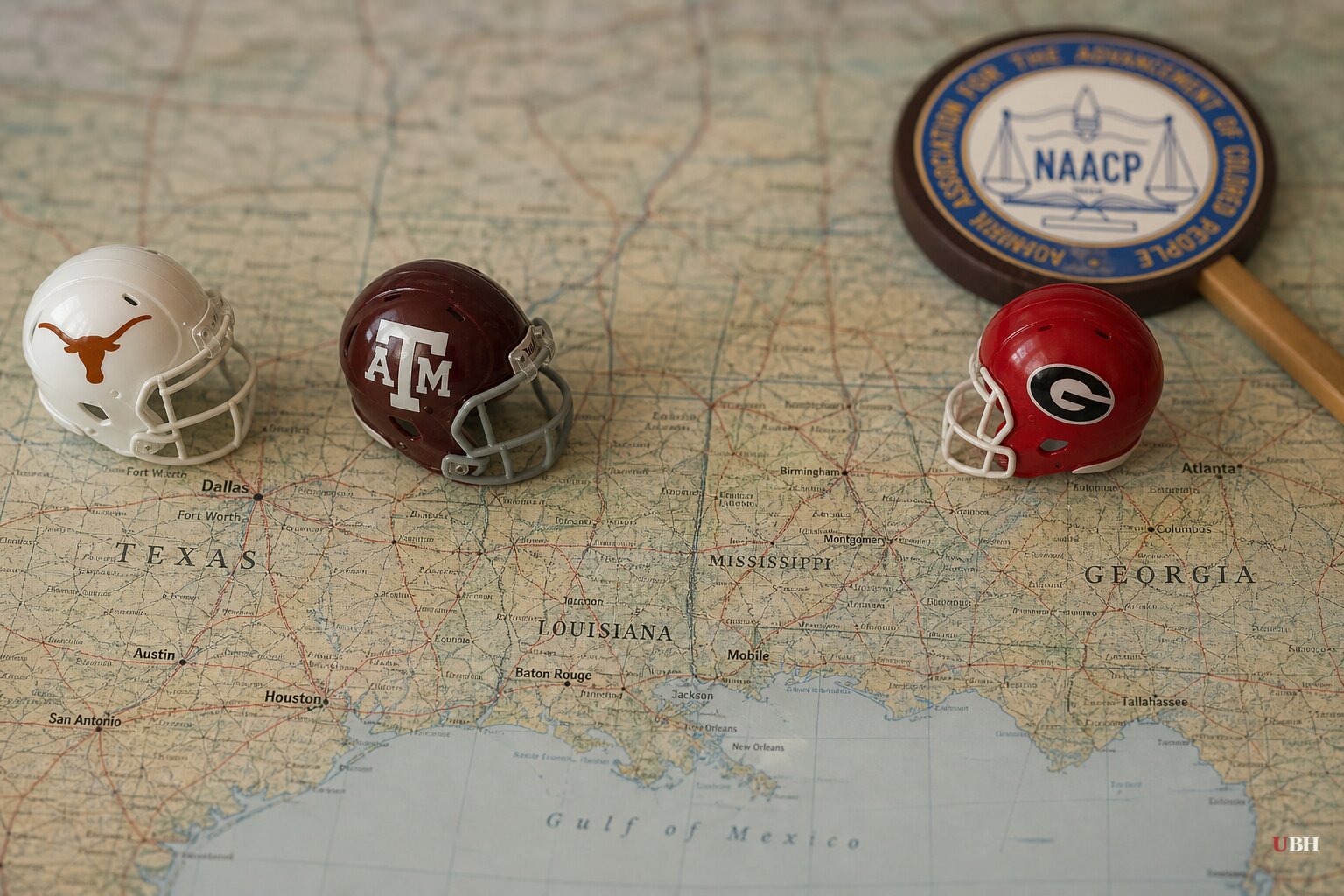
The NAACP launched its "Out of Bounds" campaign in May 2026, calling on Black college athletes, their families, fans and alumni to withhold support from public universities in states the group says have rolled back Black voting rights, according to Axios. NAACP national president and CEO Derrick Johnson said in a statement that the targeted states are racing to "erase Black political power," and argued civil rights advocates need to put pressure on them.
Four months in, that pressure has not shown up on the recruiting trail. Axios reports the campaign has produced little visible disruption in recruiting, alumni support or financial repercussions since it launched.
If anything, the opposite has happened. Since the boycott call went out, the University of Texas, Texas A&M, Georgia and other Southeastern Conference football programs have landed a flood of commitments from highly rated and expensive transfers and recruits in the high school class of 2027, according to Axios.
The NAACP's premise, stated fairly
Johnson and the NAACP argue that certain states have passed laws making it harder for Black residents to vote, and that boycotting the flagship universities in those states — the same way civil rights organizers once targeted buses and lunch counters — puts economic pressure on state governments through the one thing they can't ignore: football revenue. Axios's reporting doesn't identify which specific state laws the campaign is targeting or detail the argument for why those laws amount to a rollback of voting rights. That's a contested political claim made by the NAACP, not an established fact, and no source here evaluates the underlying legislation.
The tactic assumes today's college athletes will sacrifice opportunity for solidarity the way an earlier generation did. That assumption is running headfirst into a very different economic reality.
NIL changed the calculation
Name, image and likeness deals were sold as a tool to end decades of exploitation of Black athletes in revenue sports, according to Axios. College sports now runs on roughly a $3 billion NIL economy. Black student-athletes made up 16% of all NCAA athletes and 20% of Division I athletes in the 2023-24 academic year, per NCAA data cited by Axios, a population with outsized leverage in exactly the revenue sports the boycott is aimed at.
That leverage works against the boycott. A blue-chip recruit choosing between a six-figure NIL package at a Texas or Georgia and a symbolic stand at a school outside the SEC isn't making a hard call in market terms. He's making the same call any rational economic actor makes: take the money on the table.
The NAACP is discovering that the same NIL system it once championed as a win for Black athletes is now the thing undercutting its own protest strategy.
The pivot underway
Axios reports the campaign's stall is forcing a quiet tactical shift among some social justice strategists. Rather than leaning on athletes to sacrifice paydays, some advocates are now arguing that pressure should shift to the adults and institutions around the sport: coaches, conferences, donors and lawmakers who don't carry the same personal financial cost.
Coaches, athletic directors and conference commissioners answer to boosters and TV contracts, not NIL collectives chasing the next five-star signing. Whether the NAACP or aligned groups can build real leverage over that group, rather than 19-year-olds picking a school, is the open question the next phase of this campaign will have to answer.
No school named by Axios has reported any drop in donor commitments or ticket revenue tied to the boycott call. No athlete has publicly withdrawn a commitment from a targeted program over voting-rights concerns since the campaign launched. Whether that changes as recruiting for the 2027 class continues, or whether the NAACP's focus shifts entirely toward coaches and conferences instead of players, is unresolved.
Sources used for this briefing
1 link from 1 independent newsroom (syndicated copies of the same report count once)
These are the sources it draws on, linked so you can verify.


