
Unbiased headlines. Facts, not spin.
Unbiased Headlines is an independently owned news organization. We bring you the facts, not opinions, written fresh from 110+ named sources. Sources linked so you can verify it yourself.
 finance
Major Story (7/10)
Musk Says SpaceX Closed $40 Billion GPU Debt, but Pricing and Terms Remain Undisclosed
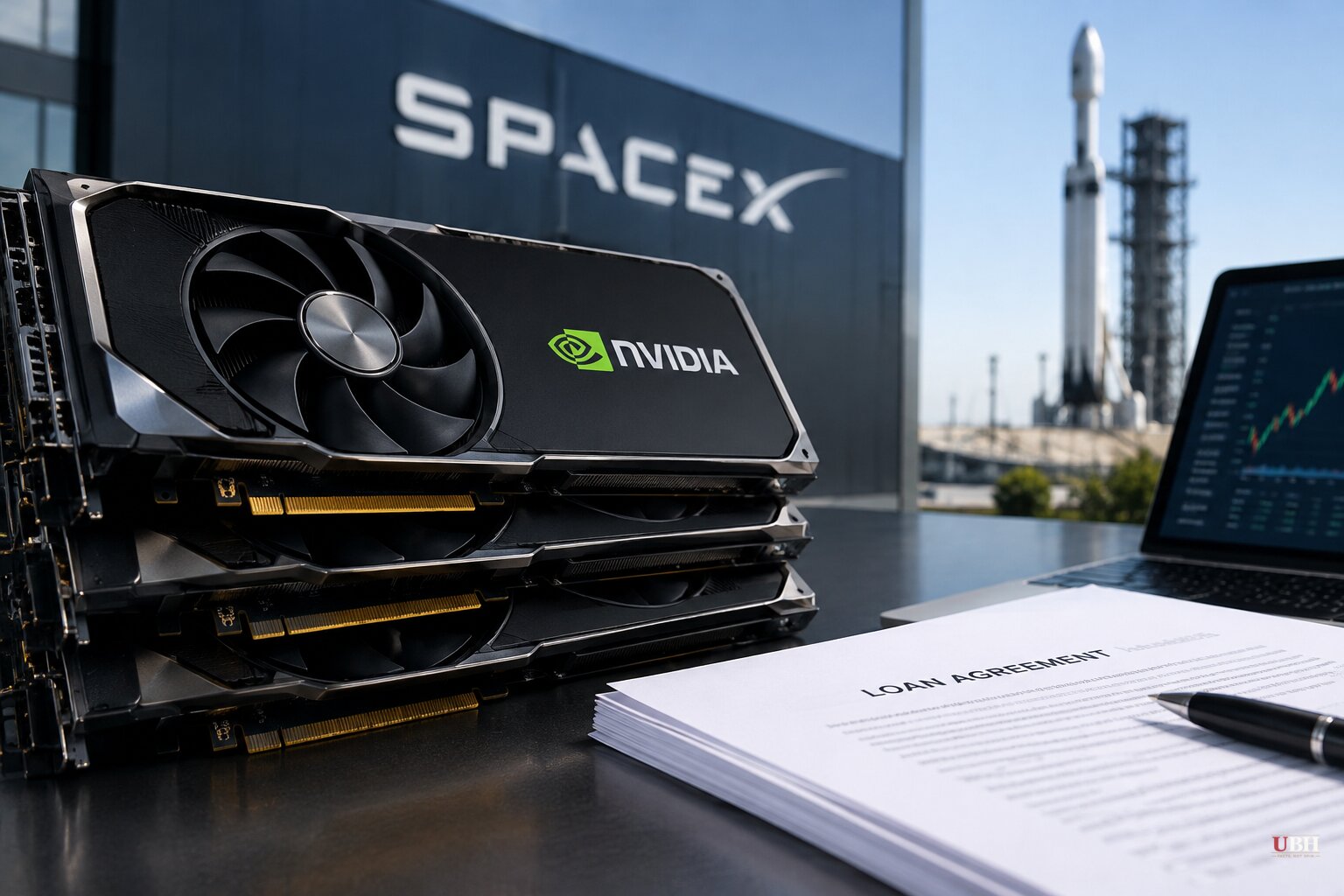
Elon Musk's Sunday, Oct. 25 announcement that SpaceX "closed $40B of debt for GPUs" has left more questions than answers. According to Reuters, it was not immediately clear what Musk meant by "closed" or whether investors had agreed to pricing for the debt. SpaceX has not provided a detailed breakdown of the structure.
Musk's post said the debt is "primarily callable debt for GPU purchases that will arrive in Q1 and Q2" of 2027 and is "not a major factor this quarter." He credited SpaceX's investment-grade rating and its Starlink and launch revenue.
What is known about the structure
People familiar with the matter have said Goldman Sachs bankers negotiated the arrangement with investors led by Apollo Global Management. An Apollo-backed vehicle, Atlas SP, was slated to manage the entity, and Pimco had weighed participating. The debt was expected to be sold as a Rule 144A private placement designed to keep the obligation off SpaceX's balance sheet.
That design has a history. An earlier xAI deal sought as much as $20 billion in off-balance-sheet debt through a sale-and-leaseback with Valor Equity Partners. According to SpaceX's latest results, roughly $13 billion of that debt had to come onto the balance sheet after the arrangement was judged not to meet the conditions for sale accounting.
The financing was first reported on Oct. 7 by the Financial Times, which described about $10 billion in bank loans and $30 billion in investment-grade debt, with Apollo as lead. At that stage the talks were described as early, with no guarantee a transaction would materialize, and the deal was expected to be completed in 2027. Musk's post puts the timeline much further along.
The market reaction and the bill
The cost of insuring SpaceX's debt against default through five-year credit default swaps rose to a record 197 basis points on Oct. 7, the day reports of the package first circulated, according to ICE Data Services.
The spending is not small relative to the business. SpaceX reported third-quarter revenue of $14.58 billion, up 161% from a year earlier. AI revenue rose nearly tenfold to $7.56 billion. CFO Bret Johnsen expects fourth-quarter capital expenditure of $35 billion to $40 billion.
Tom's Hardware estimated that $40 billion would buy roughly 5,000 Nvidia Vera Rubin NVL72 racks, or about 360,000 accelerators, assuming around $8 million per rack. That is the outlet's arithmetic, not a SpaceX figure. Whether $40 billion covers all of xAI's 2027 compute budget is unclear.
Musk's neocloud prediction
Musk used the announcement to take a shot at smaller rivals. "Debt markets have almost entirely shut off access to money for any company that doesn't have substantial revenue independent of AI data centers," he wrote. "The 200+ neoclouds are going to see guppy-level death and consolidation. Some will make it through, but not many."
He named no company. Neoclouds rent GPU capacity to AI developers. CoreWeave and Nebius are the most prominent listed examples, and CoreWeave carries a $50 billion debt load, according to Fox Business. Musk later said SpaceX will not buy any of them, calling the idea "pointless."
The prediction is Musk's own. What the market has shown is more limited. Reuters has reported that investors began betting against U.S. neocloud and data center companies after fears that their debt-fueled buildouts were unsustainable set off a selloff, and that investors are demanding higher yields on AI infrastructure bonds.
There is a flip side to the collateral argument. An A47 News analysis noted that a $40 billion order concentrated in Nvidia processors carries rapid depreciation risk, because chips become obsolete as newer architectures arrive. SpaceX's answer, per Musk, is that Starlink and launch cash flows stand behind the debt rather than the chips alone.
Markets today
AI-linked stocks rebounded on Monday, Oct. 26. The Nasdaq climbed more than 1%, and chip stocks snapped an eight-day losing streak, their longest in 18 years, according to Fox Business. The Associated Press reported that much of the money going into chips and data centers is borrowed, and rising interest rates make those loans costlier. Fox Business said rising oil prices and higher borrowing costs were keeping the comeback in check.
What to watch
The open question is what SpaceX actually signed. If the debt is a callable, off-balance-sheet private placement, the accounting treatment will matter given the roughly $13 billion that had to be moved onto the books after the Valor deal. SpaceX has not said when it will disclose pricing, the lenders or the structure.
Sources used for this briefing
6 links from 6 independent newsrooms (syndicated copies of the same report count once)
These are the sources it draws on, linked so you can verify.


