
Unbiased headlines. Facts, not spin.
Unbiased Headlines is an independently owned news organization. We bring you the facts, not opinions, written fresh from 110+ named sources. Sources linked so you can verify it yourself.
 finance
Major Story (7/10)
Event date: October 22, 2026 ·
CFTC Chair Selig Says Agency Is Building Voluntary Federal Registration Path for Crypto Exchanges
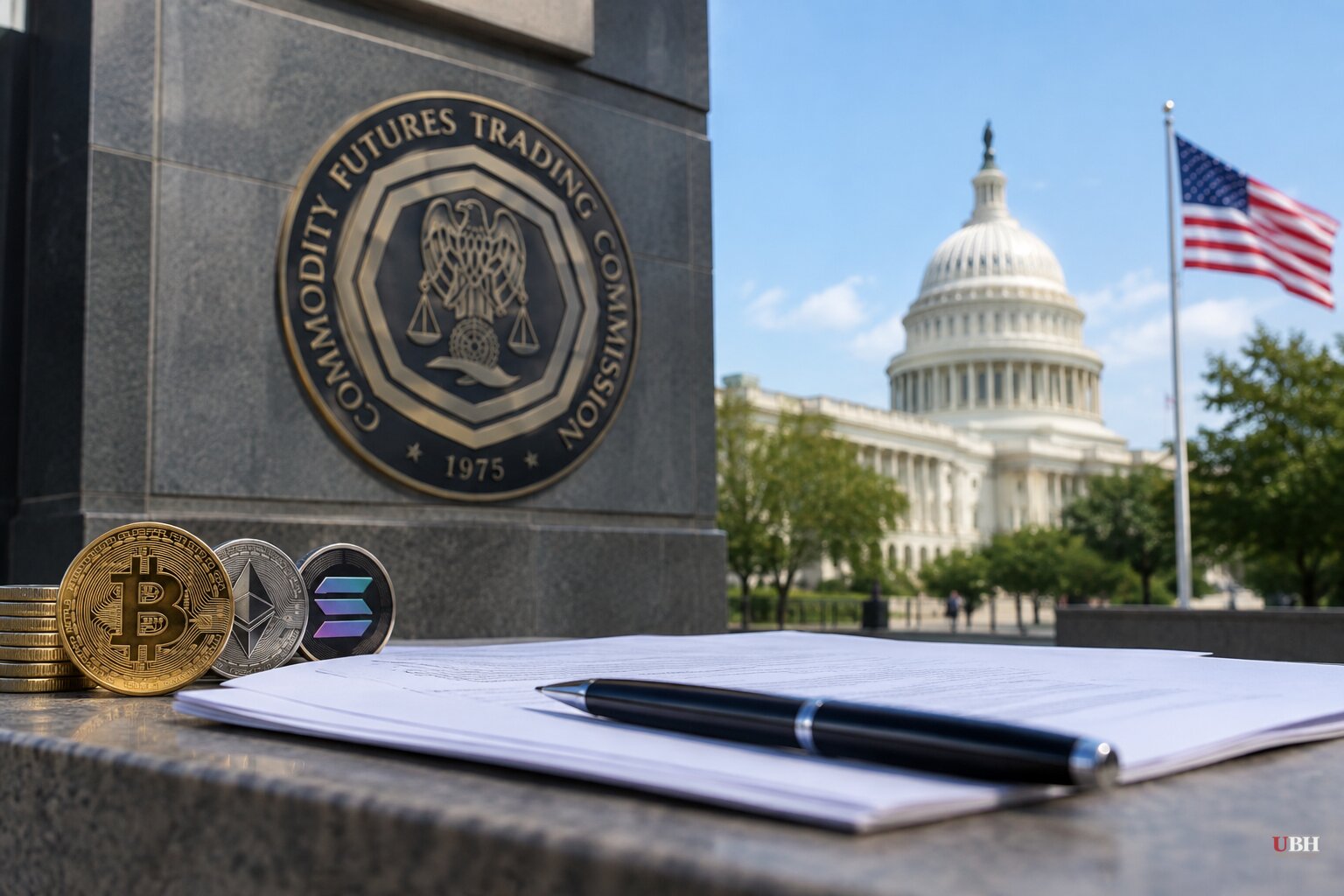
Since the Senate's 49–50 cloture vote on the CLARITY Act failed on Sept. 15, the Commodity Futures Trading Commission has been moving to fill the gap on its own. Today, Oct. 26, Chairman Mike Selig said the agency is developing a voluntary federal registration pathway for crypto exchanges.
Selig made the announcement in an X post that accompanied a Bloomberg TV interview. "Crypto markets deserve the same time-tested protections that have governed America's derivatives markets for generations," he wrote.
He has repeated his position that the CFTC can move on parts of its crypto agenda using powers it already holds.
What the CFTC has actually put on paper
The agency has not finalized anything. On Oct. 5, it issued an advance notice of proposed rulemaking, which asks for public input and contains no rule text. Binding requirements would have to come through a later proposed rule.
The notice floats two frameworks. Regulation Crypto Asset Transactions, or CTX, would define when crypto transactions fall under CFTC jurisdiction. Regulation Crypto Asset Markets, or CAM, would create a CFTC-regulated structure for venues that trade them.
The legal hook is Section 2(c)(2)(D) of the Commodity Exchange Act. It covers retail commodity transactions offered on a leveraged, margined or financed basis.
The CFTC took a preliminary view that a leverage offer can reach transactions even when customers never actually borrow. Onboarding paperwork, exchange terms and margin agreements could each constitute the offer. Where an offer covers an account or product class, the agency would treat the covered transactions as subject to the framework even if individual trades are paid in full.
The notice also separates assets actually delivered to customers from assets that exist only as an exchange's internal book entry. Attorneys at Fenwick note the statutory exception for actual delivery within 28 days turns on real delivery, not an asset balance showing up in an account.
Scope and limits
Selig has described federal registration as an option for exchanges that want a single federal market regulator. Participating venues could offer retail customers margined, leveraged or financed crypto trading. That would sit alongside the existing state-licensed spot-exchange system, not replace it.
Selig has acknowledged the agency cannot require all crypto assets to trade on registered platforms without congressional action. The rules would set requirements only for exchanges that choose the federal route.
He has called the October notice "just the beginning" of addressing gaps in crypto market structure. The agency says it is turning to formal rulemaking as part of his push to end "regulation by enforcement."
The CFTC sent the framework to the White House Office of Information and Regulatory Affairs on Sept. 17, two days after the Senate vote. That review concluded Oct. 2, three days before the notice went public.
Why Congress is not doing it
The House passed the CLARITY Act 294–134 in July 2025. In the Senate, the Sept. 15 motion fell 11 votes short of the 60 needed. Forty-four Democrats, two independents and four Republicans voted no, and one Democrat did not vote.
The bill stalled over official conflicts of interest, law-enforcement concerns about noncustodial developers, and banking-group objections to stablecoin yield.
The Senate is not scheduled to return to legislative business until Nov. 9. With the 119th Congress nearing its end, the bill would need to be reintroduced after the new Congress convenes in January 2027.
The staffing question
The agency's capacity to police a bigger market is a separate issue. An NPR analysis of Office of Personnel Management data found the CFTC ended 2025 with 21% fewer staff than its previous 10-year average. Staffing fell 22% between January 2024 and January 2025 alone.
The agency's annual reports show nearly 80% fewer enforcement actions in 2025 than the prior decade's annual average.
Jeff Le Riche, a CFTC enforcement lawyer from 2005 to 2025, tied the two trends to politics. "The Trump administration had run partially on a platform that it would be friendlier to the crypto industry," he told NPR. He said staff who brought cases against Gemini, Mirror Trading, Voyager, Celsius, FTX and Polymarket "either left or were forced out."
The CFTC did not address that claim directly. Spokesman Zach Fulton said the agency "remains committed to promoting integrity and responsible innovation in U.S. derivatives markets" and that Selig is grateful to the staff who remain.
Selig's side has an argument of its own. Formal notice-and-comment rulemaking is slower than enforcement, but it gives exchanges written rules before they are charged with breaking them.
What comes next
The CFTC would have to publish a proposed rule, take comment and adopt a final one before any exchange could register under CAM. The agency has not said when a proposal will come.
If Congress does not act before January 2027, the voluntary route may be the only federal crypto exchange framework on offer. Whether the CFTC's reduced staff can supervise the venues that sign up remains unanswered.
Sources used for this briefing
7 links from 7 independent newsrooms (syndicated copies of the same report count once)
These are the sources it draws on, linked so you can verify.


