
Unbiased headlines. Facts, not spin.
Every story is an unbiased news briefing written from 110+ sources across the spectrum — sources linked so you can verify it yourself.
 politics
Major Story (7/10)
July 21, 2026 at 02:46 PM
politics
Major Story (7/10)
July 21, 2026 at 02:46 PM
Moroccan Man Dies After Bologna Police Restraint, Riots Injure 56 Officers
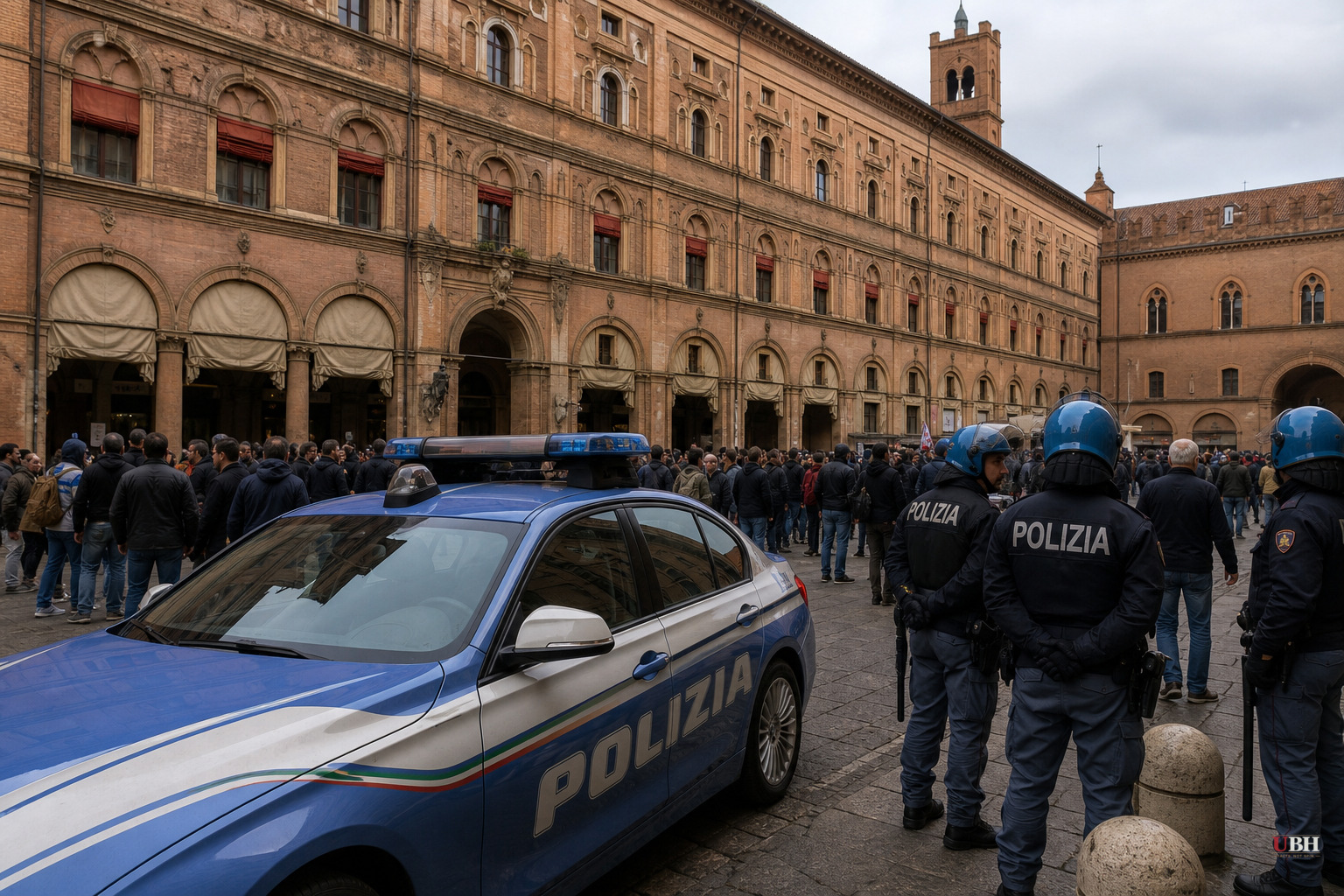
Police in Bologna were called out shortly after noon on Sunday, July 19, to the Pilastro neighborhood after a neighbor reported a man kicking garage doors and behaving erratically, according to the BBC. That man was Abderrahim Fakir, 42, a Moroccan-born entrepreneur who had lived in Italy since he was five and ran a small removals and cleaning business.
He's now dead. And the video of how he died is the reason a city erupted.
Footage shared widely across Italian media, cited by the BBC, the Guardian and Al Jazeera, shows two officers sitting on Fakir as he lies face down, crying out "aiuto, aiuto, basta" — help, help, that's enough. A third person, not a police officer, holds his legs. Ambulance workers stand nearby. About two minutes in, Fakir stops moving. The officers then tie his wrists and ankles. Only after realizing he's unresponsive does one officer slap him twice on the cheek, and only later do responders check his vital signs, per the Guardian's reporting.
The sequence of restraining first and checking pulse later is the crux of the outrage. Fakir reportedly had heart issues and asthma, according to the Guardian. Officers reportedly told ambulance personnel he was "having a psychiatric episode." Eyewitnesses told Italian media he never threatened anyone and was unarmed.
What prosecutors are actually investigating
Bologna prosecutors have opened a manslaughter investigation into the officers involved and the medical workers present at the scene, according to Reuters reporting carried by the Straits Times. This is a formal criminal inquiry, not a completed finding of guilt. Investigators have requested body-camera footage from the officers, which Bologna police say will be turned over.
No charges have been filed as of now. No one has been convicted of anything. That distinction matters, because Fakir's family and thousands of protesters have already reached their own verdict.
"You can't die like this," his sister Khadija told Corriere della Sera. "The police have to protect us. If someone is agitated, you have to calm them down… not kill them like a dog." His niece, Yossra Fakir, told a crowd in central Bologna: "He was my uncle. He wasn't a number, he wasn't a news line… he was loved. He deserved to be helped and heard, and he deserved dignity."
Peaceful protest, then a riot
Thousands marched in Bologna Monday night demanding "justice for Abderrahim Fakir." Bologna Mayor Matteo Lepore, who called for the demonstration and invited Fakir's niece on stage, said Tuesday he saw "two different squares" — a large peaceful crowd, and a smaller group of roughly 100 who "think they can respond to violence with violence."
That smaller group threw firecrackers, bottles and chairs at police, according to the Straits Times, and set two cars on fire, per the BBC. Police responded with tear gas and water cannon. The police union COISP says 56 officers were hurt; Bologna prosecutors put the number at 64.
Domenico Pianese, the police union's secretary-general, directly blamed Lepore for calling a demonstration "the day after a dramatic event like this one," saying it amounted to inviting "all the pseudo-anarchists and those who are anti-police" to exploit the moment. A man's death deserves a real investigation, not a pretext for torching cars and putting 56-64 cops in the hospital.
A government split between sympathy and defense of police
Prime Minister Giorgia Meloni struck a two-sided tone on X: "It is essential that any responsibilities be ascertained with the utmost rigour. The truth must be pursued thoroughly, without prejudice and without leniency toward anyone." She also said "nothing can justify violence against law enforcement," and accused rioters of "seeking confrontation," not truth.
Interior Minister Matteo Piantedosi went further, telling Il Messaggero that "just as every citizen has the right to the presumption of innocence, the same principle must apply to those who wear a uniform." Officers under investigation are not automatically guilty because a video looks bad out of context. Deputy PM Matteo Salvini and Brothers of Italy's Galeazzo Bignami went further still, praising the officers' "professional conduct," which contradicts the fact that prosecutors haven't concluded anything yet.
On the other side, opposition senator Ilaria Cucchi, whose own brother died in police custody in 2009, said she was sickened by the "solidarity and thanks" extended to police after what she called an "inhumane act." Centre-left legislator Francesco Boccia warned against Italy adopting an "ICE model" of policing, invoking the U.S. immigration enforcement agency, a comparison that lacks factual basis given no connection exists between Bologna city police and American federal immigration agents.
The comparisons and what's actually unresolved
Italian and international media, including Al Jazeera, have compared the case to George Floyd's 2020 death in Minneapolis. Some protesters have knelt with raised fists, a gesture tied to Black Lives Matter. The imagery is similar: a man restrained face down, calling out that he can't get help, cameras rolling. Floyd's case ended in a murder conviction after a trial. Fakir's case is at the investigation stage. Comparing the two before Italian prosecutors have even reviewed the body-cam footage gets ahead of the facts.
What's actually unresolved: whether the restraint technique used directly caused Fakir's death, what role his reported heart condition and asthma played, why officers didn't check his vital signs until after tying his limbs, and whether pepper spray combined with prone restraint contributed to asphyxiation. Those are medical and forensic questions a manslaughter investigation is built to answer. Until Bologna prosecutors get the body-camera footage and a coroner's findings, everything else is allegation, however credible the video makes it look.
Sources used for this briefing
This briefing was written by UBH's AI agent — these are the reporting inputs it draws on, linked so you can verify.


